









10Life Financial Limited
Enquiries: enquiries@10life.com
Hotline: (852) 3705 1599
Address: 16/F Greatmany Centre, 109-115 Queen’s Road East, Wan Chai, Hong Kong



Which Plans Offer Higher Guaranteed Returns?
What Should You Look at When Comparing Returns?
Short-term savings insurance also carries credit risk
Short-Term Savings Insurance Also Comes With Credit Risk
FAQs


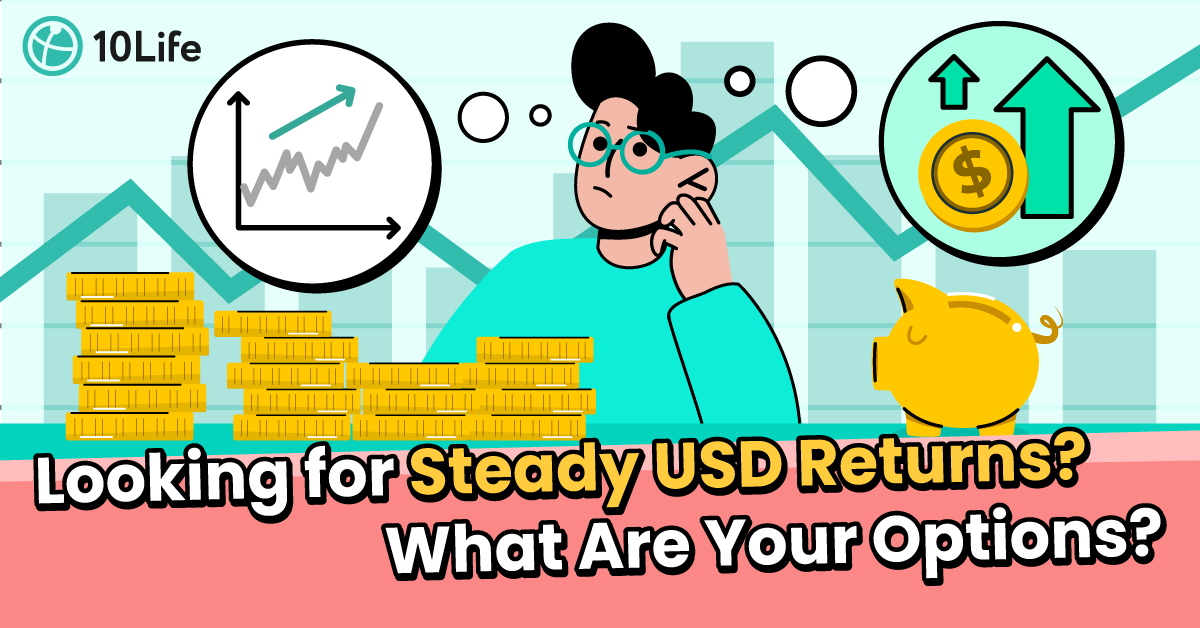
Have some savings you won’t need immediately? Leaving the money in a bank account may offer limited interest, so you may be considering options such as time deposits or short-term savings insurance to earn a more predictable return over a fixed period.
Five-year policies are common in the short-term savings insurance market, although three-year options are also available. Some offers are subject to quotas or limited-time premium discounts, so availability and returns may change.
| Insurance Product | Guaranteed IRR | Projected IRR | Premium Payment Term | Total Premium Requirement (USD) |
| Policy Year 5 | ||||
| Limited-Quota High-Interest Savings Plan → Enquire Now ← | 5.03% | / | / | / |
| Well Link Life WELL SAVE 5-YEAR ENDOWMENT PRO 3 → Enquire Now ← | 4.59%1 | 4.59%1 | 1 Year or Prepayment | $25,000 |
| HSBC Life HSBC Swift Save Insurance Plan → Enquire Now ← | 4.40%1 | 4.40%1 | 1 Year or Prepayment | $2,226 |
| Well Link Life Target Savings Plan (20-Year Maturity) → Enquire Now ← | 4.35%1 | 4.35%1 | 1 Year or Prepayment | $50,000 |
| Blue WeWealth GO Wealth Generator 3 → Enquire Now ← | 4.29%1 | 5.72%1 | 1 Year or Prepayment | $80,000 |
| Prudential PRUSave 5-Year Insurance Plan | 4.00% | 4.00% | 1 Year or Prepayment | $5,000 |
| Policy Year 3 | ||||
| Well Link Life WELL SAVE 3-YEAR ENDOWMENT PRO 3 → Enquire Now ← | 4.43%1 | 4.43%1 | 1 Year or Prepayment | $800 |
| Blue WeWealth GO Wealth Generator 3 → Enquire Now ← | 4.35%1 | 4.35%1 | 1 Year or Prepayment | $40,000 |
| Notes: 1. Returns include applicable premium discounts. Some products require a specified premium amount to qualify for certain offers. Please contact a 10Life insurance advisor for details. 2. Products are ranked by guaranteed return, from highest to lowest. Data as of 11 September 2026. | ||||
Which Plans Offer Higher Guaranteed Returns?
Short-term savings insurance in Hong Kong is commonly available in US dollars, Hong Kong dollars and renminbi. For the USD plans compared above, premium payment periods generally range from one to two years, while five-year policy terms are among the more common options.
10Life uses Internal Rate of Return (IRR) to compare the annualised guaranteed returns of different plans, taking their cash flows and timing into account.
Some of the plans above are available for online application, while others require offline application. If you’re unsure which option suits your needs, you can speak with a 10Life insurance advisor.
What Should You Look at When Comparing Returns?
Don’t simply choose the plan with the highest return. It’s also important to understand whether the return is guaranteed or non-guaranteed.
Guaranteed IRR reflects the guaranteed return at a specified policy year, while projected IRR may include non-guaranteed benefits and could therefore differ from the actual return eventually received.
When comparing plans, start with the guaranteed IRR over the same period, then consider the premium payment period, breakeven period and projected IRR alongside your own financial needs.
For a more detailed explanation of how IRR works and how it is calculated, see our guide to Internal Rate of Return (IRR).
Short-term savings insurance also carries credit risk
Short-term savings insurance won’t suit everyone. It may be worth considering if you:
On the other hand, think carefully before committing money you may need for mortgage payments, starting a business, debt repayment, medical expenses, family emergencies or other major expenses within the next year or two.
If you surrender a policy early, you may receive less than the total premiums you’ve paid.
Short-Term Savings Insurance Also Comes With Credit Risk
Short-term savings insurance is different from a bank deposit and is not covered by the Deposit Protection Scheme.
Your policy depends on the insurer’s ability to meet its financial and contractual obligations. This means policyholders are exposed to the insurer’s credit risk. If an insurer becomes unable to meet its obligations, policyholders could lose premiums paid and policy benefits.
Licensed insurers in Hong Kong are regulated by the Insurance Authority, which has statutory powers to intervene where potential issues arise.
You can also use 10Life to compare short-term savings insurance in different currencies, including USD, HKD and RMB, based on your target period and financial needs.
[US rate cut] The end of the high-yield era — how to lock in high yields and deploy?

FAQs
Compare the guaranteed IRR, projected IRR, premium payment period and minimum premium at your target policy year. A higher return doesn’t necessarily mean a plan is the right fit, particularly if you may not be able to hold it until the target date.
USD short-term savings insurance is an insurance product and generally needs to be held for a specified period to achieve its intended return. Early surrender may result in a loss. A USD time deposit is a bank deposit, where early withdrawal generally affects the interest received. The two also have different protection arrangements and risks.
Start with when you’ll need the money. If you have a clear use for the funds within three years, locking them away for five years simply to pursue a higher return may not make sense.
If you can leave the money untouched for longer, you can compare the guaranteed returns and surrender values of five-year plans.
Not always. Some policies include both guaranteed and non-guaranteed benefits. Non-guaranteed bonuses or terminal bonuses may change depending on the insurer’s performance, so compare the guaranteed return first before considering projected returns.
It depends on whether you expect to need US dollars in the future and whether you’re comfortable with currency risk. Even if a USD-denominated policy offers an attractive return, the amount you ultimately receive in Hong Kong dollars may be affected by exchange-rate movements and currency conversion costs.
It may be an option if you’re confident you won’t need the money during the premium payment period or before your target date. It generally shouldn’t be used for emergency savings, everyday expenses or money you may need at short notice, as early surrender could result in receiving less than your total premiums paid.
Look beyond guaranteed IRR and compare the premium payment period, minimum premium, breakeven period, surrender values at different policy years, proportion of non-guaranteed returns, policy currency and insurer credit risk.
10Life’s Insurance Decoder lets you compare savings insurance plans across different currencies, premium payment periods and target years based on your budget and financial needs.
This English version of this article has been generated by machine translation powered by AI. It is provided solely for reference purposes. In the event of any discrepancy or inconsistency between this translation and the original Chinese version, the Chinese version shall prevail.
身為10Life編輯團隊的一員,主力研究各種保險產品比較、拆解保單條款及索償細節,並與10Life持牌顧問緊密合作,致力將複雜術語轉化為易明分析,讓大眾更了解各種保險產品。
身為10Life編輯團隊的一員,主力研究各種保險產品比較、拆解保單條款及索償細節,並與10Life持牌顧問緊密合作,致力將複雜術語轉化為易明分析,讓大眾更了解各種保險產品。
10Life Product Comparison and 10Life Insurance Ratings are developed by 10Life Financial Limited, an authorised insurance broker company licensed with the Insurance Authority under License Number FB1526. 10Life Product Comparison and 10Life Insurance Ratings are developed for generic customer segments using mathematical calculations based on product information, facts and data, and are not influenced by any partnerships with or fees received from insurance companies. Any information on 10Life Platform ("10Life Information"), including but not limited to Product Comparison, Product Ratings, Blog Articles are intended for general education purpose and reference only. None of the 10Life Information is intended, nor should they be considered or relied upon, as regulated advice, insurance, financial, investment or professional advice, recommendation, approval, endorsement, invitation or solicitation in respect of any insurance, financial or investment products. 10Life Information does not take into account your individual needs. Reading 10Life Information should not be considered as conducting a suitability assessment, and is not sufficient to form the basis of any decisions to purchase any insurance products. You should rely on information authorised by insurance companies, carry out your own research and/or seek independent advice from licensed intermediaries before purchasing any insurance products or making any insurance decisions. While reasonable effort is used when collecting, validating and updating 10Life Information from various channels, none of 10Life Group and its subsidiaries, affiliates, agents, directors, officers and employees will be responsible for any liability, claim or loss arising from or associated with you using 10Life Information. No warranty, representation or guarantee is given by 10Life Group and its subsidiaries on the accuracy, completeness and timeliness of the information. If you have any questions on 10Life Product Comparison and 10Life Insurance Ratings, please email us at enquiries@10life.com



 Talk to 10Life on WeChat
