









10Life Financial Limited
Enquiries: enquiries@10life.com
Hotline: (852) 3705 1599
Address: 16/F Greatmany Centre, 109-115 Queen’s Road East, Wan Chai, Hong Kong





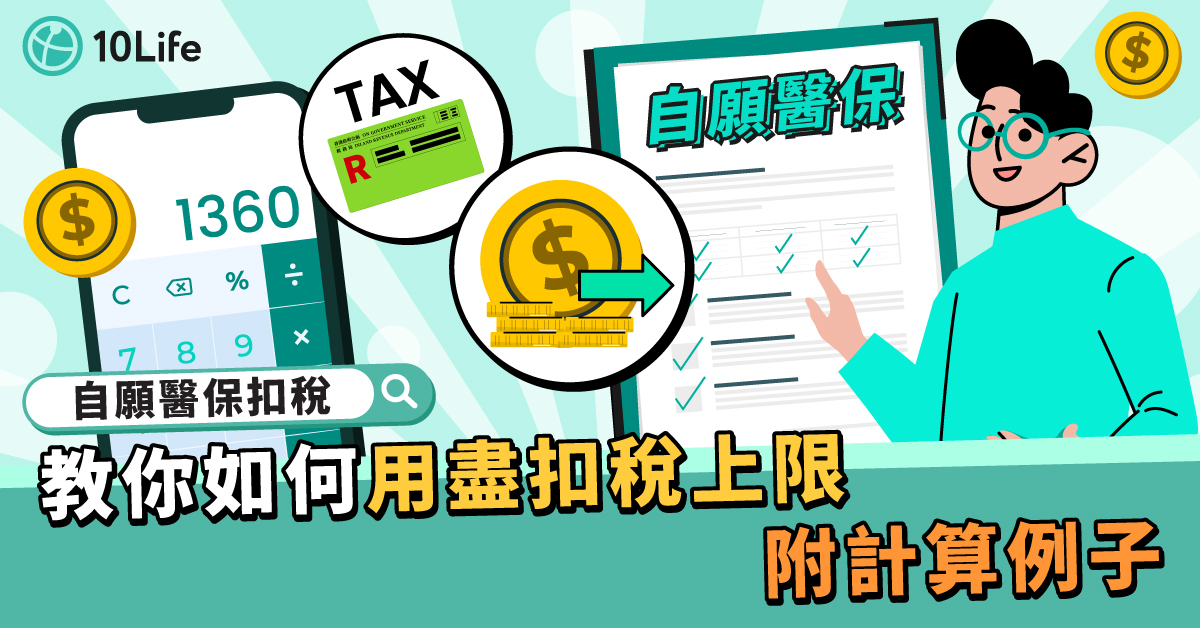
If you buy VHIS, you can deduct up to $8,000 a year — does that mean you save $8,000 in tax? In fact, it does not!
The $8,000 VHIS cap is the maximum qualifying premium deduction for each eligible insured person, not a direct $8,000 reduction in tax. You may also be able to claim a deduction if you buy VHIS for your parents, spouse or children, not only for yourself.
So how high is the VHIS tax-deduction cap? How much tax can you actually save? Can you claim a deduction if you buy medical insurance for your parents or children? How do you fill in the VHIS deduction on your tax return? 10Life, the one-stop insurance platform, explains the eligibility rules, how the figures are calculated and the steps for filing, with worked examples to help you make the most of the deduction.
VHIS tax deduction at a glance: 6 key points
| Common question | Short answer |
| How high is the VHIS tax-deduction cap? | Each taxpayer may deduct up to $8,000 per eligible insured person in each year of assessment |
| Does an $8,000 deduction mean $8,000 less tax? | No. The tax actually saved depends on your own tax position |
| Can I claim a deduction if I buy VHIS for my parents? | Yes, if they are specified relatives and the other deduction conditions are met |
| Can I claim a deduction if I buy VHIS for my children? | Yes. Qualifying premiums for eligible children can also be deducted |
| How much can a family deduct in total? | There is no cap on the number of eligible insured persons; each is calculated separately |
| How do I claim the VHIS tax deduction? | You can claim through eTAX or on tax return BIR60 |
How high is the VHIS tax-deduction cap? Up to $8,000 per person
Under Inland Revenue Department rules, a taxpayer may claim a deduction of up to $8,000 in each year of assessment for VHIS premiums paid for each eligible insured person, and there is no cap on the number of eligible insured persons.
In short:
For example, if you buy VHIS for yourself, your spouse and two children, and each of the four people has qualifying premiums of $8,000 for the year and meets the deduction conditions, you may claim a total deduction of up to $32,000.
Do note, however, that the $32,000 is a deduction that reduces your assessable income; it is not a $32,000 tax refund.
The VHIS tax-deduction cap is HK$8,000 — how much tax can you actually save?
Many people think a VHIS tax-deduction cap of $8,000 means they will save $8,000 in tax each year. The two figures are not the same.
A VHIS deduction reduces your assessable income, and that in turn lowers the tax payable.
A simplified way to calculate it:
Assuming qualifying premiums for the year reach $8,000, and the whole deduction falls in the same progressive tax band:
| Tax rate | Approximate tax saved per insured person |
|---|---|
| 2% | HK$160 |
| 6% | HK$480 |
| 10% | HK$800 |
| 14% | HK$1,120 |
| 17% | HK$1,360 |
In other words, if your deduction all falls in the 17% progressive tax band, every $8,000 of VHIS deduction is worth about $1,360 in tax saved.
The tax you actually save still depends on your income, allowances, other deductions and the method of assessment. If the deduction spans more than one tax band, you cannot simply multiply the whole amount by a single rate.
Not necessarily.
For example, if your VHIS premium for the year is $12,000, you have paid more than $8,000, but the same taxpayer may still deduct at most $8,000 for that insured person.
So you should not choose a VHIS plan only for the tax deduction. You should also consider the scope of cover, benefit limits, deductibles and the long-term premium cost.

Can I claim a tax deduction if I buy VHIS for my parents?
Yes. Besides yourself, a taxpayer may also claim a deduction for VHIS premiums paid for eligible “specified relatives”.
In general, parents, grandparents and maternal grandparents who meet the relevant Hong Kong identity requirements, and who are aged 55 or above or who satisfy the specified disability conditions, may count as eligible specified relatives.
Suppose you buy a separate VHIS plan for each of your parents:
| Insured person | Qualifying premiums for the year | Amount that may be deducted |
| Father | $10,000 | $8,000 |
| Mother | $6,000 | $6,000 |
| Total | $16,000 | $14,000 |
Because your father’s premiums for the year exceed $8,000, you may deduct at most $8,000; your mother’s premiums for the year are $6,000, so you may claim a deduction equal to the qualifying premiums actually paid.
If the whole deduction falls in the 17% progressive tax band, a $14,000 deduction is worth about $2,380 in tax saved.
If two brothers buy VHIS for their parents, can each claim a tax deduction?
Yes, but it depends on who holds the policy and how the premiums are arranged.
For example, suppose you and your younger brother each buy a VHIS policy for your father, with qualifying premiums for the year of $10,000 and $2,000 respectively.
If the relevant conditions are met, you may claim a deduction of up to $8,000, and your brother may claim $2,000.
The calculation is different if the two brothers are joint policyholders of the same policy. The Inland Revenue Department will treat the qualifying premiums on that policy as shared equally by the policyholders, rather than simply in proportion to what each actually paid.
In addition, the VHIS premium deduction and the dependent parent allowance are separate tax arrangements. Even if one child claims the dependent parent allowance, that does not stop other eligible children claiming a deduction for their parents’ VHIS premiums.

Can I claim a tax deduction if I buy VHIS for my children?
Yes. Parents who buy VHIS for eligible children may also claim a deduction for the relevant qualifying premiums.
In general, the child must meet the relevant conditions on age, full-time education or incapacity for work, as well as the applicable Hong Kong identity requirements.
| Insured person | Qualifying premiums for the year | Amount that may be deducted |
| Elder son | $5,000 | $5,000 |
| Younger daughter | $9,000 | $8,000 |
| Total | $14,000 | $13,000 |
If the whole deduction falls in the 17% progressive tax band, this is worth about $2,210 in tax saved.
Do note that the VHIS premium deduction and the child allowance are separate tax arrangements, and their eligibility conditions are not identical.
Further reading:
[Medical insurance for children aged 3 to 5] How should you choose medical cover for kindergarten-age children? Comparing VHIS premiums and benefits
[VHIS 2026] Comparing 5-star plans|Which is a better fit for a middle-class family? (with 10Life scores)
If the whole deduction falls in the 17% progressive tax band, this is worth about $2,210 in tax saved.
Do note that the VHIS premium deduction and the child allowance are separate tax arrangements, and their eligibility conditions are not identical.

Besides parents and children, which other family members can I claim a VHIS tax deduction for?
Under Inland Revenue Department rules, eligible “specified relatives” include the following:
| Specified relative | Main eligibility |
| Spouse | Meets the relevant spouse conditions |
| Children | Meet the conditions on age, full-time education or incapacity for work |
| Brothers and sisters | Meet the conditions on age, full-time education or incapacity for work |
| Parents, grandparents and maternal grandparents | Generally must be aged 55 or above, or meet the specified disability conditions |
The insured person must also meet the applicable Hong Kong identity requirements, and the person claiming the deduction must generally meet the relevant policyholder conditions.
So merely paying a family member’s premiums does not automatically entitle you to a deduction. You should check the policyholder’s status and the insured person’s eligibility before you file.
VHIS tax-deduction example: how much can a family save?
Suppose Mr A buys VHIS for himself, his wife and his parents, and they meet the relevant deduction conditions.
| Insured person | Qualifying premiums | Amount that may be deducted | Approximate tax saved |
|---|---|---|---|
| Mr A | HK$3,000 | HK$3,000 | HK$510 |
| Wife | HK$7,000 | HK$7,000 | HK$1,190 |
| Father | HK$8,000 | HK$8,000 | HK$1,360 |
| Mother | HK$12,000 | HK$8,000 | HK$1,360 |
| Total | HK$26,000 | About HK$4,420 |
The figures above assume that every deduction falls in the 17% progressive tax band.
Although the family’s qualifying premiums for the year total $30,000, the mother’s premiums exceed the $8,000 cap, so Mr A may claim a deduction of at most $26,000, saving about $4,420 in tax.
This example also shows that a VHIS deduction does not save every family member $1,360. The actual amount depends on the qualifying premiums already paid and the taxpayer’s tax position.
Can a couple claim a VHIS tax deduction together?
Yes, provided the relevant deduction conditions and premium-allocation rules are met.
For example, if a couple pays $14,000 of qualifying VHIS premiums for a child for the year, they may each claim a deduction if they meet the relevant conditions and arrangements.
Assuming both are eligible and the premiums can be allocated:
The cap for each taxpayer in respect of the same insured person is still $8,000, and the couple’s combined claim cannot exceed the qualifying premiums actually paid.
Do note that electing joint assessment does not automatically raise a single taxpayer’s $8,000 cap for the same insured person to $16,000.
Want to find out more about a VHIS plan that suits you?
Once you understand how the VHIS tax deduction works, if you would like to compare the cover, premiums and deductibles of different VHIS plans, you can use the 10Life VHIS comparison platform to review the scope of cover, benefit limits and policy terms side by side, and choose a plan that better fits your needs and budget.
If you have questions about an application, product choice or a claim, you can also WhatsApp a 10Life insurance adviser.

How do you fill in the VHIS tax deduction?
You can claim the VHIS tax deduction when you file online through eTAX, or on the paper Tax Return — Individuals (BIR60). The relevant deduction item is in Part 9 of BIR60.
If you are claiming a VHIS deduction for yourself and several family members, you should check the following for each insured person:
You generally do not need to attach supporting documents when you file your tax return, but you should keep premium receipts and the annual premium statement issued by the insurer for six years (starting from the end of the relevant year of assessment) in case the Inland Revenue Department asks to inspect them.
Should I switch from a regular medical plan to VHIS just for the tax deduction?
Although VHIS premiums are tax-deductible, you should not switch plans solely to save tax. The most important question for medical insurance is still whether the cover suits you, including the scope of benefits, reimbursement limits, deductibles and premium level. If you already have medical insurance, switching to VHIS does not necessarily mean better cover. A “Standard Plan”, for example, offers relatively basic protection, while some “Flexi Plans” provide higher cover and a wider choice of products.
So before you consider switching to VHIS, you should first compare the cover and premiums of your current policy with those of the new plan. The tax deduction should be treated only as an extra benefit, not as the main reason for changing your medical insurance.
Further reading:
[VHIS] Ward vs semi-private plans — which should you choose? (with a premium comparison of 8 insurers)
Does a VHIS plan include ordinary outpatient care? What types of outpatient treatment does VHIS cover?
Besides VHIS, are there other insurance products that are tax-deductible?
Besides VHIS, tax-deductible voluntary contributions and Qualifying Deferred Annuity Policies (QDAP, also called tax-deductible or tax-refund annuities) are also tax-deductible. The three are commonly known as the “tax-deduction trio”. Together they can give each taxpayer a tax deduction of HK$68,000 or more a year. At the current top salaries-tax rate of 17%, that means you can save HK$11,560 or more in tax each year. To find out more, read [The tax-deduction trio] A quick guide to qualifying deferred annuities, tax-deductible MPF voluntary contributions and the VHIS tax deduction.
Note: The examples and information above are for illustration and reference only and should not be treated as tax advice. Readers should refer to the websites of the Inland Revenue Department and the Voluntary Health Insurance Scheme, or consult a professional accountant or tax adviser.
VHIS tax deduction: frequently asked questions
No. In each year of assessment, the same taxpayer may deduct at most $8,000 of qualifying premiums for the same insured person. For example, if the year’s premiums are $12,000, the maximum deduction is still $8,000.
No. The deduction is based on the qualifying premiums actually paid in the relevant year of assessment, and the $8,000 cap is not reduced pro rata just because you applied mid-year.
For example, if you take out cover mid-year and pay $5,000 of qualifying premiums in that year of assessment, you may deduct at most $5,000.
If a VHIS policy has more than one policyholder, the Inland Revenue Department treats the qualifying premiums as shared equally by the policyholders.
For example, if two brothers jointly hold a VHIS policy for their father, with qualifying premiums of HK$12,000 for the year, even if one actually paid HK$8,000 and the other HK$4,000, each is treated as having paid HK$6,000 for deduction purposes, so each may claim a HK$6,000 deduction.
Not necessarily. The cap for each taxpayer in respect of each insured person is still HK$8,000, and the amount the couple claims together cannot exceed the qualifying premiums actually paid. For example, if they pay HK$14,000 of qualifying premiums for a child, and both have assessable income, they may, if the rules are met, claim HK$8,000 and HK$6,000 respectively, or HK$7,000 each. But if one spouse has no assessable income, joint assessment alone cannot raise the other spouse’s HK$8,000 cap for the same insured person to HK$16,000.
If you find that a tax return already submitted omitted qualifying VHIS premiums, you may ask the Inland Revenue Department about the applicable correction or claim procedures.
The actual method and deadline depend on the relevant year of assessment, the stage of assessment and your individual circumstances.
Insurers generally provide an annual premium statement or other payment records, but the timing depends on the insurer’s arrangements.
You generally do not need to submit supporting documents when you file your tax return, but you should keep the records in case the Inland Revenue Department asks to inspect them.
Besides VHIS, Qualifying Deferred Annuity Policies (QDAP) and tax-deductible voluntary contributions (TVC) also have tax-deduction arrangements. However, the caps and calculation methods for QDAP and TVC are different from those for VHIS. If you would like to understand all three at once, see 10Life’s guide to the tax-deduction trio.
Note: The examples above are for illustration and reference only and do not constitute tax advice. The deduction you may actually claim, and the tax payable, depend on your circumstances and the Inland Revenue Department’s latest rules.
This English version of this article has been generated by machine translation powered by AI. It is provided solely for reference purposes. In the event of any discrepancy or inconsistency between this translation and the original Chinese version, the Chinese version shall prevail.
I’m delighted to be part of 10Life in building a one stop insurance platform.
10Life Product Comparison and 10Life Insurance Ratings are developed by 10Life Financial Limited, an authorised insurance broker company licensed with the Insurance Authority under License Number FB1526. 10Life Product Comparison and 10Life Insurance Ratings are developed for generic customer segments using mathematical calculations based on product information, facts and data, and are not influenced by any partnerships with or fees received from insurance companies. Any information on 10Life Platform ("10Life Information"), including but not limited to Product Comparison, Product Ratings, Blog Articles are intended for general education purpose and reference only. None of the 10Life Information is intended, nor should they be considered or relied upon, as regulated advice, insurance, financial, investment or professional advice, recommendation, approval, endorsement, invitation or solicitation in respect of any insurance, financial or investment products. 10Life Information does not take into account your individual needs. Reading 10Life Information should not be considered as conducting a suitability assessment, and is not sufficient to form the basis of any decisions to purchase any insurance products. You should rely on information authorised by insurance companies, carry out your own research and/or seek independent advice from licensed intermediaries before purchasing any insurance products or making any insurance decisions. While reasonable effort is used when collecting, validating and updating 10Life Information from various channels, none of 10Life Group and its subsidiaries, affiliates, agents, directors, officers and employees will be responsible for any liability, claim or loss arising from or associated with you using 10Life Information. No warranty, representation or guarantee is given by 10Life Group and its subsidiaries on the accuracy, completeness and timeliness of the information. If you have any questions on 10Life Product Comparison and 10Life Insurance Ratings, please email us at enquiries@10life.com




 Talk to 10Life on WeChat

