









10Life Financial Limited
Enquiries: enquiries@10life.com
Hotline: (852) 3705 1599
Address: 16/F Greatmany Centre, 109-115 Queen’s Road East, Wan Chai, Hong Kong





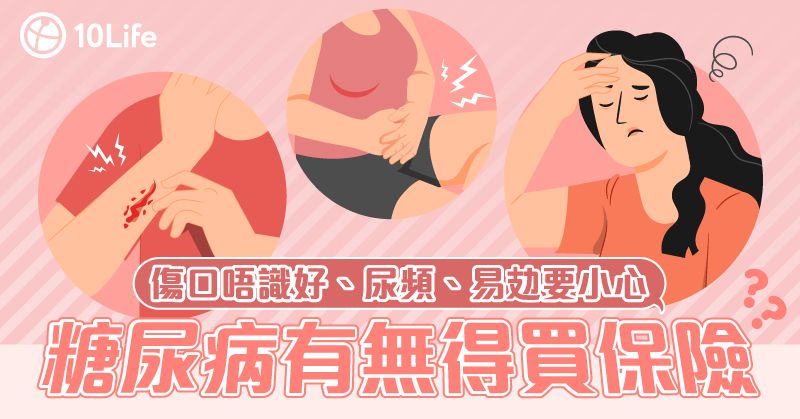
Diabetes is a common chronic disease. According to statistics from the Hospital Authority, there are currently approximately 700,000 people with diabetes in Hong Kong, meaning that one in every 10 Hong Kong residents has diabetes. If blood sugar levels remain high over a prolonged period, they may affect the functioning of the body's organs and lead to complications such as diabetic kidney disease, diabetic retinopathy and even stroke. Therefore, early diagnosis and appropriate treatment are extremely important. Although diabetes cannot currently be cured, the condition can be managed through medication, a balanced diet and other measures. In addition, there is now insurance specifically designed for people with diabetes available on the market.
What is diabetes?
Diabetes is a disease caused by metabolic dysfunction in the body. After digestion, carbohydrates are converted into glucose, which is absorbed by the small intestine and enters the bloodstream, becoming blood glucose. Under normal circumstances, the pancreas secretes insulin to help blood glucose enter the body's cells. If insulin secretion is insufficient, or the body is unable to use insulin, blood glucose levels will rise.
According to the guidelines of the World Health Organization, a fasting blood glucose level (that is, having not eaten for 8 hours) above 7 mmol/L, or a blood glucose level two hours after a meal above 11.1 mmol/L, indicates diabetes. If blood glucose is higher than normal but does not meet the diagnostic criteria, the condition is considered prediabetes. These patients also need regular examinations to monitor their condition.
What causes diabetes?
Diabetes can be classified into four types according to its causes, with type 2 diabetes being the most common, accounting for more than 90% of all cases.
Type | Cause |
Type 1 diabetes | Due to genetic and autoimmune problems, the cells that produce insulin are destroyed, making it completely impossible for the body to produce insulin. This type mainly affects children and young people. |
Type 2 diabetes | It is mainly caused by poor dietary habits, obesity and a lack of exercise. The body's cells are unable to absorb and utilise glucose effectively, resulting in an excess of sugar accumulating in the blood. |
Gestational diabetes | It is caused by changes in hormone secretion during pregnancy and usually resolves after delivery. |
Other types of diabetes | Caused by genetic disorders that result in insufficient insulin secretion; complications of pancreatitis; the effects of medication, etc. |
What are the symptoms of diabetes? How is it diagnosed?
The symptoms of diabetes are not obvious in the early stages. Some patients may frequently experience thirst, frequent urination, weight loss, fatigue, blurred vision, itchy skin and wounds that are slow to heal. However, some patients may not experience any of the above symptoms and only discover that they have diabetes when complications arise. Regular check-ups can help with early diagnosis. The main testing methods include:
How is diabetes treated? Can it lead to complications?
Diabetes cannot currently be cured, but the condition can be controlled through diet and medication:
If the condition is not properly controlled, persistently high and unstable blood sugar levels can damage the blood vessels and nervous system, thereby affecting the function of the body’s organs and causing complications such as cerebrovascular disease including stroke, retinopathy, cataracts, coronary heart disease, heart failure, kidney failure and limb ulcers. If a lower-limb ulcer becomes infected and fails to heal, amputation of the lower limb may be necessary. In addition, diabetes may also cause acute hypoglycaemia or hyperglycaemia.
How can diabetes be prevented?
Healthy lifestyle habits can help prevent diabetes, including:
People with high blood pressure, high blood lipid levels or obesity (i.e. a BMI above 23), those aged over 45, and those with a family history of diabetes among their immediate relatives are considered to be at high risk. Studies have also shown that women who have had gestational diabetes are more likely to develop type 2 diabetes later in life. Therefore, even after recovering following childbirth, they should continue to focus on maintaining a balanced diet.
Can people with diabetes purchase medical insurance?
Like many patients with chronic illnesses, people with diabetes have historically found it difficult to purchase medical insurance. Fortunately, in recent years, many insurance companies have gradually relaxed their underwriting restrictions for diabetes, including for critical illness and medical insurance. However, related complications may still be listed as exclusions, such as blindness, heart disease and kidney failure.
Some companies have also launched medical and critical illness insurance plans specifically for people with diabetes. For example, YF LifeYF Life’s 「首選糖尿保」 focuses on covering serious illnesses related to diabetes, including blindness, coronary artery surgery, heart disease, kidney failure, stroke and limb amputation. Cigna’s 「信諾糖路同行醫療保」 provides hospitalisation medical coverage for insured persons with type 1 or type 2 diabetes, or prediabetes. In addition, Sun Life永明’s 「萬家康安心保」 also accepts applications from people with diabetes and provides lifelong cancer coverage.
As the coverage of the insurance products mentioned above is complex, you may refer to the policy terms or consult a 10Life insurance adviser if you have any questions.
Note:
1. Sources: Hospital Authority, Hong Kong Diabetes Association, media reports and insurance companies
2. Last updated: 31 October 2024.
This English version of this article has been generated by machine translation powered by AI. It is provided solely for reference purposes. In the event of any discrepancy or inconsistency between this translation and the original Chinese version, the Chinese version shall prevail.
Our team of professional content researchers focussing on insurance
Our team of professional content researchers focussing on insurance
10Life Product Comparison and 10Life Insurance Ratings are developed by 10Life Financial Limited, an authorised insurance broker company licensed with the Insurance Authority under License Number FB1526. 10Life Product Comparison and 10Life Insurance Ratings are developed for generic customer segments using mathematical calculations based on product information, facts and data, and are not influenced by any partnerships with or fees received from insurance companies. Any information on 10Life Platform ("10Life Information"), including but not limited to Product Comparison, Product Ratings, Blog Articles are intended for general education purpose and reference only. None of the 10Life Information is intended, nor should they be considered or relied upon, as regulated advice, insurance, financial, investment or professional advice, recommendation, approval, endorsement, invitation or solicitation in respect of any insurance, financial or investment products. 10Life Information does not take into account your individual needs. Reading 10Life Information should not be considered as conducting a suitability assessment, and is not sufficient to form the basis of any decisions to purchase any insurance products. You should rely on information authorised by insurance companies, carry out your own research and/or seek independent advice from licensed intermediaries before purchasing any insurance products or making any insurance decisions. While reasonable effort is used when collecting, validating and updating 10Life Information from various channels, none of 10Life Group and its subsidiaries, affiliates, agents, directors, officers and employees will be responsible for any liability, claim or loss arising from or associated with you using 10Life Information. No warranty, representation or guarantee is given by 10Life Group and its subsidiaries on the accuracy, completeness and timeliness of the information. If you have any questions on 10Life Product Comparison and 10Life Insurance Ratings, please email us at enquiries@10life.com




 Talk to 10Life on WeChat
