









10Life Financial Limited
Enquiries: enquiries@10life.com
Hotline: (852) 3705 1599
Address: 16/F Greatmany Centre, 109-115 Queen’s Road East, Wan Chai, Hong Kong



What is the cruciate ligament? Where is it located?
Causes of Cruciate Ligament Tears/Ruptures
Methods for diagnosing cruciate ligament injuries
Treatment Methods for Cruciate Ligament Tears
Post-operative recovery and care methods
Can cruciate ligament tear surgery be Claim under medical insurance?
Frequently Asked Questions


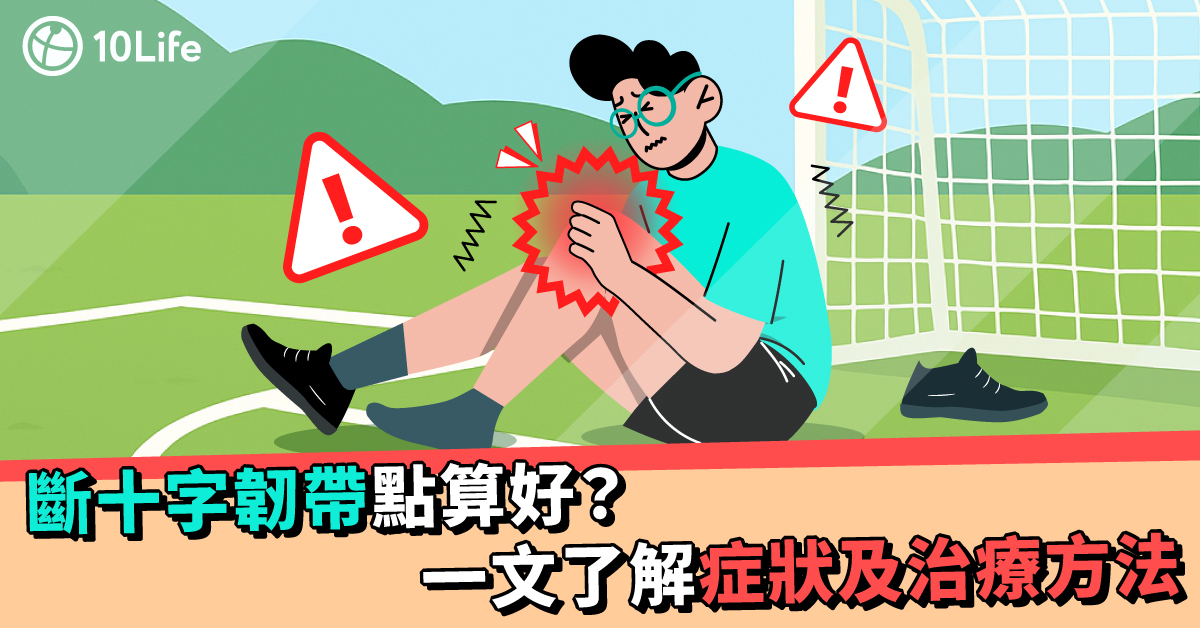
What exactly does the commonly heard term “a torn cruciate ligament” refer to? In fact, cruciate ligament tears are common sports injuries that can occur while playing football, basketball or even from a fall in everyday life. Where are the cruciate ligaments located? What does it feel like when they tear? How are they treated? This time, 10Life will introduce the symptoms, causes and treatment methods for cruciate ligament tears.
What is the cruciate ligament? Where is it located?
Before understanding cruciate ligament tears, let us first learn about the cruciate ligaments. There are two ligaments arranged in a cross within the knee joint: the anterior cruciate ligament (ACL) and the posterior cruciate ligament (PCL). Together, they maintain the movement and stability of the knee joint, enabling us to stand, walk, run and jump. Therefore, once a tear occurs, it may affect daily activities. Cruciate ligament injuries are also often accompanied by damage to other structures, so a thorough examination is essential.
The anterior cruciate ligament connects the thigh bone (femur) and shin bone (tibia). It mainly limits forward movement of the tibia and provides stability when the knee joint is flexed, rotated or moved sideways.
The posterior cruciate ligament is located at the back of the knee. Its function is opposite to that of the anterior cruciate ligament, primarily preventing the tibia from moving backwards. This ligament is less likely to tear as a result of sporting activities and is usually injured in traffic accidents, falls or severe impacts.
Causes of Cruciate Ligament Tears/Ruptures
The causes of anterior and posterior cruciate ligament tears are different, as explained below:
An anterior cruciate ligament tear usually occurs during exercise. When a movement is too forceful and exceeds the amount of force the ligament can withstand, it may result in a tear or rupture. This is common in sports that involve rapid running and jumping, sudden stops and changes of direction, such as football, basketball and badminton. Even stepping awkwardly while hiking can cause a strain.
Common injury scenarios:
The posterior cruciate ligament is less commonly injured and usually requires a powerful external impact to rupture, such as in a road traffic accident or when the knee strikes the ground directly during a fall.
Common injury scenarios:
Methods for diagnosing cruciate ligament injuries
To accurately determine whether the cruciate ligament is torn, doctors will generally arrange an MRI scan to clearly assess whether the ligament has been damaged and check whether the meniscus or other tissues have also been injured. At the same time, an X-ray examination may also be recommended to determine whether there are other issues, such as fractures.
Treatment Methods for Cruciate Ligament Tears
In fact, cruciate ligament tears are not uncommon. However, with early diagnosis and appropriate treatment, a full recovery may be possible. Treatment can generally be divided into surgical and non-surgical treatment.
If the cruciate ligament tear is severe, other tissues have been injured (such as the meniscus), or the patient needs to continue participating in sports, the doctor will generally recommend cruciate ligament reconstruction surgery. During the procedure, the torn ligament is removed and replaced with a graft taken from the patient’s own tendon, such as the hamstring tendon or patellar tendon.
However, not everyone needs surgery. If the anterior cruciate ligament tear is minor, or the patient does not usually exercise, the doctor may recommend trying physiotherapy first and monitoring the condition. In addition, the posterior cruciate ligament has a greater capacity for natural healing. As long as it is not completely torn, surgery is usually not required.
If the cruciate ligament is only mildly torn, the doctor will generally recommend non-surgical treatment. Common non-surgical treatments include:
Non-surgical treatment carries a lower risk, but it cannot repair an already damaged ligament. If the knee remains unstable afterwards, it may lead to further damage to the meniscus or cartilage, so the doctor may subsequently recommend considering surgery.
Post-operative recovery and care methods
Anterior cruciate ligament reconstruction surgery is currently primarily performed using minimally invasive techniques, requiring only small incisions in the knee, with either regional or general anaesthesia. After surgery, an overnight hospital stay is generally required for observation. In the early stages after surgery, crutches can be used to assist with slow walking, but you may experience mild aching in the knee. After approximately two weeks, you can gradually reduce your reliance on crutches and progressively resume normal activities. However, recovery time varies from person to person: some may require more than six months, while others may take up to a year. After surgery, follow your doctor’s instructions to perform rehabilitation exercises regularly, such as bending and extending the leg and raising the leg. You should also get plenty of rest and avoid weight-bearing or strenuous exercise.
Can cruciate ligament tear surgery be Claim under medical insurance?
Anterior cruciate ligament surgery can easily cost tens of thousands of Hong Kong dollars, and without medical insurance coverage, the financial burden can be considerable. With Voluntary Health Insurance Scheme (VHIS) coverage, medical expenses can be significantly reduced, while some plans also cover post-operative physiotherapy, providing more comprehensive support during recovery. Would you like to find out which medical insurance plan best suits you? Please feel free to contact a licensed insurance adviser at 10Life for impartial and professional advice.
Frequently Asked Questions
Generally speaking, it takes approximately 6 months from surgery to full recovery, although some patients may need up to 1 year to fully regain their original athletic ability.
If appropriate treatment is not received, it may lead to long-term instability of the knee joint and even increase the risk of developing osteoarthritis. However, with timely and proper treatment, together with rehabilitation exercises, most patients can achieve a good recovery.
As with other surgical procedures, cruciate ligament reconstruction surgery carries certain risks, such as infection, wound inflammation and possible complications including graft rejection. However, as it is a minimally invasive procedure, the risks are relatively low. Most patients can recover well when the surgery is performed by an experienced doctor and rehabilitation is carried out as instructed.
Further reading
【Meniscus tear】Learn about the symptoms, location, causes and treatment of meniscus tears
What is the Voluntary Health Insurance Scheme? Learn about the differences between the Voluntary Health Insurance Scheme and medical insurance
Last updated: 28 April 2025
This English version of this article has been generated by machine translation powered by AI. It is provided solely for reference purposes. In the event of any discrepancy or inconsistency between this translation and the original Chinese version, the Chinese version shall prevail.

Our team of professional content researchers focussing on insurance
Our team of professional content researchers focussing on insurance
10Life Product Comparison and 10Life Insurance Ratings are developed by 10Life Financial Limited, an authorised insurance broker company licensed with the Insurance Authority under License Number FB1526. 10Life Product Comparison and 10Life Insurance Ratings are developed for generic customer segments using mathematical calculations based on product information, facts and data, and are not influenced by any partnerships with or fees received from insurance companies. Any information on 10Life Platform ("10Life Information"), including but not limited to Product Comparison, Product Ratings, Blog Articles are intended for general education purpose and reference only. None of the 10Life Information is intended, nor should they be considered or relied upon, as regulated advice, insurance, financial, investment or professional advice, recommendation, approval, endorsement, invitation or solicitation in respect of any insurance, financial or investment products. 10Life Information does not take into account your individual needs. Reading 10Life Information should not be considered as conducting a suitability assessment, and is not sufficient to form the basis of any decisions to purchase any insurance products. You should rely on information authorised by insurance companies, carry out your own research and/or seek independent advice from licensed intermediaries before purchasing any insurance products or making any insurance decisions. While reasonable effort is used when collecting, validating and updating 10Life Information from various channels, none of 10Life Group and its subsidiaries, affiliates, agents, directors, officers and employees will be responsible for any liability, claim or loss arising from or associated with you using 10Life Information. No warranty, representation or guarantee is given by 10Life Group and its subsidiaries on the accuracy, completeness and timeliness of the information. If you have any questions on 10Life Product Comparison and 10Life Insurance Ratings, please email us at enquiries@10life.com




 Talk to 10Life on WeChat
