









10Life Financial Limited
Enquiries: enquiries@10life.com
Hotline: (852) 3705 1599
Address: 16/F Greatmany Centre, 109-115 Queen’s Road East, Wan Chai, Hong Kong



The difference between self-drive travel insurance and car insurance provided by car rental companies
Compare travel insurance (including car rental excess comparison)
What insurance should you buy for a self-drive trip?
Motor Insurance Claims Guide for Self-Drive Travel
What are the differences between self-drive travel insurance for Japan, South Korea and Taiwan?
Frequently Asked Questions


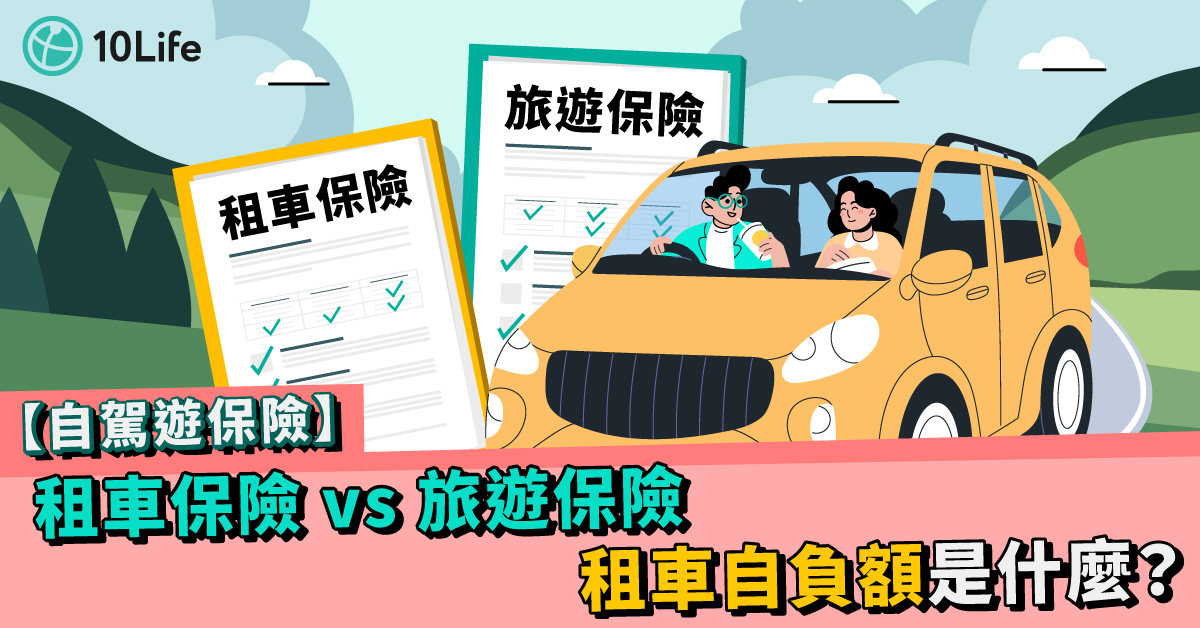
In recent years, more and more Hong Kong people have enjoyed self-drive trips overseas. This offers greater flexibility in planning itineraries, while also allowing them to explore local attractions in greater depth. However, car rental insurance and Travel Insurance are not a choice between one or the other, but rather complementary. In the event of an accident, the “rental vehicle excess” is often where the protection gap lies. Policyholders should focus on comparing the maximum excess cover and the number of claims allowed, because a high insured amount does not necessarily mean the cover is complete. In addition, NOC (loss of use compensation), excluded vehicle types and claim conditions also affect the actual level of protection. As a major insurance platform in Hong Kong, 10Life will explain each of these points in turn, so that everyone can travel with peace of mind.
The difference between self-drive travel insurance and car insurance provided by car rental companies
What is commonly referred to as “self-drive travel insurance” is not an independent insurance product, but refers to basic travel insurance that includes, or offers as an optional add-on, “Rental Vehicle Excess Coverage”. As for the motor insurance provided by the local car hire company, this is arranged by the car hire company and may already be included in the rental fee, or may need to be purchased separately. It generally comes with a fixed excess (also known as a “deductible”).
In other words, if an accident occurs involving a hired vehicle, the car hire company’s insurance may not fully cover the repair costs, and the renter may first have to bear the excess specified in the contract. Rental vehicle excess coverage under travel insurance can then reimburse all or part of the relevant costs in accordance with the policy terms.
Compare travel insurance (including car rental excess comparison)
Assuming the insured person is an adult, for a 4-day trip, with the destination being Japan/Mainland China or Taiwan/South Korea/Thailand/Vietnam
| Product | Premium | Overall Score | Car Rental Excess |
| MSIG iTravel Go(單次旅程) Plan A | $164 | 9.5 | 10,000 |
$167 | 8.9 | 15,000 | |
| BOC 中銀 Universal Voyage Travel Protection Plan Diamond Plan (with Enhanced Protection) | $266 Save 30% when you take out the specified plan online via 10Life →Apply Now← | 8.8 | 5,000 |
| Generali 忠意保險 Bravo Travel Protector Premier Plan | $191 Save 40% when you take out the specified plan online via 10Life →Apply Now← | 8.6 | 5,000 |
| Starr TraveLead Travel Insurance Premier Plan | $143 Save 40% when you take out the specified plan online via 10Life →Apply Now← | 8.4 | 5,000 |
| AXA 安盛 「卓越」豐盛優遊樂 - 至尊計劃 | $189 Save 35% when you take out the specified plan online via 10Life →Apply Now← | 8.4 | 5,000 |
| QBE 昆士蘭保險 Single Trip Travel Insurance Gold Plan | $149 Save 30% when you take out the specified plan online via 10Life →Apply Now← | 7.8 | 5,000 |
| Ping An Online Travel Insurance Deluxe Plan | $167 Save 20% when you take out the specified plan online via 10Life →Apply Now← | 7.0 | 10,000 |
| Note: Assuming the insured person is an adult, for a 5-day trip, with the destination being Japan/Mainland China or Taiwan/South Korea/Thailand/Vietnam. Product information last updated on 13 July 2026 | |||
| Item | Self-drive Travel Insurance / Travel Insurance | Car Hire Company Motor Insurance |
| Main cover | Medical expenses, baggage, flight delay and rental excess | Damage to the rented vehicle and third-party liability |
| Vehicle damage | Does not directly pay for vehicle repair costs; only reimburses the “rental excess” you have to bear (for example, HK$5,000–15,000) | Covers repair costs, but the renter generally has to pay an excess first |
| Third-party liability (injury to others or damage to others’ property) | Generally not covered | Primary source of cover; the benefit amount depends on the rental plan and local regulations |
| What should you pay attention to? | The maximum limit for excess cover, whether loss of income compensation is covered, and vehicle type and claims restrictions | The excess amount, third-party liability limit, and whether the vehicle damage cover / comprehensive cover includes loss of income compensation |
Insurance provided by overseas car rental companies generally covers vehicle damage, but it comes with an excess. In Japan, for example, the excess is usually around JPY 50,000 to 100,000; in South Korea, it can range from several hundred thousand Korean won. In both places, you can usually purchase an additional CDW or Zero Deductible plan to reduce the excess. In Hong Kong self-drive travel insurance, the car rental excess cover (typically around HKD 5,000 to 15,000) is specifically designed to reimburse this cost; if the excess stated in the rental agreement is higher than the cover limit, the policyholder must bear the difference.
Car rental companies’ insurance usually only starts paying out after the excess has been exceeded, whereas the “car rental excess cover” in self-drive travel insurance can directly reimburse this excess, easing unexpected expenses. However, it is important to check whether the scope of cover includes NOC (loss of use charges), as policy terms vary between insurers. You should read the relevant terms carefully before purchasing.
The insurance provided by car rental companies mainly focuses on vehicle damage and third-party liability, and medical cover for drivers and passengers is generally limited or even absent. In contrast, travel insurance offers higher overseas medical cover, including emergency medical evacuation, hospitalisation and surgery expenses.
Basic car rental insurance in Japan, South Korea and Taiwan usually already includes liability cover for third-party bodily injury and property damage. However, Hong Kong self-drive travel insurance generally does not cover such third-party liability—if the policyholder negligently damages another person’s vehicle or property while driving, the self-drive travel insurance will not cover the loss, and the claim must be handled by the car rental company’s insurance. It is therefore essential to confirm before departure whether the car rental company’s basic insurance provides sufficient third-party liability cover.
Self-drive travel insurance is attached to standard travel insurance, so it also covers baggage loss, flight delays, trip cancellation and loss of personal belongings.
Further reading:
【Travel Insurance】Compare trip delay cover across 10 products — can flight delays be compensated up to $3,600?
【Travel Insurance Mobile Phone / Computer / Camera Cover】Compare personal belongings cover across 9 popular travel insurance plans (with claim tips)
What insurance should you buy for a self-drive trip?
The key protection points to check vary depending on the car rental arrangement:
Car rental situation | Recommended action |
The car rental company only provides basic vehicle insurance | Purchase travel insurance with car rental excess cover |
Zero excess / comprehensive cover already purchased | You still need to buy travel insurance to cover medical expenses, baggage and other risks |
Calculation example
Item | Amount |
Repair cost | HK$52,000 |
Car rental excess | HK$15,000 |
Travel insurance car rental excess cover | HK$15,000 |
Final amount borne by yourself | HK$2,000 |
Motor Insurance Claims Guide for Self-Drive Travel
If you are unfortunately involved in a traffic accident or your vehicle is damaged during a self-drive trip, you should report the incident to the police immediately and obtain a police report or accident record from the local authorities. At the same time, remember to keep the car rental receipt, repair invoices, medical reports and relevant expense receipts, so that you can apply for insurance compensation later.
Most insurers require claims to be submitted within 21 to 30 days after the incident, so it is advisable to handle the matter as early as possible to avoid missing the deadline. If the insurer offers online claims or electronic document upload services, this can save time and speed up the approval process. If you are unsure, you may first call the insurer’s claims hotline for assistance to ensure the application is completed smoothly.
What are the differences between self-drive travel insurance for Japan, South Korea and Taiwan?
For self-drive travel in Japan, the mandatory third-party liability insurance (“Jibaiseki Hoken”) covers third-party bodily injury and death. The rental car company’s excess is generally around JPY 50,000 each, while property damage and vehicle damage total about JPY 100,000. CDW can waive the excess, but it generally does not include NOC (non-operation charge) compensation for business interruption.
Further reading:
【日本自駕遊攻略 2026】香港人自駕遊日本12大注意事項
內地自駕遊有咩要注意?內地租車VS 港車北上點揀好?
Korea’s mandatory liability insurance is generally already included in the rental fee, but the vehicle damage excess remains payable by the renter. Renters may consider purchasing additional CDW or a zero-excess option to reduce the risk of vehicle damage excess.
Taiwan’s compulsory insurance is generally already included in the rental fee, while the vehicle damage insurance excess is approximately TWD 5,000 to 10,000. Renters should assess, based on the car rental contract and their travel needs, whether to purchase comprehensive cover.
If you want to save time, compare over 70 travel insurance plans in the market instantly to see the cover and premiums at a glance, with actuarial ratings specially provided.

Frequently Asked Questions
Yes. The rental company’s motor insurance mainly covers vehicle damage and third-party liability; travel insurance, on the other hand, covers risks such as overseas medical expenses, lost baggage, flight delays and trip cancellations. If the rental insurance has an excess, you may also claim reimbursement through the rental car excess cover under travel insurance.
NOC is the business loss compensation charged by the rental company for vehicle repairs and the period when the vehicle cannot be rented out, and it is different from the vehicle repair excess. CDW, comprehensive rental car insurance and travel insurance may not include NOC, so you should check separately with the rental company and the insurer before taking out cover.
In addition to comparing the cover limit for rental car excess, you should also note the number of claims allowed per trip, whether vehicle types such as SUVs, campervans and motorcycles are covered, and whether the nominated driver, driving roads and rental agreement meet the policy requirements.
You should first ensure everyone is safe, report the incident to the police and notify the rental company, then take photos of the scene and the vehicle damage. Keep the police record, rental agreement, accident report, repair documents and proof of excess payment; generally, you must first pay the excess to the rental company before applying for reimbursement from the travel insurance company.
Common situations include driving by a driver not named in the contract, no valid driving licence, drink-driving or unlawful driving, breach of the rental agreement, failure to report to the police or notify the rental company as required, driving on non-covered roads, and use of non-covered vehicle types. Pre-existing damage to the vehicle or normal wear and tear are also usually not covered.
This English version of this article has been generated by machine translation powered by AI. It is provided solely for reference purposes. In the event of any discrepancy or inconsistency between this translation and the original Chinese version, the Chinese version shall prevail.
I’m delighted to be part of 10Life in building a one stop insurance platform.
10Life Product Comparison and 10Life Insurance Ratings are developed by 10Life Financial Limited, an authorised insurance broker company licensed with the Insurance Authority under License Number FB1526. 10Life Product Comparison and 10Life Insurance Ratings are developed for generic customer segments using mathematical calculations based on product information, facts and data, and are not influenced by any partnerships with or fees received from insurance companies. Any information on 10Life Platform ("10Life Information"), including but not limited to Product Comparison, Product Ratings, Blog Articles are intended for general education purpose and reference only. None of the 10Life Information is intended, nor should they be considered or relied upon, as regulated advice, insurance, financial, investment or professional advice, recommendation, approval, endorsement, invitation or solicitation in respect of any insurance, financial or investment products. 10Life Information does not take into account your individual needs. Reading 10Life Information should not be considered as conducting a suitability assessment, and is not sufficient to form the basis of any decisions to purchase any insurance products. You should rely on information authorised by insurance companies, carry out your own research and/or seek independent advice from licensed intermediaries before purchasing any insurance products or making any insurance decisions. While reasonable effort is used when collecting, validating and updating 10Life Information from various channels, none of 10Life Group and its subsidiaries, affiliates, agents, directors, officers and employees will be responsible for any liability, claim or loss arising from or associated with you using 10Life Information. No warranty, representation or guarantee is given by 10Life Group and its subsidiaries on the accuracy, completeness and timeliness of the information. If you have any questions on 10Life Product Comparison and 10Life Insurance Ratings, please email us at enquiries@10life.com




 Talk to 10Life on WeChat
