


false
Category
Author
Search for Articles
Trending Keywords
Category
Author
Search
Category
Author
Search
Editor's Pick

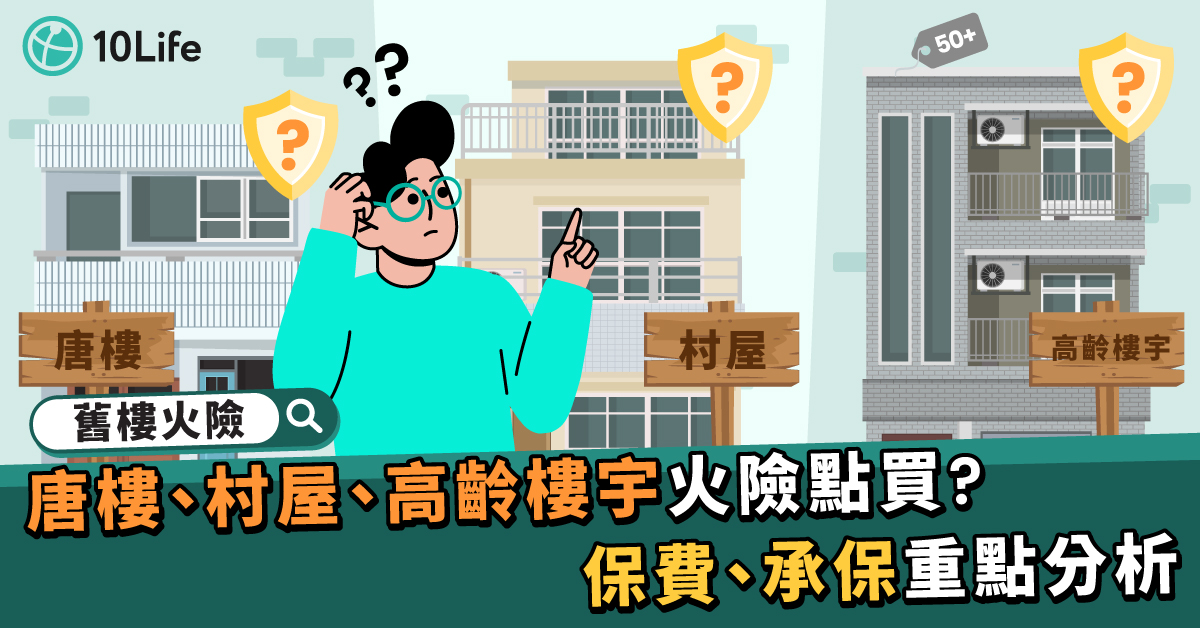
[Fire Insurance for Older Buildings] How to buy cover for tenement buildings, village houses and ageing buildings? Premiums and key underwriting points analyzed

2026-08-10 5min read

Many properties in Hong Kong are already over 30 or 40 years old. Older tenement-style flats, Tong Lau and village houses may serve as owner-occupied homes, and may also be used for rental income. When purchasing fire insurance, the building’s age, management condition, usage and whether there are any unauthorised structures may all affect whether cover can be underwritten, the premium and any claims.

In older buildings, wiring, plumbing and electrical distribution systems are more likely to be deteriorated, and common escape routes are also more easily obstructed by clutter. In addition, some buildings may not have fully adequate fire safety equipment, so insurers are generally more cautious during underwriting. If you want to protect the building structure while avoiding insufficient sum insured or policy terms that do not match, owners should first understand the property’s risks before taking out insurance. 

Why is fire insurance for older buildings more “sensitive”? 

Fire insurance mainly covers damage to the building structure caused by fire and incidents specified in the policy; home insurance, by contrast, mainly covers renovation, furniture, electrical appliances and personal belongings. There is no uniform territory-wide restriction on the age of buildings for fire insurance: some products state that there is no upper age limit, while others set a clear cap (commonly around 35 to 50 years). In practice, exceeding the threshold does not necessarily mean that cover is unavailable, but it usually requires an individual quotation or the submission of additional information for special underwriting arrangements.

Insurers will take a holistic view of the property’s wiring and structural condition, fire protection facilities, management and maintenance records, intended use, and the surrounding environment. Mixed-use buildings, or low-rise buildings with restaurants or workshops, are usually treated as higher risk; village houses near hillsides or in densely vegetated areas may also be affected by underwriting due to the risk of wildfires in recent years.

Premiums are generally calculated by multiplying the sum insured by the premium rate. A commonly seen annual rate in the market is about 0.03% to 0.15% of the sum insured, but older buildings do not necessarily fall into the highest premium band; the actual quotation still depends on the individual property and policy terms. You should also note the excess: the excess for incidents such as flooding, typhoons and landslips is usually higher than for ordinary fire incidents.  

表一:火險/樓宇結構保險比較(港元) 

保險公司保額 300 萬港元之首年保費保費率保障範圍自負額
中國平安
按揭火險 
$900
$1,500
經 10Life 網上投保指定計劃可享 6 折優惠
→立即投保←
0.041%

受保物業遭受火災,閃電,鍋爐爆炸或家用氣體造成的任何損失或損壞引起的重置費用(排水管及其裝置除外)。  

 (a) 每次事故索償為損失理算之10%,或最少自負額10,000港元,以較高者為準;  
(b) 因颱風/暴風雨/水災而引致或造成的索償,自負額為賠償額之首 3,000 港元#;
(c) 因地震(火警/震動/洪水)而引致或造成的索償,自負額為賠償額之首3,000港元#;
(d) 其他附加險原因之附加險索償,自負額為賠償額之首3,000 港元。  
忠意保險
火險
$976 
$1,502
經 10Life 網上投保指定計劃可享 65 折優惠
→立即投保←
0.033%

保障住宅建築結構遭受火災、閃電、家用鍋爐或燃氣爆炸造成的任何破壞或損失。 

延伸保障因水災、颱風、風暴、山泥傾瀉、地陷、罷工、暴動、蓄意破壞、山火、水缸溢瀉、喉管爆裂、灑水裝置失靈等事故造成的損失或損毀

(a) 因颱風/暴風雨/水災而引致或造成的索償,自負額為賠償額之首 3,000 港元#;(b) 因山泥傾瀉和地陷引致或造成的索償,自負額為賠償額之首港幣10,000 港元或損失的 10%,以較高者為準#
(c) 因地震(火警/震動/洪水)而引致或造成的索償,自負額為賠償額之首3,000 港元#
(d) 因(a), (b), (c) 之外原因之附加險索償,自負額為賠償額之首3,000 港元。
#每次損失意指每一事故按比例分攤條款計算後之損失,而保險期間內連續 72 小時內發生的事故均視為一次事故。
@假設樓齡22年、單位400呎  
註: 
1. 上述保險產品均提供網上報價或保費率,從而計算出有關保費及保費率。  
2. 若果是因應按揭貸款額而申請火險,有關保障範圍須符合銀行要求,消費者宜直接向銀行查詢。 
3. 有關保費並未包按揭保監局保費徵費。 
4. 上述產品排名根據保險公司首年保費。 
5. 資料以保險公司為準。

Old tenement buildings, tong lau and village houses 

For older multi-storey buildings with an owners’ corporation: the corporation or managing company will usually purchase building insurance / collective fire insurance for the entire building, covering the building structure and common areas. Owners should obtain the policy summary or a copy from the management office to check whether the sum insured is calculated on a reinstatement basis, whether the original fixtures and fittings and decorations inside the unit are covered, and whether the bank will accept the policy for mortgage purposes. However, even where collective cover is already in place, furniture, electrical appliances, collectibles and any improvements added by the owner may still need to be covered through home contents insurance.

Tenement buildings and village houses: these are not automatically declined, but insurers often place greater emphasis on the maintenance and risk profile of the entire building, such as whether there is management in place, escape routes, fire safety equipment, the condition of the exterior walls and rooftop, and whether the property is used for both residential and commercial purposes. Some products exclude these types of property, or require individual underwriting; before taking out cover, it is advisable to prepare information on the property’s use, maintenance records, fire safety equipment and structural details. If a tenement building does not have collective fire insurance, when the owner insures a single unit, the underwriter may also assess the condition of the entire building.  

Unauthorised building works and unauthorised alterations may not be covered

Some fire insurance policies require policyholders to comply with statutory requirements such as the Buildings Ordinance. Accordingly, opening up partition walls, removing walls that may form part of the structure, converting a separate kitchen into an open-plan kitchen, or adding a tin roof, glass room or loft on a rooftop, balcony or external wall may all breach the law, or involve fire and structural risks.

It should be noted in particular that, in an insurer’s assessment, unauthorised building works or non-compliant renovations are themselves regarded as an increase in risk, rather than being considered only where there is a direct causal link between the fire and the unauthorised structure. Unless the policyholder has obtained the insurer’s prior written consent for the relevant alterations before the damage occurs, once the condition of the insured premises changes as a result of the above alterations and the overall risk level increases, cover for the affected property may lapse. In other words, the key issue in disputes over policy liability is whether the risk has been increased by unauthorised building works or non-compliant works, and not merely whether such unauthorised building works directly caused the fire in question.

That said, this does not mean that any renovation will cause cover to disappear. The wording is aimed at alterations made without consent that increase the risk; some policies permit routine repairs and decoration within specified limits or scopes. The actual extent of cover depends on the schedule of benefits under the individual policy.

Before carrying out major renovation works, it is advisable to first have a qualified professional confirm whether approval is required, and to retain plans, approvals and work records. Where the works involve changes to structure, use or risk, the insurer should be notified before work begins, and construction should only proceed after written confirmation has been obtained. Failure to disclose material alterations at the time of taking out the policy may constitute misrepresentation, which may later give the insurer grounds to رفض?

Four steps to purchase fire insurance for an older building 

  1. First check any group insurance cover: obtain the policy details from the property management office or owners’ corporation, and confirm the sum insured for the structure, scope of cover, excess, and renewal date.
  2. Top up cover according to use: owner-occupiers can pair it with home insurance for renovations and contents; landlords should clarify the respective home insurance and third-party liability responsibilities of landlords and tenants, and set these out in the tenancy agreement, while the owner should also purchase fire insurance for the unit.
  3. Compare underwriting criteria, not just premiums: ask clearly about building age restrictions, whether tenement buildings/village houses are accepted, the documents required for individual underwriting, natural disaster excess, and exclusions relating to unauthorised works.
  4. Update the insurer as soon as any details change: after rewiring, pipe replacement, major repairs, alterations to the layout, or a change in use, notify the insurance company proactively to avoid any mismatch between the policy details and the actual situation. 

You can also compare a range of fire insurance products via 10Life to understand the scope of cover, premium rates and excess for each plan at a glance, and find the option that best suits your needs.

Further reading:
【Fire Insurance Comparison 2026】How is it different from home insurance? Which insurer offers better cover and lower prices?
【Must-read for owners】How is fire insurance sum insured calculated? Is fire insurance already included in management fees? Read the insurance guide now 

Frequently Asked Questions 

For older buildings without an owners’ corporation or collective fire insurance, can fire insurance still be purchased?

There is a chance, but it depends on the property’s maintenance condition and the insurer’s policy. Tenement buildings, buildings without management, or high-risk village houses may require individual underwriting, with owners needing to provide additional documents, or may face higher premiums and excesses. If there is a mortgage, it is also advisable to confirm as early as possible with the bank the policy requirements it accepts.

After the mortgage has been fully repaid, is it still necessary to renew fire insurance?

Once the mortgage has been fully repaid, banks will generally no longer require fire insurance as a mortgage condition. However, owners should still consider bearing the risk of reconstruction or repair after a fire themselves. For older buildings, whether to take out fire insurance should be based on reconstruction costs, personal financial capacity, and the building’s existing protection, rather than stopping cover simply because the bank no longer requires it.  

This English version of this article has been generated by machine translation powered by AI. It is provided solely for reference purposes. In the event of any discrepancy or inconsistency between this translation and the original Chinese version, the Chinese version shall prevail.

Oscar

I’m delighted to be part of 10Life in building a one stop insurance platform.

Oscar

I’m delighted to be part of 10Life in building a one stop insurance platform.

Disclaimer

10Life Product Comparison and 10Life Insurance Ratings are developed by 10Life Financial Limited, an authorised insurance broker company licensed with the Insurance Authority under License Number FB1526. 10Life Product Comparison and 10Life Insurance Ratings are developed for generic customer segments using mathematical calculations based on product information, facts and data, and are not influenced by any partnerships with or fees received from insurance companies. Any information on 10Life Platform ("10Life Information"), including but not limited to Product Comparison, Product Ratings, Blog Articles are intended for general education purpose and reference only. None of the 10Life Information is intended, nor should they be considered or relied upon, as regulated advice, insurance, financial, investment or professional advice, recommendation, approval, endorsement, invitation or solicitation in respect of any insurance, financial or investment products. 10Life Information does not take into account your individual needs. Reading 10Life Information should not be considered as conducting a suitability assessment, and is not sufficient to form the basis of any decisions to purchase any insurance products. You should rely on information authorised by insurance companies, carry out your own research and/or seek independent advice from licensed intermediaries before purchasing any insurance products or making any insurance decisions. While reasonable effort is used when collecting, validating and updating 10Life Information from various channels, none of 10Life Group and its subsidiaries, affiliates, agents, directors, officers and employees will be responsible for any liability, claim or loss arising from or associated with you using 10Life Information. No warranty, representation or guarantee is given by 10Life Group and its subsidiaries on the accuracy, completeness and timeliness of the information. If you have any questions on 10Life Product Comparison and 10Life Insurance Ratings, please email us at enquiries@10life.com

Whatsapp icon
Whatsapp icon
WeChat icon
WeChat icon
Enquiry icon Close icon
Back To Top
Whatsapp icon
Whatsapp icon
WhatsApp