









10Life Financial Limited
Enquiries: enquiries@10life.com
Hotline: (852) 3705 1599
Address: 16/F Greatmany Centre, 109-115 Queen’s Road East, Wan Chai, Hong Kong


What is No Claim Discount (NCD)/No Claim Bonus (NCB)? What is the difference between NCD and NCB?
How is the No Claim Discount (NCD) calculated?
Is the No Claim Discount (NCD/NCB) linked to the person or the vehicle?
Can the no claim discount (NCD/NCB) be transferred?
No-claim discount proof document
Will NCD/NCB be reset to zero after making a claim following an accident? How is it deducted?
If a traffic accident occurs, do I need to notify the insurance company to make a claim?
Will NCD/ NCB expire?
Car insurance tips


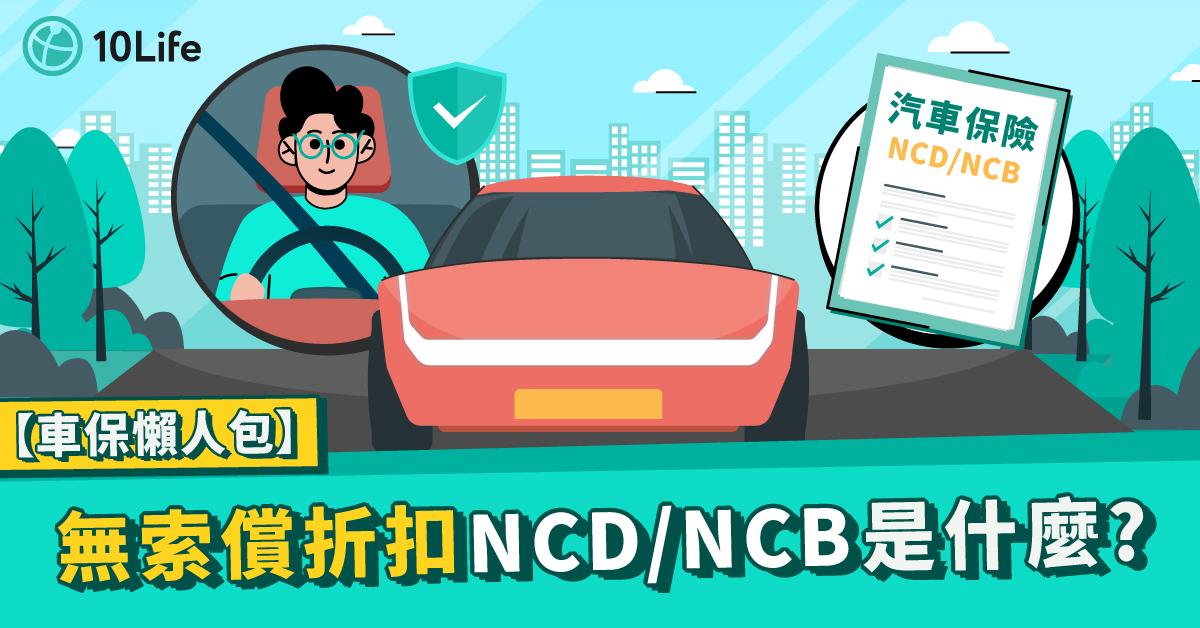
Motor insurance has always been complex. There are Third Party Only and Comprehensive policies, and it also involves the “No-Claim Discount (NCD/NCB)”, which means enjoying a lower premium by driving safely and making no claims. What, exactly, is the difference between NCD and NCB? How is NCD calculated? Is NCD/NCB linked to the driver or the vehicle? This time, 10Life will answer all your questions about NCD/NCB and explain the key points of car insurance in one go.
What is No Claim Discount (NCD)/No Claim Bonus (NCB)? What is the difference between NCD and NCB?
NCB/NCD (No Claim Bonus/Discount) means a no-claim discount. As long as the policyholder has not made any claim during the specified period, they can enjoy a more favourable premium when renewing the policy in the following year. Some people may feel somewhat confused about the difference between NCD and NCB. In fact, they mean exactly the same thing, with only the wording differing. Some insurers use “Bonus” to describe it, while more insurers use “Discount”. As this benefit is not an actual cash reward but a discount on the premium, the term NCD is more commonly used.
How is the No Claim Discount (NCD) calculated?
In Hong Kong, most motor insurance companies calculate the no-claim discount (NCD) on a step-by-step basis. In other words, the longer a driver maintains a claim-free record, the higher the premium discount they receive. However, the NCD calculation method may vary among insurers or vehicle types. Based on publicly available information, NCD discounts generally range from 20% to 60%. Among them, private cars can qualify for an NCD of up to 60%, significantly reducing vehicle owners’ insurance costs. In general, the NCD and NCB calculation for private cars is as follows:
| Year | NCD or NCB |
| 1st year of driving without any claims | 0% |
| 2nd consecutive year of driving without any claims | 20% (i.e. 20% off) |
| 3rd consecutive year of driving without any claims | 30% (i.e. 30% off) |
| 4th consecutive year of driving without any claims | 40% (i.e. 40% off) |
| 5th consecutive year of driving without any claims | 50% (i.e. 50% off) |
| 6th consecutive year or above of driving without any claims | 60% (i.e. 60% off) |
| Note: For reference only. NCD or NCB policies may vary between insurers. | |
Is the No Claim Discount (NCD/NCB) linked to the person or the vehicle?
NCD or NCB follows the policyholder rather than the vehicle. As such, it remains valid even if you switch to another insurer after the existing policy ends, provided that valid supporting documents are submitted. It may also be transferred to another vehicle of the same type registered under the policyholder’s name.
Can the no claim discount (NCD/NCB) be transferred?
As mentioned above, NCD is “attached to the person, not the vehicle”, so even if you change vehicles, the policyholder may still retain the existing No-Claim Discount and transfer it to the policy for the new vehicle. However, please note that NCD can only be transferred between the same type of vehicles, for example from one private car to another private car. It cannot be transferred between different vehicle types, such as from a motorcycle to a private car, and NCD will need to be accumulated again from scratch. In addition, if the policyholder wishes to change insurer, they may transfer the NCD to the new insurer as long as they purchase a new policy within 12 months after the old policy has expired or been cancelled, and provide valid documentary proof of the old policy, whether for a local transfer or a transfer from an overseas insurer to Hong Kong. However, please note that the way NCD is calculated may differ between insurers, and the original discount may not be fully transferable.
No-claim discount proof document
If the policyholder wishes to switch insurers while retaining the NCD discount, the following supporting documents are usually required:
If the policy is being transferred from an overseas insurer to Hong Kong, the relevant supporting documents are also required. However, as requirements may vary between insurers, it is advisable to check with the new insurer in advance to ensure the NCD can be transferred smoothly.
Will NCD/NCB be reset to zero after making a claim following an accident? How is it deducted?
Not necessarily. Most private car insurance companies have a “no-claims discount reduction mechanism”. Even if an accident occurs and a claim is made, the NCD will not immediately drop to zero; instead, it will be reduced by a certain percentage. For example, if you originally have a 50% NCD (i.e. half-price premiums), after a claim, the NCD may drop to 20% when the policy is renewed, rather than falling straight to zero. However, please note that this “discount reduction mechanism” mainly applies to private cars. For motorcycles, commercial vehicles and other vehicle types, the NCD may drop directly to zero after a claim. Therefore, when deciding whether to make a claim, vehicle owners should consider which has the lesser impact: “losing the no-claims discount” or “paying for the repairs themselves”.
If a traffic accident occurs, do I need to notify the insurance company to make a claim?
In the event of a traffic accident, the vehicle owner should notify the insurer within 24 hours, but whether to make a claim is at their own discretion. If it is a minor accident, when making a decision, they should weigh the impact of losing their No Claims Discount (NCD) against paying for the repairs themselves, and choose the option that is most beneficial to them. However, if the accident involves a third party, careful consideration is required to avoid the other party making a large claim later, which could lead to greater financial risk.
Will NCD/ NCB expire?
Generally speaking, most insurers stipulate that the NCD will expire within 12 months after the policy is cancelled or ends. In other words, if you do not purchase motor insurance for more than one year, the accumulated NCD will lapse, and the NCD under a new policy will need to be built up again. Therefore, if you do not plan to renew in the near term, it is advisable to check the specific time limit with your insurer in advance to avoid affecting any future discount benefits.
Car insurance tips
Under the Motor Vehicles Insurance (Third Party Risks) Ordinance, anyone who uses a motor vehicle on a road in Hong Kong must take out third party liability insurance for that vehicle (third party insurance), otherwise it is unlawful and may attract a maximum fine of HK$10,000 and imprisonment for 12 months.
Third party insurance covers third parties, such as passengers, pedestrians and other road users, to protect the driver against legal liability for bodily injury or death caused to those third parties. The law also stipulates that the minimum sum insured for liability arising from a single accident under “third party insurance” is HK$100 million.
For example, if a car owner unfortunately causes an accident while driving, injuring a pedestrian or damaging a roadside shop, and the car owner incurs legal liability, third party bodily injury and death liability insurance can cover the claim losses.
Motor insurance in Hong Kong is mainly divided into third party insurance and comprehensive insurance. As mentioned above, third party insurance covers third parties, such as passengers, pedestrians and other road users, but generally does not cover injury to the driver or damage to the insured vehicle itself. If you only have third party insurance, and the vehicle is damaged in an accident while the driver is also injured, you will have to bear the repair and medical expenses yourself.
Comprehensive insurance offers broader coverage. In addition to third party cover, it also covers vehicle damage, medical expenses for the owner or driver, and more, so the premium is naturally higher than third party insurance. Depending on the terms of different comprehensive policies, some insurers may provide wider coverage, which may be reflected in the premium.
Motor insurance premiums are determined according to a range of factors, including the vehicle model and valuation, the driver’s age and background, and the type of policy selected.
In terms of vehicle model and valuation, generally speaking, the newer the model, the higher its value or the stronger its performance, the more expensive the premium will be. For example, premiums for new sports cars or luxury cars will be higher than those for ordinary cars.
Insurers will also assess the driver’s age, driving experience, occupation, claims history, traffic violation record, and no claims discount or no claims bonus when determining premiums. In general, the younger the driver or the less driving experience they have, the higher the premium. The same applies to traffic violation records — for instance, if a driver has previously engaged in dangerous driving, the insurer may substantially increase the loading. As for occupation, some professions, such as construction workers who frequently enter and leave construction sites, have a higher likelihood of accidents, meaning higher premiums as well.
Motor insurance usually includes an excess, which is the amount the policyholder must bear when making a claim. For example, if a claim amounts to HK$20,000 and the policy has an excess of HK$3,000, the policyholder must pay the first HK$3,000, and the remaining HK$17,000 will be paid by the insurer. It is worth noting that excess levels vary by insurer, so this is an important consideration.
Finally, motor insurance premiums can fluctuate significantly. In addition to personal factors causing premiums to change from year to year, different car dealers and insurance brokers may also provide different quotes for the same product, for example due to relationship-based customer discounts (Client discount). Therefore, car owners are advised to compare options before buying motor insurance.
Further reading:
What is motor insurance? A comparison of third party insurance meaning, price and excess
[Electric Car Insurance] Why is it more expensive than traditional car insurance? How do the coverage ranges differ?
[Comprehensive Car Insurance vs Third Party Insurance] Is comprehensive cover worth it? Which provider offers the best value?
Note:
This article was last updated on 7 March 2025.
This English version of this article has been generated by machine translation powered by AI. It is provided solely for reference purposes. In the event of any discrepancy or inconsistency between this translation and the original Chinese version, the Chinese version shall prevail.
Our team of professional content researchers focussing on insurance
Our team of professional content researchers focussing on insurance
10Life Product Comparison and 10Life Insurance Ratings are developed by 10Life Financial Limited, an authorised insurance broker company licensed with the Insurance Authority under License Number FB1526. 10Life Product Comparison and 10Life Insurance Ratings are developed for generic customer segments using mathematical calculations based on product information, facts and data, and are not influenced by any partnerships with or fees received from insurance companies. Any information on 10Life Platform ("10Life Information"), including but not limited to Product Comparison, Product Ratings, Blog Articles are intended for general education purpose and reference only. None of the 10Life Information is intended, nor should they be considered or relied upon, as regulated advice, insurance, financial, investment or professional advice, recommendation, approval, endorsement, invitation or solicitation in respect of any insurance, financial or investment products. 10Life Information does not take into account your individual needs. Reading 10Life Information should not be considered as conducting a suitability assessment, and is not sufficient to form the basis of any decisions to purchase any insurance products. You should rely on information authorised by insurance companies, carry out your own research and/or seek independent advice from licensed intermediaries before purchasing any insurance products or making any insurance decisions. While reasonable effort is used when collecting, validating and updating 10Life Information from various channels, none of 10Life Group and its subsidiaries, affiliates, agents, directors, officers and employees will be responsible for any liability, claim or loss arising from or associated with you using 10Life Information. No warranty, representation or guarantee is given by 10Life Group and its subsidiaries on the accuracy, completeness and timeliness of the information. If you have any questions on 10Life Product Comparison and 10Life Insurance Ratings, please email us at enquiries@10life.com



 Talk to 10Life on WeChat
