









10Life Financial Limited
Enquiries: enquiries@10life.com
Hotline: (852) 3705 1599
Address: 16/F Greatmany Centre, 109-115 Queen’s Road East, Wan Chai, Hong Kong



What is appendicitis?
Common Symptoms of Appendicitis
Location of Pain in Appendicitis
What complications can appendicitis cause?
Can children get appendicitis?
Causes of Appendicitis
Diagnostic Methods for Appendicitis
Does Appendicitis Require Surgery? Common Treatment Methods
Prevention Methods for Appendicitis
Secure Medical Protection Early to Safeguard Your Health
Frequently Asked Questions


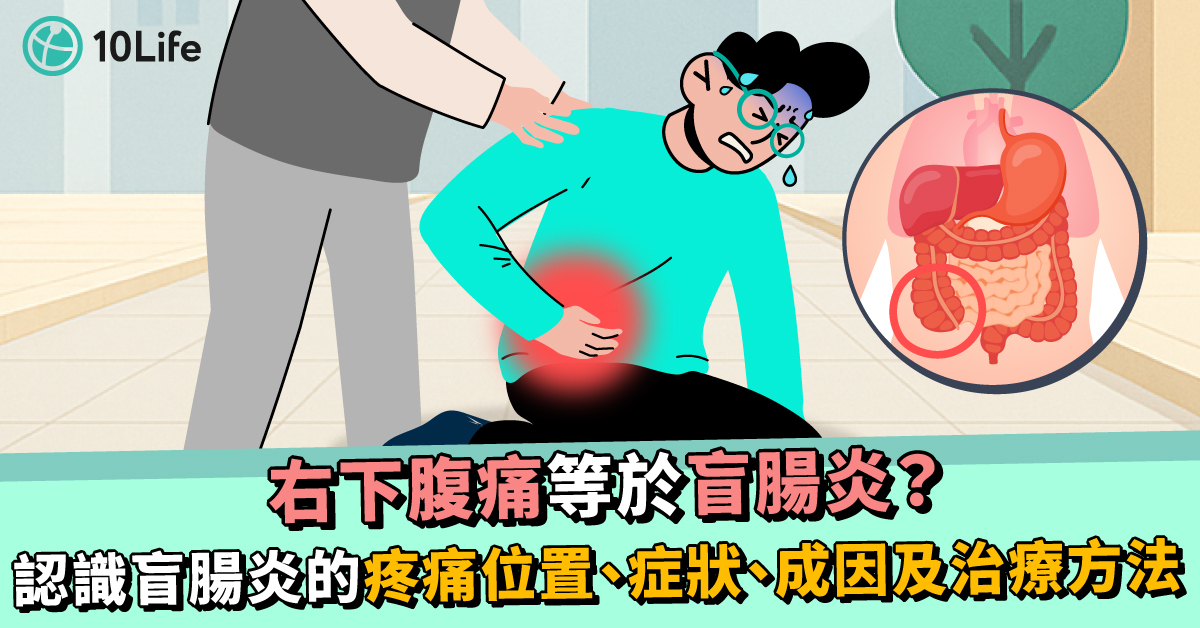
I'm sure many of us have heard the saying: "Don't run after eating, or you'll get appendicitis!" But what exactly is appendicitis? Does pain in the lower right abdomen always mean appendicitis? In fact, appendicitis is a common yet often misdiagnosed emergency condition. This article will delve into the pain location, common symptoms, causes, and treatment methods of appendicitis, helping you understand when to be alert and seek medical attention.
What is appendicitis?
Appendicitis, also known as inflammation of the appendix, refers to the inflammation of a small, tube-like structure located in the lower right abdomen, connected to the beginning of the large intestine—the appendix. Although the appendix itself has minimal function, if it becomes blocked or infected, it can cause severe inflammation. If not treated promptly, it may rupture, leading to dangerous complications.
Acute appendicitis is the most common type and is considered a surgical emergency. It develops rapidly, with symptoms often worsening significantly within 24 to 48 hours. Initially, pain typically begins around the navel and then shifts to the lower right abdomen (known as McBurney’s point), becoming increasingly severe. If left untreated, it may lead to appendix perforation, peritonitis, or sepsis, which can be life-threatening in severe cases. Therefore, acute appendicitis often requires emergency surgery to remove the appendix to prevent complications.
Chronic appendicitis, on the other hand, is relatively rare and usually results from incomplete recovery from acute appendicitis or prolonged mild obstruction. Symptoms often persist for a long time and may even recur intermittently over weeks to years. Early symptoms are typically mild or dull pain, concentrated in the lower right abdomen, sometimes accompanied by bloating, nausea, loss of appetite, or a slight fever. Due to the subtle nature of the symptoms, it is often mistaken for gastroenteritis or irritable bowel syndrome, making diagnosis more challenging. Confirmation usually requires ultrasound or a computed tomography (CT) scan.
Common Symptoms of Appendicitis
Patients may experience:
Location of Pain in Appendicitis
The appendix is located in the lower right abdomen, so most patients experience pain concentrated in this area. However, in the early stages, the pain often starts around the navel or upper abdomen before gradually moving to the lower right abdomen. During pregnancy, due to the expansion of the uterus, the position of the appendix shifts upwards, and pregnant women may feel pain in the upper right abdomen or on the side of the waist.
What complications can appendicitis cause?
If appendicitis is not treated in time, it may lead to severe infections. Below are two common complications:
When the appendix continues to be inflamed and the internal pressure rises, the appendiceal wall may rupture, allowing bacteria to spread into the abdominal cavity, causing peritonitis. Patients may experience severe abdominal pain, bloating, high fever, and nausea, and the abdomen may become rigid. If the infection is not surgically removed immediately, bacteria could enter the bloodstream, leading to sepsis or organ failure.
If the appendix ruptures, the body may attempt to isolate the infected area, forming a pus pocket. Patients may continue to have a fever or pain in the lower right abdomen. Doctors typically use a catheter to drain the pus and administer antibiotics. Once the infection subsides, an appendectomy is performed to prevent recurrence.
Can children get appendicitis?
Appendicitis is quite common in children and adolescents, particularly among young people aged 10 to 20. As young children may not be able to clearly express their discomfort, parents might easily mistake it for a simple stomach upset. If symptoms such as persistent pain in the lower right abdomen, fever, vomiting, or refusal to eat occur, parents should seek medical attention for their child as soon as possible. Doctors will confirm the cause through physical examination or ultrasound scans. Appendicitis tends to worsen more quickly in children, and early diagnosis and treatment can effectively prevent rupture or infection.
Causes of Appendicitis
Below are the common causes of appendicitis:
Hardened faeces or calcified deposits accumulate in the intestines, forming a "faecalith," which blocks the appendix duct, allowing bacteria to multiply in a confined environment and trigger inflammation.
Lymphatic tissue near the appendix may swell due to infection or inflammation, compressing or obstructing the duct, leading to fluid accumulation and bacterial growth inside the cavity.
Food residues or parasites such as roundworms may enter the appendix, potentially causing obstruction or irritating the mucosa, resulting in localised inflammation.
Though rare, intestinal tumours or abnormal tissue overgrowth can block the appendix, leading to chronic inflammation or infection.
Once the appendix is obstructed, bacteria (such as Escherichia coli) can proliferate extensively inside, worsening the inflammation and potentially forming an abscess. In severe cases, the appendix may rupture, causing peritonitis.
Diagnostic Methods for Appendicitis
The doctor will gently press on the abdomen to observe the location of pain, tenderness, and rebound tenderness. If there is significant tenderness or rebound pain in the right lower abdomen (McBurney's point), it is usually a key indicator of appendicitis.
For female patients, the doctor may perform a pelvic examination to rule out gynaecological conditions such as ovarian cysts, pelvic inflammatory disease, or fallopian tube infections that could cause lower abdominal pain.
If clinical symptoms remain unclear, the doctor will arrange further imaging tests, such as abdominal ultrasound, computed tomography (CT), or magnetic resonance imaging (MRI).
Does Appendicitis Require Surgery? Common Treatment Methods
Most appendicitis patients still undergo surgical removal as the primary treatment method, but "antibiotic treatment" has also become an alternative option for some non-complicated cases. For early or mild appendicitis, doctors may initially use antibiotics to control the infection and monitor whether the condition improves. If symptoms worsen or recur, surgical removal is still necessary to prevent further inflammation.
Appendectomy surgery (also known as appendix removal) is the primary method for treating appendicitis, commonly divided into two types:
The surgery is performed under general anaesthesia and typically takes about 30 minutes to 1 hour. After the procedure, patients usually need to stay in the hospital for observation for 3 to 10 days and follow the doctor’s instructions to gradually resume diet and activities.
Prevention Methods for Appendicitis
Although appendicitis is difficult to completely prevent, maintaining a healthy diet and lifestyle can help reduce the risk of inflammation:
Secure Medical Protection Early to Safeguard Your Health
Appendicitis often strikes unexpectedly, and if the condition deteriorates rapidly, emergency hospitalisation or even surgical removal may be required. Public healthcare systems are often under-resourced, with unpredictable waiting times. When faced with sudden illnesses like acute appendicitis, opting for a private hospital can provide faster treatment, though the surgical costs, which can easily amount to tens of thousands, represent a significant expense for patients and their families. Securing appropriate medical insurance in advance ensures that the insured has the freedom to choose—receiving prompt treatment and recuperating in a comfortable environment without the burden of financial stress. With a wide range of medical insurance products available in the market, each with varying coverage terms, understanding which product best suits individual needs or seeking assistance in interpreting policy details can be challenging. For personalised advice and professional planning, feel free to consult a licensed 10Life insurance advisor.
Frequently Asked Questions
No. Appendicitis is typically an acute inflammation, and if not treated promptly, it may worsen, leading to a ruptured appendix, which can cause peritonitis or sepsis. Even if symptoms temporarily subside, the condition may recur, so it is crucial to seek medical attention as soon as possible.
Generally, there are no significant effects. The appendix has limited function in the human body, and its removal does not impact intestinal digestion or absorption. Most patients can fully return to normal life after recovery.
In the initial period after surgery, focus on light and easily digestible foods such as plain porridge or soup noodles, and avoid greasy, spicy, or high-fat foods. As the wound heals and gastrointestinal function recovers, you can gradually return to a normal diet.
Recovery time depends on the type of surgery. Laparoscopic surgery typically allows a return to daily activities within 1 to 2 weeks, while open surgery may require 3 to 4 weeks. During this period, avoid lifting heavy objects or engaging in strenuous exercise, and follow up with your doctor as advised.
Further Reading
【MRI Price Comparison 2025】A Comprehensive Guide to MRI Scan Costs and Contrast Agent Side Effects
References:
The Chinese University of Hong Kong Hospital: How is Appendicitis Diagnosed? What are the Treatment Options?
Mayo Clinic: Appendicitis
OT&P Healthcare: Symptoms, Treatment, and Diagnosis of Appendicitis
Hospital Authority: Appendectomy
Last updated: 17 November 2025
This English version of this article has been generated by machine translation powered by AI. It is provided solely for reference purposes. In the event of any discrepancy or inconsistency between this translation and the original Chinese version, the Chinese version shall prevail.
Last updated: 9 Apr 2026

Our team of professional content researchers focussing on insurance
Our team of professional content researchers focussing on insurance
10Life Product Comparison and 10Life Insurance Ratings are developed by 10Life Financial Limited, an authorised insurance broker company licensed with the Insurance Authority under License Number FB1526. 10Life Product Comparison and 10Life Insurance Ratings are developed for generic customer segments using mathematical calculations based on product information, facts and data, and are not influenced by any partnerships with or fees received from insurance companies. Any information on 10Life Platform ("10Life Information"), including but not limited to Product Comparison, Product Ratings, Blog Articles are intended for general education purpose and reference only. None of the 10Life Information is intended, nor should they be considered or relied upon, as regulated advice, insurance, financial, investment or professional advice, recommendation, approval, endorsement, invitation or solicitation in respect of any insurance, financial or investment products. 10Life Information does not take into account your individual needs. Reading 10Life Information should not be considered as conducting a suitability assessment, and is not sufficient to form the basis of any decisions to purchase any insurance products. You should rely on information authorised by insurance companies, carry out your own research and/or seek independent advice from licensed intermediaries before purchasing any insurance products or making any insurance decisions. While reasonable effort is used when collecting, validating and updating 10Life Information from various channels, none of 10Life Group and its subsidiaries, affiliates, agents, directors, officers and employees will be responsible for any liability, claim or loss arising from or associated with you using 10Life Information. No warranty, representation or guarantee is given by 10Life Group and its subsidiaries on the accuracy, completeness and timeliness of the information. If you have any questions on 10Life Product Comparison and 10Life Insurance Ratings, please email us at enquiries@10life.com




 Talk to 10Life on WeChat
