









10Life Financial Limited
Enquiries: enquiries@10life.com
Hotline: (852) 3705 1599
Address: 16/F Greatmany Centre, 109-115 Queen’s Road East, Wan Chai, Hong Kong



What is chemotherapy (Chemotherapy)?
Principles of chemotherapy
How is chemotherapy administered?
What cancers can chemotherapy be used for?
What is the chemotherapy process like?
What are the common side effects of chemotherapy? How can they be alleviated?
Dietary Guidelines and Precautions During Chemotherapy
High cancer treatment costs? Critical illness cover can help ease the burden
Frequently Asked Questions


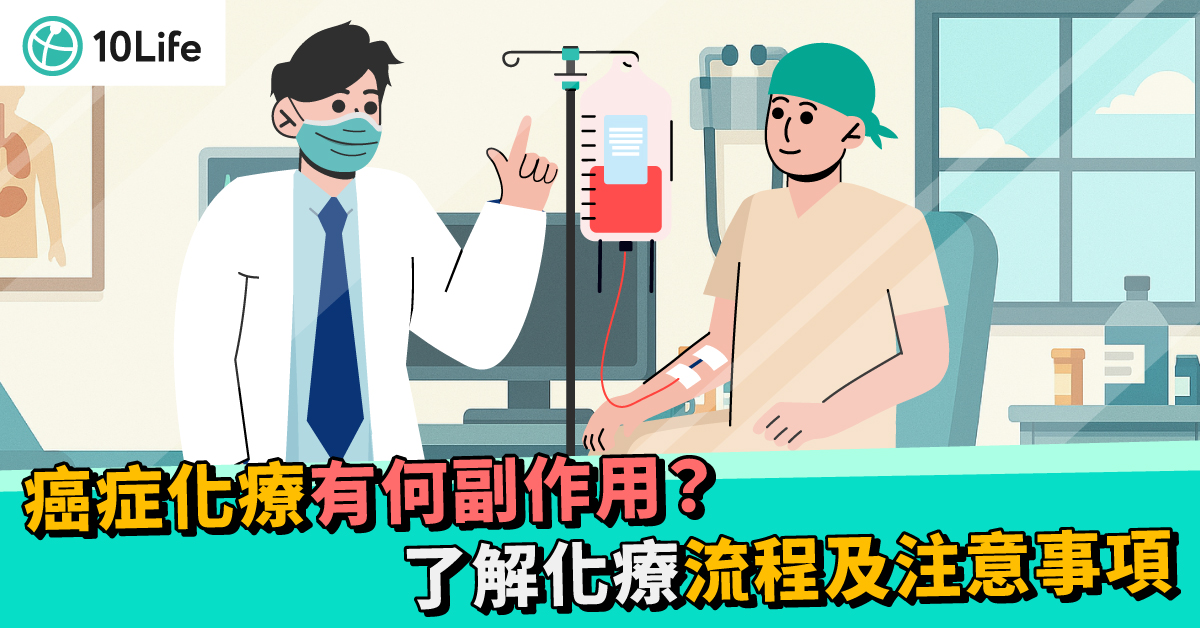
Cancer is not necessarily a dead end. With advances in medical technology, many treatments can help cancer patients overcome the disease, and “chemotherapy” is one of the most common treatment methods. What exactly is chemotherapy? How is it administered? What are its side effects, and what should you be aware of? In the following article, 10Life will introduce chemotherapy, enhance your understanding of it, and strengthen your confidence in treating cancer.
What is chemotherapy (Chemotherapy)?
Chemotherapy (Chemotherapy), commonly known as chemo, is a treatment that uses chemotherapy drugs to inhibit and destroy cancer cells. It targets rapidly dividing cells, disrupting the growth and spread of cancer cells. Chemotherapy may be used alone or in combination with other treatments, such as surgery and radiotherapy.
Principles of chemotherapy
Cancer cells arise from genetic mutations, causing certain cells in the body to grow uncontrollably, continue dividing and multiplying, and accumulate continuously. Chemotherapy can interfere with the division of cancer cells, effectively inhibiting their growth and potentially destroying them completely. However, chemotherapy drugs cannot fully distinguish between cancer cells and normal cells. Consequently, during treatment, they can also affect some normal cells that divide more rapidly, such as hair follicle cells, cells in the gastrointestinal lining and blood-forming cells in the bone marrow, thereby causing certain side effects.
How is chemotherapy administered?
Common methods of chemotherapy include:
What cancers can chemotherapy be used for?
There are currently more than 100 different chemotherapy drugs, which are mainly divided into seven major classes. Each class works differently and can target cancer cells during different stages of division and growth. Doctors will adjust the treatment according to the type of cancer and the patient’s condition.
Chemotherapy is commonly used to treat the following cancers:
Different cancers respond differently to chemotherapy drugs, so treatment regimens vary from person to person.
What is the chemotherapy process like?
In Hong Kong, the chemotherapy process is mainly divided into three stages, but personalised adjustments will be made according to the patient's condition:
What are the common side effects of chemotherapy? How can they be alleviated?
Fatigue is one of the most common side effects. Patients may experience persistent tiredness, difficulty concentrating and low mood, and may remain extremely tired even after completing treatment. Patients are advised to get plenty of rest, maintain a balanced diet and drink plenty of water. In addition, gentle exercise such as walking may also help improve their mental state.
Nausea or vomiting commonly occurs after chemotherapy, usually within a few hours of treatment, and may last for several days. Patients may take anti-sickness medication as advised by their doctor. In terms of diet, eat small, frequent meals, avoid greasy or spicy foods, eat slowly and chew thoroughly, and choose light, easily digestible foods such as congee, biscuits and soup. Avoid irritating smells such as cooking fumes or perfume, which can also help reduce discomfort.
Some chemotherapy medicines can affect bowel function, causing constipation or diarrhoea. If constipated, patients are advised to eat more high-fibre foods, drink plenty of water and do some gentle exercise. If diarrhoea occurs, avoid spicy, greasy or undercooked foods. Seek medical attention immediately if symptoms are severe.
Some chemotherapy medicines can irritate the lining of the mouth, causing ulcers, pain or difficulty swallowing. It is recommended to brush your teeth morning and evening with a soft-bristled toothbrush, and to use warm salt water or a prescribed mouthwash to keep the mouth clean and moist. Avoid very hot, salty or spicy foods, drink plenty of water or soup, and chew sugar-free chewing gum to stimulate saliva production and reduce dry mouth.
Not all chemotherapy medicines cause hair loss, but some patients may experience hair loss within 2 to 3 weeks of starting treatment, including loss of hair on the head and other body hair. Hair loss is usually temporary, and new hair will grow back within several months after chemotherapy ends. It is recommended to use a mild shampoo and avoid using a hairdryer or procedures such as hair dyeing or perming that may irritate the scalp. You may also choose to wear a hat, wig or headscarf to keep warm and cover the hair loss.
Chemotherapy may cause the skin to become dry, flaky or sensitive to sunlight, and some patients may experience itching or changes in skin colour. It is recommended to wear clothing made from soft materials to reduce friction and apply a moisturising product recommended by your doctor to dry areas. If redness, swelling or pain occurs at the injection site, contact your healthcare professional immediately.
Some chemotherapy medicines may affect the nerves, causing tingling, numbness or muscle weakness in the hands and feet. If these symptoms occur, notify your doctor immediately. Healthcare professionals may adjust the type or dosage of the medicine as appropriate, which can usually improve the symptoms effectively.
Some chemotherapy medicines may affect hearing, causing difficulty hearing high-pitched sounds or ringing in the ears. If you notice these symptoms, notify your doctor as soon as possible for further assessment, to prevent the problem from worsening.
Chemotherapy may suppress the bone marrow’s ability to produce blood cells, resulting in reduced numbers of white blood cells, red blood cells or platelets. A low white blood cell count increases the risk of infection, a low red blood cell count can cause anaemia, while a low platelet count may lead to persistent bleeding. Patients need regular blood tests to monitor their blood cell counts. Seek medical attention immediately if you develop a fever, mouth ulcers, severe fatigue or bleeding.
Chemotherapy may affect reproductive function in both men and women. Women may experience irregular periods or early menopause, while men may have a reduced sperm count. Before treatment, patients should discuss options for preserving eggs or sperm with their doctor and use appropriate contraception during chemotherapy to avoid affecting a foetus. A condom should also be used during sexual intercourse within 48 hours after chemotherapy.
Dietary Guidelines and Precautions During Chemotherapy
High cancer treatment costs? Critical illness cover can help ease the burden
Cancer treatment can be expensive, and if cancer unfortunately recurs or spreads, the costs of subsequent examinations and treatment can often be difficult to predict. A suitable critical illness insurance policy can provide financial support for patients and help ease the burden of medical expenses. As the scope of cover and features of critical illness products on the market vary, you should carefully compare whether the product features will significantly affect the premium based on your personal needs and budget when making your choice. If you would like to learn more about critical illness insurance or have any questions about the application details, please feel free to consult a 10Life licensed insurance adviser for professional advice and prepare for the future.
Frequently Asked Questions
The duration and length of chemotherapy will vary depending on the type of cancer, the severity of the condition, the treatment goals, and the patient’s tolerance of the medication. Generally speaking, chemotherapy is usually administered over 4 to 6 cycles, with an interval of approximately 3 to 4 weeks between each cycle to allow the body time to rest and recover.
The cost of chemotherapy varies depending on the type of medication used and the complexity of the treatment. At St. Paul’s Hospital, for example, the charges for the chemotherapy care day ward range from approximately $1,840 for mild treatment to $3,250 for extensive treatment per session. These fees do not include doctors’ fees, medication costs and other expenses. At present, many organisations offer various forms of cancer medication subsidy schemes. If the eligibility criteria are met, some medication costs may be waived or partially subsidised.
Many cancer patients believe that an integrated approach combining traditional Chinese and Western medicine can speed up recovery, but it is not advisable to take traditional Chinese medicine during chemotherapy without medical advice. This is because certain ingredients in traditional Chinese medicine may affect liver function or interact with chemotherapy medications, thereby reducing their effectiveness and potentially increasing side effects. If you need to take traditional Chinese medicine, you should first seek professional advice from your attending doctor or oncologist.
Further reading:
What are targeted drugs? How do they help treat cancer? Understand their principles, types and effects
Is cancer recurrence not the end of the road? New technology can predict cancer recurrence at an early stage
How much critical illness cover is enough? Learn about critical illnesses and how to determine the appropriate amount of cover in one article
【MRI Price Comparison 2025】A complete guide to MRI scan fees and contrast agent side effects
References:
1. Hong Kong Cancer Fund. Understanding cancer. Chemotherapy
2. Medline Plus. Types of chemotherapy
3. Hong Kong Cancer Fund. Side effects of chemotherapy
4. Hong Kong Anti-Cancer Society. How to relieve and manage the side effects of chemotherapy
5. Oncology Centre, St. Teresa’s Hospital. Chemotherapy injections
Last updated: 9 May 2025
This English version of this article has been generated by machine translation powered by AI. It is provided solely for reference purposes. In the event of any discrepancy or inconsistency between this translation and the original Chinese version, the Chinese version shall prevail.
Our team of professional content researchers focussing on insurance
Our team of professional content researchers focussing on insurance
10Life Product Comparison and 10Life Insurance Ratings are developed by 10Life Financial Limited, an authorised insurance broker company licensed with the Insurance Authority under License Number FB1526. 10Life Product Comparison and 10Life Insurance Ratings are developed for generic customer segments using mathematical calculations based on product information, facts and data, and are not influenced by any partnerships with or fees received from insurance companies. Any information on 10Life Platform ("10Life Information"), including but not limited to Product Comparison, Product Ratings, Blog Articles are intended for general education purpose and reference only. None of the 10Life Information is intended, nor should they be considered or relied upon, as regulated advice, insurance, financial, investment or professional advice, recommendation, approval, endorsement, invitation or solicitation in respect of any insurance, financial or investment products. 10Life Information does not take into account your individual needs. Reading 10Life Information should not be considered as conducting a suitability assessment, and is not sufficient to form the basis of any decisions to purchase any insurance products. You should rely on information authorised by insurance companies, carry out your own research and/or seek independent advice from licensed intermediaries before purchasing any insurance products or making any insurance decisions. While reasonable effort is used when collecting, validating and updating 10Life Information from various channels, none of 10Life Group and its subsidiaries, affiliates, agents, directors, officers and employees will be responsible for any liability, claim or loss arising from or associated with you using 10Life Information. No warranty, representation or guarantee is given by 10Life Group and its subsidiaries on the accuracy, completeness and timeliness of the information. If you have any questions on 10Life Product Comparison and 10Life Insurance Ratings, please email us at enquiries@10life.com




 Talk to 10Life on WeChat
