









10Life Financial Limited
Enquiries: enquiries@10life.com
Hotline: (852) 3705 1599
Address: 16/F Greatmany Centre, 109-115 Queen’s Road East, Wan Chai, Hong Kong



What does it mean to stop paying premiums? Is it the same as surrendering a policy?
What are the consequences of stopping premium payments for the policyholder?
If you are temporarily experiencing financial difficulties and do not want to stop paying your insurance premiums, what can you do?
How can you avoid having your insurance policy lapse due to missed payments?
Expert Advice Before Taking Out a Policy: Avoid Costly Mistakes and Lapsed Policies


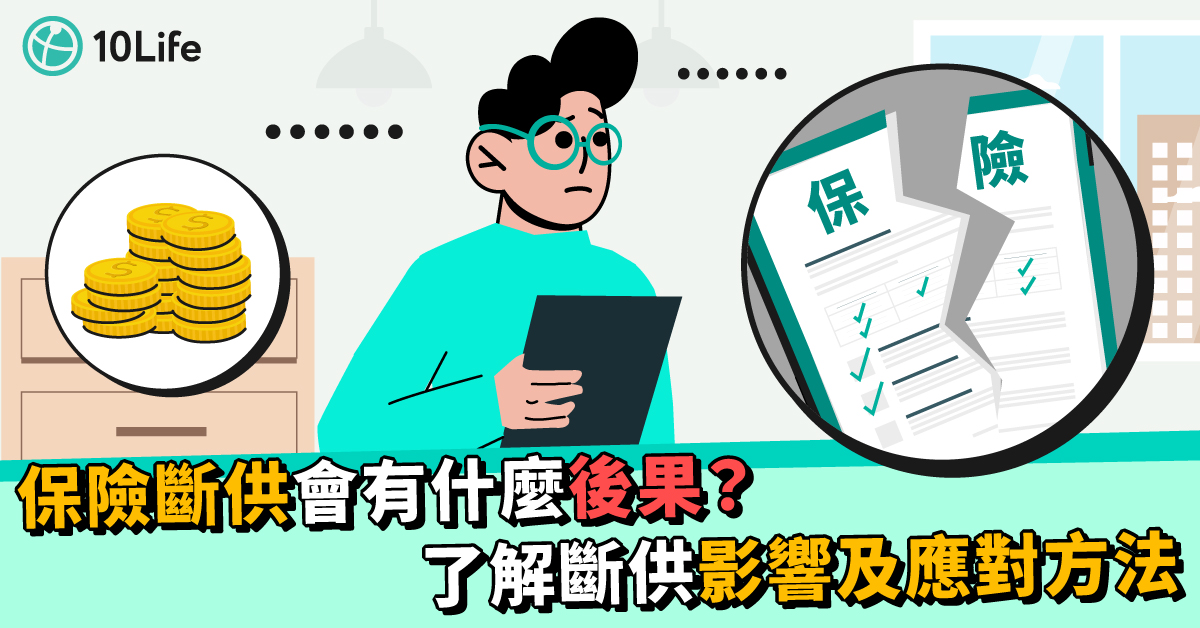
Insurance is a long-term commitment, but life is inevitably full of uncertainties. If your financial circumstances suddenly change and you are unable to pay your premiums on time, do you have to stop paying? Does stopping premium payments amount to surrendering your policy? What impact could this have? Apart from stopping premium payments, are there any other ways to address the situation? This time, 10Life will take you through the consequences of stopping premium payments and explore how to respond flexibly under financial pressure, so that your protection remains unaffected.
What does it mean to stop paying premiums? Is it the same as surrendering a policy?
Policy lapse, in simple terms, means that the policyholder fails to pay the premiums on time, causing the policy to no longer remain in force. However, a policy lapse is not the same as surrendering a policy. Surrendering a policy means that the policyholder actively applies to the insurance company to cancel the policy and receives the remaining cash value according to the policy terms (if applicable). In contrast, a policy lapse may result in the loss of cover due to premiums not being paid on time, and the policyholder may even be unable to recover any money.
Generally speaking, insurance companies usually provide a 30-day or 31-day grace period. If the outstanding premiums are paid during this period, the policy will remain in force and the cover will not be affected. However, if the premiums remain unpaid after the grace period, the policy may lapse, and reinstatement may even require underwriting again.
What are the consequences of stopping premium payments for the policyholder?
The primary function of insurance is to provide cover, but if you stop paying your premiums, you will not be able to make a claim in the event of an accident or illness. In other words, the premiums you have paid for cover may go to waste.
If you wish to reinstate your policy after stopping your premium payments, the insurer may require you to undergo underwriting again and will decide whether to accept your application based on your health condition. If your health has changed, this could result in higher premiums, reduced cover or even your application being declined.
If you stop paying premiums for a policy with a savings element, such as whole-of-life critical illness insurance, the insurer may first pay the outstanding premiums by using the cash value, bonuses or a policy loan. However, when the loan amount exceeds the policy’s cash value, the policy will terminate. At that point, you will not only lose your cover, but may also be unable to recover the savings accumulated, resulting in a loss overall.
If you are temporarily experiencing financial difficulties and do not want to stop paying your insurance premiums, what can you do?
Most insurance companies provide a 30-day premium grace period. As long as the premium is paid in full within this period, your coverage will not be affected. Therefore, if you are experiencing short-term financial pressure, you can first confirm the length of the grace period and pay the outstanding premium within the specified time.
Some policies with a savings component may offer a “premium holiday”, allowing policyholders to apply to the insurance company to suspend premium payments for a period of time without affecting their coverage. However, please note that a premium holiday usually only applies to policies with a “savings component” and is subject to certain conditions. It is recommended that you confirm the details with your insurance company. It is also worth noting that the guaranteed cash value will be frozen during a “premium holiday”, which may affect the amount paid out.
If you are facing significant long-term pressure from premium payments, you may consider applying to the insurance company to reduce the sum assured. This can reduce the premium over the long term while retaining basic coverage.
How can you avoid having your insurance policy lapse due to missed payments?
Before purchasing insurance, you should select a suitable level of cover and premium payment period based on your financial circumstances, ensuring that you can afford the premiums over the long term and avoid being forced to stop paying them due to financial pressure in the future. When taking out insurance, you should strike a balance between the scope of cover and the premiums you can afford, ensuring that the plan aligns with your long-term financial capacity and that excessive premium payments will not affect your living expenses.
Before taking out insurance, you should carefully understand the policy terms, including the premium payment period, premium adjustment mechanism, and whether flexible arrangements such as premium holidays or premium payment deferment in the event of unemployment are available. Some policies offer the option to apply for a “premium holiday”, allowing you to temporarily suspend premium payments or adjust the level of cover for a short period, ensuring that basic cover can be maintained when financial pressure increases. Understanding these details in advance will help you manage your finances more flexibly in the future and reduce the risk of discontinuing premium payments.
In addition to choosing a suitable insurance plan, developing good saving habits and building an emergency fund are also key to reducing the risk of discontinuing premium payments. It is recommended that you set aside 3 to 6 months’ worth of living expenses as an emergency reserve to cope with unexpected financial situations, such as temporary unemployment, sudden medical expenses or other financial pressures. This will ensure that you can continue paying your premiums when facing cash-flow difficulties and prevent your policy from being affected.
Expert Advice Before Taking Out a Policy: Avoid Costly Mistakes and Lapsed Policies
When choosing insurance, there are many details to consider, such as the scope of cover, premium payment period, cash value and surrender terms. The terms and conditions may vary between policies. Therefore, before taking out a policy, you should plan your finances carefully to ensure that you can afford the premiums in the long term. This will help you avoid lapsing due to payment pressure, which could affect your cover and financial situation. If you have any questions about the policy details or choosing a suitable protection plan, please feel free to WhatsApp 10Life insurance adviser. A licensed adviser can provide professional advice, assist in comparing different plans, help you find the most suitable protection plan and reduce your future financial burden.
Further reading
【Emigration insurance 2022】How should you deal with your medical, critical illness and savings insurance? Should you Cut or retain your policy?
【Critical illness insurance 2025】Whole life critical illness vs term critical illness! A complete comparison of premiums, cover and savings components
【Medical financing】Can you really “pay off” your medical insurance? Discover the benefits and pitfalls in one article
Last updated: 9 April 2025
This English version of this article has been generated by machine translation powered by AI. It is provided solely for reference purposes. In the event of any discrepancy or inconsistency between this translation and the original Chinese version, the Chinese version shall prevail.
Our team of professional content researchers focussing on insurance
Our team of professional content researchers focussing on insurance
10Life Product Comparison and 10Life Insurance Ratings are developed by 10Life Financial Limited, an authorised insurance broker company licensed with the Insurance Authority under License Number FB1526. 10Life Product Comparison and 10Life Insurance Ratings are developed for generic customer segments using mathematical calculations based on product information, facts and data, and are not influenced by any partnerships with or fees received from insurance companies. Any information on 10Life Platform ("10Life Information"), including but not limited to Product Comparison, Product Ratings, Blog Articles are intended for general education purpose and reference only. None of the 10Life Information is intended, nor should they be considered or relied upon, as regulated advice, insurance, financial, investment or professional advice, recommendation, approval, endorsement, invitation or solicitation in respect of any insurance, financial or investment products. 10Life Information does not take into account your individual needs. Reading 10Life Information should not be considered as conducting a suitability assessment, and is not sufficient to form the basis of any decisions to purchase any insurance products. You should rely on information authorised by insurance companies, carry out your own research and/or seek independent advice from licensed intermediaries before purchasing any insurance products or making any insurance decisions. While reasonable effort is used when collecting, validating and updating 10Life Information from various channels, none of 10Life Group and its subsidiaries, affiliates, agents, directors, officers and employees will be responsible for any liability, claim or loss arising from or associated with you using 10Life Information. No warranty, representation or guarantee is given by 10Life Group and its subsidiaries on the accuracy, completeness and timeliness of the information. If you have any questions on 10Life Product Comparison and 10Life Insurance Ratings, please email us at enquiries@10life.com




 Talk to 10Life on WeChat
