








10Life Financial Limited
Enquiries: enquiries@10life.com
Hotline: (852) 3705 1599
Address: 16/F Greatmany Centre, 109-115 Queen’s Road East, Wan Chai, Hong Kong



Benefits of Choosing Self-Drive Tours in Mainland China
Tips and Considerations for Family Self-Drive Holidays
Mainland Car Rental VS Hong Kong Car Travelling North: Which to Choose?
Travelling Northwards? Don’t Forget to Purchase Travel Insurance for Added Protection
Frequently Asked Questions


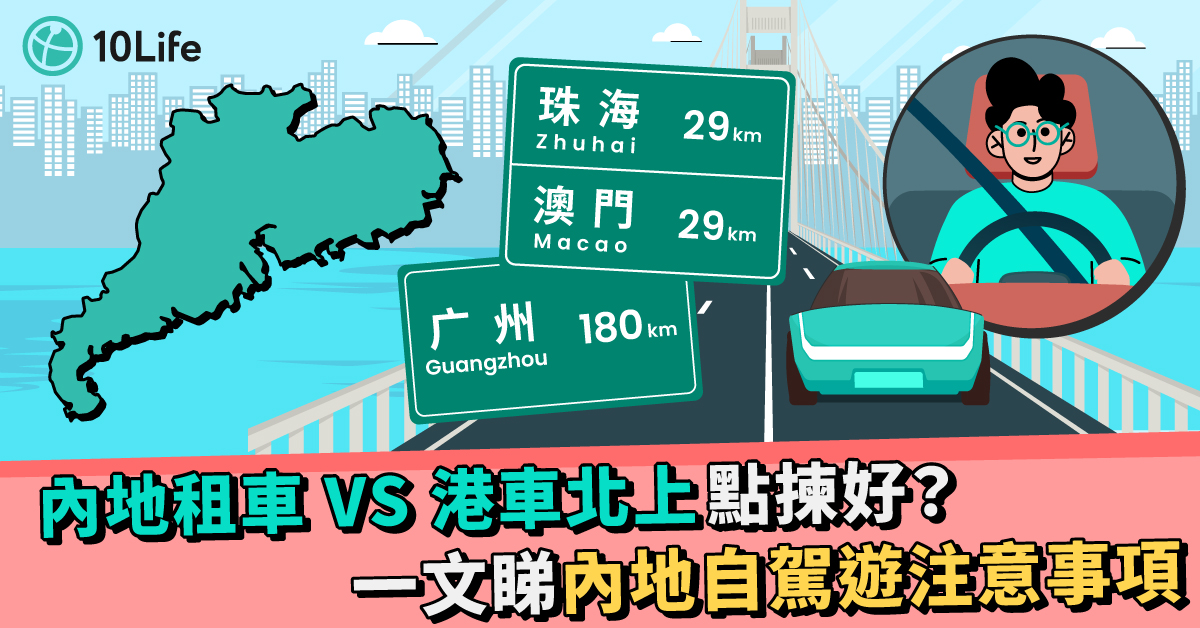
Planning a family self-driving trip to explore more family-friendly attractions in Guangdong Province during the summer holidays? With the official launch of the "Hong Kong Vehicles Northbound" scheme, Hong Kong residents can now drive their own vehicles to mainland China or opt to rent a car there for self-driving. However, traffic regulations in mainland China differ from those in Hong Kong. What should you be aware of when planning a self-driving trip? Should you choose to rent a car in mainland China or apply for the "Hong Kong Vehicles Northbound" scheme? This time, 10Life has compiled the key points for you, providing a clear comparison of the pros and cons of both options, so you can enjoy your trip to the fullest.
Benefits of Choosing Self-Drive Tours in Mainland China
Many people might think that taking the high-speed rail or public transport is very convenient and that driving oneself is not necessary. However, self-driving tours in mainland China offer numerous advantages, especially for family outings.
Self-driving tours do not require adhering to fixed schedules, allowing you to adjust your itinerary flexibly based on children's routines, weather changes, or spontaneous interests, making the trip more adaptable.
Many family-friendly destinations, such as resort hotels, homestays, Glamping campsites, zoos, farms, theme parks, and country parks, are often located in remote areas. Public transport may not be convenient, and itineraries can be restricted. Self-driving allows direct access to these destinations without the need for transfers, making it relatively hassle-free.
Public transport in mainland China is often crowded. Self-driving reduces contact with strangers, ensuring privacy and hygiene safety. For families with young children or elderly members, this option is more reassuring and comfortable. Additionally, you can bring your own luggage, food, and children's supplies, making self-driving more flexible.
If travelling with three or more people, splitting fuel costs and tolls can make the total cost of a self-driving tour in mainland China potentially lower than purchasing multiple high-speed rail or bus tickets, offering better value for long-distance travel.
Tips and Considerations for Family Self-Drive Holidays
In some cities in mainland China (such as Shenzhen), it is explicitly stipulated that children under the age of 4 must use a safety seat when travelling in a vehicle. If you are driving northbound from Hong Kong, it is advisable to bring a compliant safety seat. For those renting a car for a self-driving trip, make sure to enquire and reserve one with the rental company in advance. Avoid last-minute arrangements to prevent fines for non-compliance or risks to your child’s safety.
Mainland China follows right-side driving, which is the opposite of Hong Kong, and most vehicles are left-hand drive. For Hong Kong drivers unfamiliar with left-hand drive cars, it is easy to drift out of the lane, use the wrong indicator, or misjudge when changing lanes. It is recommended to familiarise yourself with road conditions before departure and exercise extra caution when starting your journey.
Enforcement of solid and broken line rules in mainland China is strict. Do not attempt to change lanes when there is a solid line. While driving, pay attention to arrow directions, stay in the middle lane for straight driving, and avoid penalties or point deductions due to unfamiliarity with the rules.
Many cities in mainland China have designated “bus-only lanes” reserved exclusively for buses. General vehicles are not allowed to enter, except briefly for right turns. Entering or using these lanes improperly will result in immediate photographic evidence being recorded and a fine being issued.
Highway toll collection methods vary across regions in mainland China. Some support ETC (Electronic Toll Collection), while others offer manual payment options. Payments can generally be made in cash, via WeChat Pay, or Alipay. It is recommended to check the toll station arrangements along your driving route in advance.
Since Google Maps is not accessible in mainland China, it is advisable to download apps such as “AMap” or “Baidu Maps” before departure. These navigation apps provide real-time information on traffic lights, speed limits, road conditions, lane details, and nearby parking lots. Their navigation features also help avoid congested routes, ensuring a smoother and more reassuring driving experience.
Parking spaces in urban areas or near popular attractions can be limited. You can use platforms like “AMap”, “ETCP Parking”, or “Ting Jian Dan” to search for nearby authorised parking lots. Additionally, mobile apps such as “Xiao Qiang Parking”, “Tao Che Wei”, and “Jie Ting Che” are commonly used for finding parking. For self-driving in Shenzhen, the “Shenzhen Public Smart Parking Platform” allows you to filter parking lots with electric vehicle charging stations. If you wish to park at metered spaces, the “Yi Ting Che” app enables instant payment without license plate recognition. However, remember to install the necessary apps in advance and note that some platforms may require real-name verification.
Certain cities in mainland China impose “traffic restriction measures” that limit the travel times or areas for non-local vehicles. Some cities also restrict fuel-powered or non-local new energy vehicles. For instance, Guangzhou enforces “peak-hour restrictions” during busy periods on weekdays, prohibiting non-Guangzhou registered vehicles from using controlled roads. It is advisable to check these policies in advance to avoid unintentional violations.
While electronic payments are widely used in mainland China, some parking lots, highways, or petrol stations may still accept cash. It is recommended to carry RMB cash in small denominations and have payment methods linked to WeChat or Alipay to ensure smooth transactions.
Before setting off, ensure you have all necessary driving-related documents, such as a mainland China driving licence, insurance documents, and rental agreements, ready for presentation if required. You can also download the “Traffic Management 12123” app to store an electronic version of your mainland driving licence on your phone for easy access. It is also advisable to keep a phone charging cable, phone holder, or navigation device in the car to ensure seamless navigation. Additionally, consider having car umbrellas, tissues, and disinfectant supplies on hand for sudden weather changes or daily cleaning needs. If travelling with children, bringing toys or snacks can help alleviate boredom during long drives, making the journey more enjoyable and relaxing for the whole family.
Self-driving in mainland China differs from Hong Kong in terms of driving styles, road rules, and payment methods. Preparing in advance, understanding local traffic regulations, and purchasing suitable car and travel insurance will ensure a more worry-free and enjoyable trip.
Mainland Car Rental VS Hong Kong Car Travelling North: Which to Choose?
Many families choose to go on self-driving trips in mainland China to easily explore more family-friendly destinations. "Mainland Car Rental" and "Hong Kong Cars Travelling North" are the two most common options, each with its own advantages and disadvantages. It is recommended to select the most suitable option based on the duration of the trip, frequency of travel, and family needs to ensure a smoother and more reassuring journey.
If you plan to rent a car in mainland China, you can quickly make a reservation through a car rental platform as long as you hold a valid mainland driving licence. The process is straightforward. Hong Kong residents can obtain a Chinese driving licence through a "no-test licence exchange" or with the help of an agent. On the other hand, the application process for "Hong Kong Cars Travelling North" involves more steps. You must first register and enter a lottery on a designated platform. Only after winning the lottery can you proceed to apply through the Hong Kong Transport Department and relevant mainland authorities, which may take several weeks. If the vehicle is over six years old, an inspection is also required. Additionally, you must purchase compulsory traffic insurance ("CTLI") or an approved "equivalent first recognition" policy to ensure legal driving.
Renting a car means using an unfamiliar vehicle model, and you may not be fully accustomed to its handling or features, requiring time to adapt. In contrast, driving your own familiar private car is more comfortable, especially for family outings. Items such as child seats and storage space can be pre-arranged, providing a greater sense of security.
"Mainland Car Rental" offers high flexibility and a wide range of choices, allowing you to set off at any time, making it ideal for short, casual trips. However, if you plan to travel north for an extended period or carry a lot of luggage, your own car provides more space and better accommodates the needs of the entire family.
Mainland car rentals generally include compulsory traffic insurance ("CTLI") and basic commercial insurance. For more comprehensive protection, additional coverage can be purchased. In contrast, "Hong Kong Cars Travelling North" requires you to purchase an "equivalent first recognition" insurance policy in advance. While there are many options, it takes time to compare the scope of coverage.
Car rental fees are charged daily and vary depending on the vehicle model and platform, making short-term use generally more affordable. For "Hong Kong Cars Travelling North," costs include annual fees, application fees, and insurance premiums, resulting in higher overall expenses. This option is more suitable for families who frequently travel north.
If a rented car breaks down, you can usually contact the rental platform immediately for assistance. However, if a Hong Kong car breaks down in mainland China, you will need to rely on a mainland-approved insurance company for support, and the process may be more complicated.
In summary, if you are only occasionally travelling north for a short, casual trip and prefer flexibility to set off at a moment’s notice, "Mainland Car Rental" is the more convenient choice. However, if your family frequently visits relatives in mainland China or prefers long family road trips, driving your familiar car under "Hong Kong Cars Travelling North" is a more reliable and reassuring option. Remember to prepare thoroughly before departure, purchase adequate travel and car insurance, and enjoy a worry-free journey.
Travelling Northwards? Don’t Forget to Purchase Travel Insurance for Added Protection
Although the Greater Bay Area is not far from Hong Kong, the road conditions in the mainland are different, and with heavy traffic and large crowds, unexpected situations can arise. Whether you choose to rent a car in the mainland or drive a Hong Kong-registered vehicle northwards, remember to purchase suitable travel insurance before departure.
Many insurance companies now offer protection products tailored for "Greater Bay Area travel", with affordable premiums and coverage suited for short trips. For more details, you can read【Greater Bay Area Travel Insurance】Essential Protection for Travelling in the Greater Bay Area! Compensation for High-Speed Rail Delays and Ride-Hailing Injuries Included.
If you are only travelling north for a short period, you can opt for single-trip travel insurance. If you frequently travel to the mainland, consider annual travel insurance, which offers year-round coverage with a single purchase, making it more convenient and cost-effective. You may refer to:【Annual Travel Insurance Comparison】When is the Best Time to Buy an Annual Plan for the Best Value?
Want to fully understand the key coverage points of travel insurance? 10Life not only compares over 60 single-trip travel insurance plans on the market, but now also introduces a dedicated comparison section for annual travel insurance. Premium differences and coverage scopes are clear at a glance, with actuarial ratings provided to help consumers precisely find the most suitable single-trip or annual travel insurance plan.
Frequently Asked Questions
No. Even if you hold a valid Hong Kong driving licence, you cannot directly rent a car in Mainland China. Hong Kong residents must possess a valid driving licence issued by Mainland China to drive legally there.
Hong Kong residents with a valid Hong Kong driving licence can apply for a Mainland China driving licence without taking a test. You need to visit a vehicle management office in Guangdong Province in person and complete a medical examination at a designated medical institution. Remember to bring your identity card, Home Return Permit, medical report, and other required documents for on-site photo taking and application submission. While agency services can assist with booking appointments, the application process still requires your physical presence. It is advisable to check official information before departure to avoid any oversight.
In Mainland China, petrol stations offer both self-service and assisted service options. Most petrol stations accept payments via WeChat Pay or Alipay, but they may not accept cash or overseas credit cards. It is recommended to prepare the relevant digital payment methods in advance. Additionally, fuel grades may differ slightly, so ensure you select the appropriate fuel type based on your vehicle’s specifications.
Further Reading:
What is Car Insurance? Understanding Third-Party Insurance, Costs, and Excess Comparison
【Hong Kong Cars Travelling North】How Does Car Insurance Differ Between Hong Kong and Mainland China? With Insurance Tips
【Japan Road Trip Guide 2025】12 Key Tips for Hong Kong Residents Driving in Japan
Last updated: 17 July 2025
This English version of this article has been generated by machine translation powered by AI. It is provided solely for reference purposes. In the event of any discrepancy or inconsistency between this translation and the original Chinese version, the Chinese version shall prevail.
Our team of professional content researchers focussing on insurance
Our team of professional content researchers focussing on insurance
10Life Product Comparison and 10Life Insurance Ratings are developed by 10Life Financial Limited, an authorised insurance broker company licensed with the Insurance Authority under License Number FB1526. 10Life Product Comparison and 10Life Insurance Ratings are developed for generic customer segments using mathematical calculations based on product information, facts and data, and are not influenced by any partnerships with or fees received from insurance companies. Any information on 10Life Platform ("10Life Information"), including but not limited to Product Comparison, Product Ratings, Blog Articles are intended for general education purpose and reference only. None of the 10Life Information is intended, nor should they be considered or relied upon, as regulated advice, insurance, financial, investment or professional advice, recommendation, approval, endorsement, invitation or solicitation in respect of any insurance, financial or investment products. 10Life Information does not take into account your individual needs. Reading 10Life Information should not be considered as conducting a suitability assessment, and is not sufficient to form the basis of any decisions to purchase any insurance products. You should rely on information authorised by insurance companies, carry out your own research and/or seek independent advice from licensed intermediaries before purchasing any insurance products or making any insurance decisions. While reasonable effort is used when collecting, validating and updating 10Life Information from various channels, none of 10Life Group and its subsidiaries, affiliates, agents, directors, officers and employees will be responsible for any liability, claim or loss arising from or associated with you using 10Life Information. No warranty, representation or guarantee is given by 10Life Group and its subsidiaries on the accuracy, completeness and timeliness of the information. If you have any questions on 10Life Product Comparison and 10Life Insurance Ratings, please email us at enquiries@10life.com



 Talk to 10Life on WeChat
