









10Life Financial Limited
Enquiries: enquiries@10life.com
Hotline: (852) 3705 1599
Address: 16/F Greatmany Centre, 109-115 Queen’s Road East, Wan Chai, Hong Kong



What is sinusitis?
Symptoms of Sinusitis
Causes of Sinusitis
Diagnostic Methods for Sinusitis
Treatment Methods for Sinusitis
When do you need to seek medical attention?
Effective Ways to Prevent Sinusitis
The cost of sinus surgery is relatively high Medical insurance can alleviate financial pressure


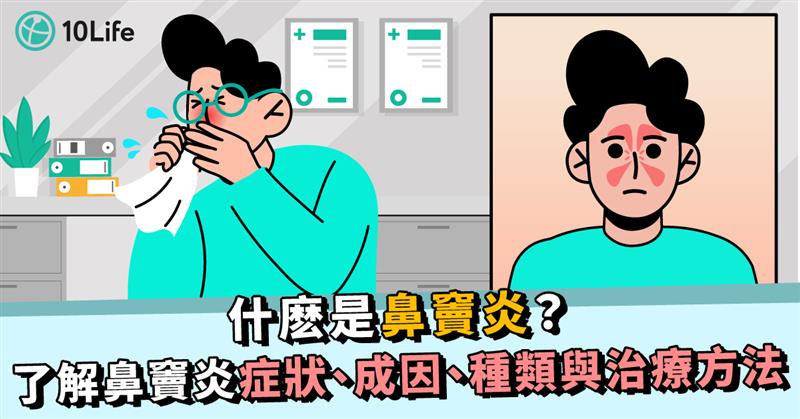
Persistent nasal congestion, or even headaches and facial pain? This may not just be a common cold, but sinusitis at play. Sinusitis is a common yet often overlooked condition. If not treated promptly, it may become chronic and recur repeatedly, and in severe cases, it could significantly affect quality of life. This article will provide a detailed explanation of the causes, symptoms, diagnostic methods, and treatment options for sinusitis, helping everyone to better prevent and manage the condition.
What is sinusitis?
The sinuses are hollow cavities within the skull, connected to the nasal cavity and lined with a mucous membrane that secretes mucus. The role of mucus is to keep the nasal cavity moist and to filter dust and bacteria from the air.
When the mucous membrane in the nasal passages and sinuses becomes infected or irritated, triggering an inflammatory response, sinusitis develops. People of any age can be affected, and sinusitis is classified into acute sinusitis and chronic sinusitis:
Acute sinusitis is typically caused by a viral or bacterial infection, with symptoms lasting less than 4 weeks. It often develops quickly and is commonly associated with a cold. Mild cases may resolve on their own, while severe cases might require antibiotic treatment.
If the inflammation persists for more than 12 weeks, it is classified as chronic sinusitis. This condition is common in individuals with recurrent episodes or weakened immunity. Symptoms are often persistent, including nasal congestion, facial tenderness, and reduced sense of smell. It usually requires long-term treatment and, in some cases, surgical intervention.
Symptoms of Sinusitis
The symptoms of sinusitis often resemble those of a cold or nasal allergies, but they last longer and are more severe. Common symptoms include:
Causes of Sinusitis
Sinusitis typically arises from the following factors:
When the mucous membrane swells and blocks the nasal cavity, mucus in the sinuses cannot drain, allowing bacteria or fungi to multiply extensively and cause infection.
Diagnostic Methods for Sinusitis
Doctors usually conduct an initial assessment, which includes:
If necessary, doctors may arrange further tests, including:
Treatment Methods for Sinusitis
Most cases of acute sinusitis are mild infections that can typically be managed with self-care at home and resolve within a few days. Common self-care methods include:
If symptoms persist for more than a week without improvement, it is advisable to seek medical attention promptly. A doctor may recommend the following treatments based on the condition:
For patients with chronic or severe sinusitis, if medication proves ineffective, surgical intervention may be necessary:
These treatment options can effectively relieve sinusitis symptoms and prevent recurrent episodes. The choice of treatment should be determined based on medical advice and the individual’s specific condition.
When do you need to seek medical attention?
Although most cases of acute sinusitis are mild infections that can be managed with self-care at home, you should seek medical attention promptly if you experience the following:
Effective Ways to Prevent Sinusitis
Take the following measures in daily life to reduce the risk of sinusitis:
The cost of sinus surgery is relatively high Medical insurance can alleviate financial pressure
Although sinusitis is not a severe illness, repeated episodes may necessitate surgical treatment. In Hong Kong, the cost of sinus surgery at private hospitals is relatively high. For instance, at the Chinese University of Hong Kong Medical Centre, the day-care medical expense for functional endoscopic sinus surgery can be as high as HKD 99,200, and the cost could be even higher if hospitalisation is required.
Having suitable medical insurance can effectively alleviate the financial burden. The Voluntary Health Insurance Scheme (VHIS) not only provides reimbursement for hospitalisation expenses but also offers tax deduction benefits, ensuring both health and financial protection.
If you wish to find out which Voluntary Health Insurance Scheme best suits your needs, feel free to consult 10Life licensed insurance advisors for impartial and professional advice.
Further Reading:
References:
This article was last updated on: 2 October 2025
This English version of this article has been generated by machine translation powered by AI. It is provided solely for reference purposes. In the event of any discrepancy or inconsistency between this translation and the original Chinese version, the Chinese version shall prevail.
Last updated: 9 Apr 2026

Our team of professional content researchers focussing on insurance
Our team of professional content researchers focussing on insurance
10Life Product Comparison and 10Life Insurance Ratings are developed by 10Life Financial Limited, an authorised insurance broker company licensed with the Insurance Authority under License Number FB1526. 10Life Product Comparison and 10Life Insurance Ratings are developed for generic customer segments using mathematical calculations based on product information, facts and data, and are not influenced by any partnerships with or fees received from insurance companies. Any information on 10Life Platform ("10Life Information"), including but not limited to Product Comparison, Product Ratings, Blog Articles are intended for general education purpose and reference only. None of the 10Life Information is intended, nor should they be considered or relied upon, as regulated advice, insurance, financial, investment or professional advice, recommendation, approval, endorsement, invitation or solicitation in respect of any insurance, financial or investment products. 10Life Information does not take into account your individual needs. Reading 10Life Information should not be considered as conducting a suitability assessment, and is not sufficient to form the basis of any decisions to purchase any insurance products. You should rely on information authorised by insurance companies, carry out your own research and/or seek independent advice from licensed intermediaries before purchasing any insurance products or making any insurance decisions. While reasonable effort is used when collecting, validating and updating 10Life Information from various channels, none of 10Life Group and its subsidiaries, affiliates, agents, directors, officers and employees will be responsible for any liability, claim or loss arising from or associated with you using 10Life Information. No warranty, representation or guarantee is given by 10Life Group and its subsidiaries on the accuracy, completeness and timeliness of the information. If you have any questions on 10Life Product Comparison and 10Life Insurance Ratings, please email us at enquiries@10life.com




 Talk to 10Life on WeChat
