









10Life Financial Limited
Enquiries: enquiries@10life.com
Hotline: (852) 3705 1599
Address: 16/F Greatmany Centre, 109-115 Queen’s Road East, Wan Chai, Hong Kong



What is a trust fund?
How does a trust structure work? Understand the three key parties: settlor, trustee and beneficiary
What types of trust funds are there?
What are the advantages of a trust fund?
Are there any disadvantages of trust funds?
Who are trust funds suitable for?
Are there any requirements for setting up a trust fund? What are the fees?
How to choose the right unit trust fund?


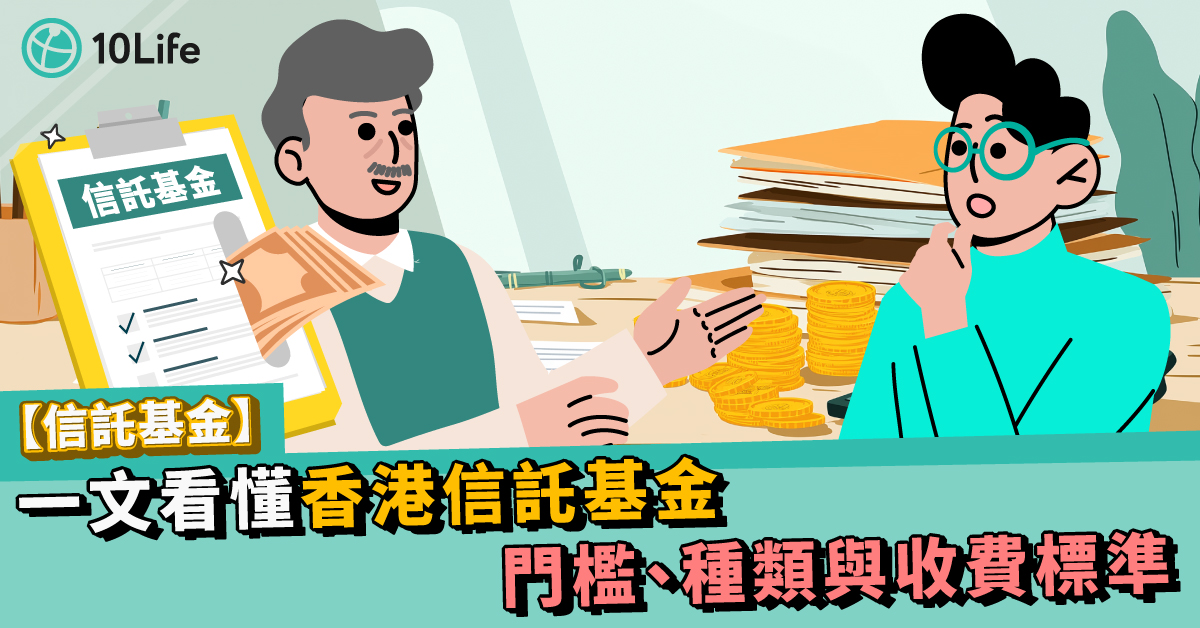
When watching films, we sometimes hear about second-generation heirs having a (Trust Fund), leading many people to believe that trusts are exclusively for the wealthy. In fact, a trust is an effective tool for asset management and wealth succession. With proper planning, it can not only safeguard assets but also help meet the needs of family members. How high is the threshold for setting up a trust fund? What are the fee standards? This article introduces the basic principles, common types, suitable candidates and establishment costs of trust funds, helping readers assess whether a trust meets their personal needs.
What is a trust fund?
A trust fund is a legally binding asset arrangement under which the settlor (Settlor) transfers assets such as cash, shares and property to the trustee (Trustee) for management, who holds and distributes the assets for the beneficiary (Beneficiary) in accordance with the terms of the trust deed.
In Hong Kong, trust funds have become a common wealth management tool. Combining flexibility with legal protection, they are often used for asset protection, succession planning and tax planning. Through clearly defined terms, assets can be distributed conditionally or in stages according to the needs of family members, while preserving privacy and reducing legal risks. With careful planning, a trust can flexibly accommodate individual and family needs and achieve multiple asset management objectives.
Common purposes for setting up a trust include:
How does a trust structure work? Understand the three key parties: settlor, trustee and beneficiary
A trust operates according to the terms established by the Settlor, with three key roles at its core: the Settlor, Trustee and Beneficiary
What types of trust funds are there?
Trusts can be divided into various types according to their purpose and the nature of their assets. Common types include:
What are the advantages of a trust fund?
Assets held in a trust are managed separately from the settlor’s other personal assets. When the settlor faces debt disputes, legal proceedings or matrimonial disputes, the assets in the trust may receive a certain degree of protection and are less likely to be subject to claims, effectively safeguarding the family’s core wealth.
A trust can set clear conditions for the distribution of assets according to the settlor’s wishes, such as age restrictions or requiring beneficiaries to complete their education before they can receive the assets. This helps to avoid the waste that may result from a one-off inheritance and reduces disputes arising from the distribution of an estate, allowing assets to be passed on to the next generation in an orderly manner.
Although Hong Kong does not impose estate tax, tax planning remains important for families with cross-border assets. Certain jurisdictions, such as the United States, the United Kingdom, Australia and Singapore, impose taxes on estates, capital gains or asset transfers. Through a trust, asset ownership and beneficial interests can be effectively separated, reducing or deferring tax liabilities. At the same time, assets in different jurisdictions can be managed centrally, simplifying the transfer process and reducing future disputes through clear provisions, thereby ensuring that wealth is passed on according to plan.
The terms of a trust can be tailored to different family circumstances, types of assets and objectives. It supports various forms of distribution, such as instalments and performance-based distributions, offering greater flexibility and control than a standard will or insurance policy.
Are there any disadvantages of trust funds?
When establishing a trust, advisory and establishment fees are payable, followed by annual management fees, account audit fees and other charges. If the asset value is not substantial, these fees may account for a considerable proportion of the assets, affecting overall cost-effectiveness.
Once assets are transferred into a trust, withdrawals or changes in purpose must be handled in accordance with the trust deed. The process is more complicated, unlike personal assets, which can be used flexibly at any time. Therefore, trusts may not be suitable for those with short-term liquidity needs.
The legal provisions and tax arrangements involved in trusts are relatively technical, and professional assistance from solicitors, accountants or trust companies is required during the design and management process. If not properly structured, difficulties in implementation or tax risks may arise.
Trust funds have certain minimum requirements. For those with relatively limited assets, management costs may be too high and the expected benefits may not be realised. It is advisable to assess the total value of the assets before making a decision.
Who are trust funds suitable for?
Trust funds are not exclusively for the wealthy. Anyone with asset management, succession or asset protection needs may consider setting up a trust. The following people may be particularly suited:
Are there any requirements for setting up a trust fund? What are the fees?
Many people believe that setting up a trust has a high entry threshold. In fact, from a legal perspective, Hong Kong does not impose any minimum asset requirement for establishing a trust. In theory, a trust can be established even if the asset size is not substantial. In practice, however, the key considerations are the costs and management fees involved in setting up and administering the trust.
Trust fees generally comprise two parts:
Generally speaking, the annual management fee for a family trust is approximately 1% to 2% of the total value of the trust assets. Some trust companies impose a minimum asset requirement or a fixed fee structure. It is generally recommended that the assets reach a seven- to eight-figure value for the arrangement to be more suitable; otherwise, the proportion of costs may be too high to be cost-effective. The services and fee structures of different banks and trust companies vary. It is advisable to consult the relevant institutions or a licensed adviser first to determine whether a trust is suitable for your needs.
It is also worth noting that, under the 2013 Trust Law (Amendment) Ordinance, Hong Kong has abolished the time limit on the duration of trusts. Trusts established locally may therefore remain in effect indefinitely, making them more suitable for long-term wealth planning and intergenerational succession.
How to choose the right unit trust fund?
Trusts can be used for different purposes. When making a selection, you should first clarify your own needs, such as asset protection, succession planning or charitable purposes. A personal trust is suitable for those who wish to ring-fence their assets and reduce legal or financial risks; a family trust can facilitate the flexible distribution of assets and protect family members. If you have plans to make donations, you may consider a charitable trust; where life insurance policies or property are involved, an insurance trust or a real estate trust may be appropriate. Different types of trusts serve different functions, so it is advisable to select a suitable solution based on the nature of the assets and the distribution arrangements.
The product designs, investment strategies and management approaches offered by each trust company vary. Before making a selection, you should understand its professional background, whether it is licensed, its track record and fee structure, while also paying attention to the transparency of asset reports and the quality of customer service. This helps ensure that your assets are properly managed after being entrusted, reducing future disputes or difficulties.
Trust structures often involve areas such as taxation, law and asset allocation. The choice of the jurisdiction governing the trust, such as Hong Kong, Singapore or the Cayman Islands, is also an important consideration. If you are unfamiliar with the relevant terms or risks, it is advisable to seek advice from a financial adviser or trust specialist. Based on your personal circumstances, they can provide suitable product recommendations and structuring solutions, enabling the trust to fulfil its intended functions.
References:
Hong Kong’s Trustee Ordinance, Cap. 29
Last updated: 9 September 2025
This English version of this article has been generated by machine translation powered by AI. It is provided solely for reference purposes. In the event of any discrepancy or inconsistency between this translation and the original Chinese version, the Chinese version shall prevail.
Our team of professional content researchers focussing on insurance
Our team of professional content researchers focussing on insurance
10Life Product Comparison and 10Life Insurance Ratings are developed by 10Life Financial Limited, an authorised insurance broker company licensed with the Insurance Authority under License Number FB1526. 10Life Product Comparison and 10Life Insurance Ratings are developed for generic customer segments using mathematical calculations based on product information, facts and data, and are not influenced by any partnerships with or fees received from insurance companies. Any information on 10Life Platform ("10Life Information"), including but not limited to Product Comparison, Product Ratings, Blog Articles are intended for general education purpose and reference only. None of the 10Life Information is intended, nor should they be considered or relied upon, as regulated advice, insurance, financial, investment or professional advice, recommendation, approval, endorsement, invitation or solicitation in respect of any insurance, financial or investment products. 10Life Information does not take into account your individual needs. Reading 10Life Information should not be considered as conducting a suitability assessment, and is not sufficient to form the basis of any decisions to purchase any insurance products. You should rely on information authorised by insurance companies, carry out your own research and/or seek independent advice from licensed intermediaries before purchasing any insurance products or making any insurance decisions. While reasonable effort is used when collecting, validating and updating 10Life Information from various channels, none of 10Life Group and its subsidiaries, affiliates, agents, directors, officers and employees will be responsible for any liability, claim or loss arising from or associated with you using 10Life Information. No warranty, representation or guarantee is given by 10Life Group and its subsidiaries on the accuracy, completeness and timeliness of the information. If you have any questions on 10Life Product Comparison and 10Life Insurance Ratings, please email us at enquiries@10life.com



 Talk to 10Life on WeChat
