


false
Category
Author
Search for Articles
Trending Keywords
Category
Author
Search
Category
Author
Search
Critical Illness
Editor's Pick

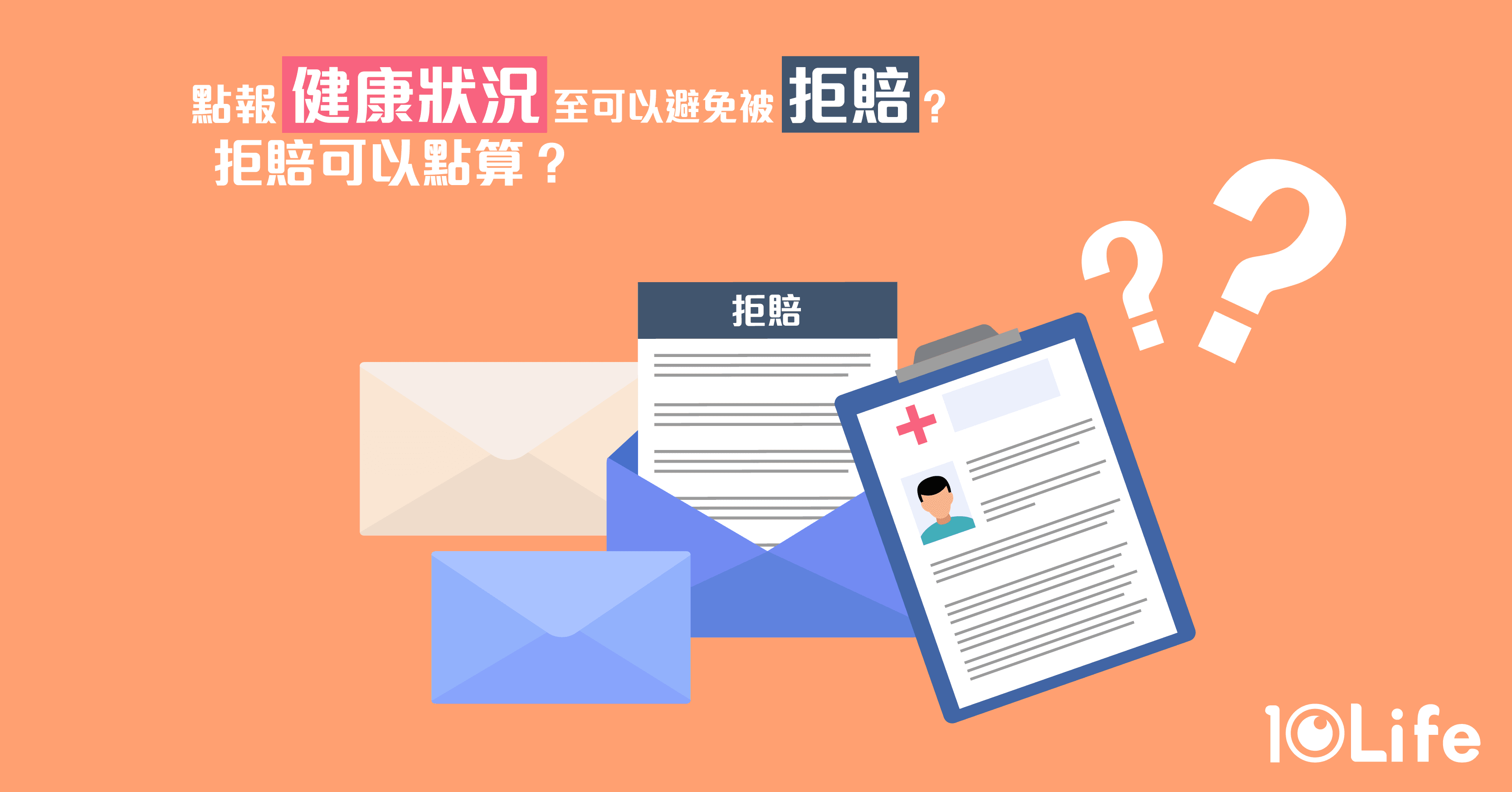
【Rejected Claims Decoded】Key points for declaring your health conditions! Feel aggrieved? Make a complaint?

2019-12-12 4min read
blog-Claim-Rejections-How-to-do-Health-Declarations-Where-to-complain-if-you-get-screwed-by-the-insurance-company-or-agent.png
10Life recently published an analysis of a critical illness insurance claim rejection case, which prompted considerable discussion among readers. In this case, the insured person had failed to disclose their previous medical history when applying for the policy, and the insurer rejected the claim when they were diagnosed with cancer. Some people believe that insurance means “paying premiums without receiving a payout”. How should policyholders declare their medical history? If an insurer unfortunately rejects a claim, is there really no avenue for redress?
 
When consumers apply for critical illness or medical insurance, they must answer health-related questions on the application form, and many readers are unsure how to respond. These questions can broadly be divided into the following categories:
 
  • Whether they have ever suffered from any disease/condition/illness/symptoms relating to a specified organ. Insurers usually list various diseases in detail. The question most often asked by policyholders is whether they need to declare a cold or flu. If the insurer asks about diseases of the respiratory system, the policyholder should declare it. However, some insurers state that minor colds and flu do not need to be declared. Nevertheless, if the cold or flu persists for some time, the policyholder must declare it.
  • Whether they have ever/are currently/in the past X years, undergone or been advised by a doctor to undergo diagnostic examinations/medical tests, such as X-rays, electrocardiograms, blood tests and so on. The examinations required by each insurer differ. If the question asks whether you have “ever” undergone them, as there is no time limit, the policyholder will very likely need to declare them.
  • The medical history of close relatives, such as parents and siblings. Insurers usually list a range of diseases, particularly hereditary diseases, and policyholders can make their declaration according to the age at which their close relatives developed the condition.
  • Additional questions for female policyholders, such as female diseases, test results and whether they have ever been pregnant. Many people ask whether they need to declare gestational diabetes, anaemia, high blood pressure or similar conditions that occurred during pregnancy but from which they subsequently recovered. In fact, insurers want to understand whether these conditions were temporarily caused by the pregnancy. Therefore, when making a declaration, policyholders can also attach their test results after the pregnancy.
  • Habits involving smoking, alcohol consumption and drug abuse, if applicable.
 
In fact, the health-related questions asked by different insurers vary, with some asking more questions than others, and the potential pitfalls also differ. If you have any questions, you can use “Ask Questions Anonymously” on the 10Life website or App to learn about the underwriting questions and procedures of different insurers. However, regardless of how the insurer phrases its questions, policyholders should fulfil their duty of “utmost good faith” and answer truthfully. Many policyholders rely on insurance agents to complete their application forms, but take care if an insurance agent asks you to conceal your medical history. Once you sign the form, you are deemed to have agreed to the information provided in the application. If your claim is subsequently rejected, you may also be at a disadvantage when lodging a complaint. 
Readers often say that the amount paid under a policy is entirely decided by the insurer, leaving policyholders at the insurer’s mercy. In fact, if a policyholder is dissatisfied with an insurer’s claim decision, they can also lodge a complaint. Generally speaking, policyholders may first complain to the insurer and argue their case. However, if the insurer fails to provide a satisfactory response, the policyholder may still submit a written complaint to an external body.
 
  • If the complaint concerns a claim, such as unfair claims handling or a rejected claim, it can be submitted to the Insurance Complaints Bureau ( abbreviated as ICB) within six months of the insurer issuing its final decision
  • If the complaint concerns an intermediary, including an insurance agent or broker, such as improper sales conduct, it can be submitted to the Insurance Authority
  • If the policyholder remains dissatisfied with the results of the above complaints, they may seek legal advice and, depending on the amount in dispute, take the matter to court
 
The author reviewed the Insurance Complaints Bureau’s 2018/2019 annual report. Among the 414 claim-related cases concluded in 2018, the main types of complaint concerned “interpretation of policy terms” (35%), “non-disclosure of facts” (30%) and “excluded matters” (20%). However, the most common outcome of these complaints was “no prima facie case established” (57%), while only 3.5% resulted in the claim being upheld and just 18% resulted in a settlement between the parties. This shows that it is not easy for policyholders to succeed with a complaint. After all, consumers sign multiple documents when applying for insurance. 10Life therefore reminds everyone to understand the policy contents before signing, and to make good use of the 21-day cooling-off period to study the policy terms in detail. If the policy is cancelled during the cooling-off period, the policyholder can recover the premiums paid.
 
If you have any questions about applying for, underwriting, coverage or claims relating to critical illness insurance, you can use 《Ask Questions Anonymously》 on the 10Life website and App to receive immediate responses from multiple licensed advisers.


The case in this article was taken from an interview on Television Broadcasts Limited’s Scoop, which was broadcast on 19 November 2019.

This English version of this article has been generated by machine translation powered by AI. It is provided solely for reference purposes. In the event of any discrepancy or inconsistency between this translation and the original Chinese version, the Chinese version shall prevail.

10Life Logo
10Life Editorial Team

Our team of professional content researchers focussing on insurance

10Life Logo
10Life Editorial Team

Our team of professional content researchers focussing on insurance

Disclaimer

10Life Product Comparison and 10Life Insurance Ratings are developed by 10Life Financial Limited, an authorised insurance broker company licensed with the Insurance Authority under License Number FB1526. 10Life Product Comparison and 10Life Insurance Ratings are developed for generic customer segments using mathematical calculations based on product information, facts and data, and are not influenced by any partnerships with or fees received from insurance companies. Any information on 10Life Platform ("10Life Information"), including but not limited to Product Comparison, Product Ratings, Blog Articles are intended for general education purpose and reference only. None of the 10Life Information is intended, nor should they be considered or relied upon, as regulated advice, insurance, financial, investment or professional advice, recommendation, approval, endorsement, invitation or solicitation in respect of any insurance, financial or investment products. 10Life Information does not take into account your individual needs. Reading 10Life Information should not be considered as conducting a suitability assessment, and is not sufficient to form the basis of any decisions to purchase any insurance products. You should rely on information authorised by insurance companies, carry out your own research and/or seek independent advice from licensed intermediaries before purchasing any insurance products or making any insurance decisions. While reasonable effort is used when collecting, validating and updating 10Life Information from various channels, none of 10Life Group and its subsidiaries, affiliates, agents, directors, officers and employees will be responsible for any liability, claim or loss arising from or associated with you using 10Life Information. No warranty, representation or guarantee is given by 10Life Group and its subsidiaries on the accuracy, completeness and timeliness of the information. If you have any questions on 10Life Product Comparison and 10Life Insurance Ratings, please email us at enquiries@10life.com

Whatsapp icon
Whatsapp icon
WeChat icon
WeChat icon
Enquiry icon Close icon
Back To Top
Whatsapp icon
Whatsapp icon
WhatsApp