









10Life Financial Limited
Enquiries: enquiries@10life.com
Hotline: (852) 3705 1599
Address: 16/F Greatmany Centre, 109-115 Queen’s Road East, Wan Chai, Hong Kong



What is Atrial Fibrillation? Types of Atrial Fibrillation
Symptoms of Atrial Fibrillation
Can atrial fibrillation cause complications?
Diagnostic Methods for Atrial Fibrillation
Can Atrial Fibrillation Be Cured? Treatment Methods for Atrial Fibrillation
How to prevent atrial fibrillation?
Heart conditions cannot be ignored – securing medical insurance brings greater peace of mind


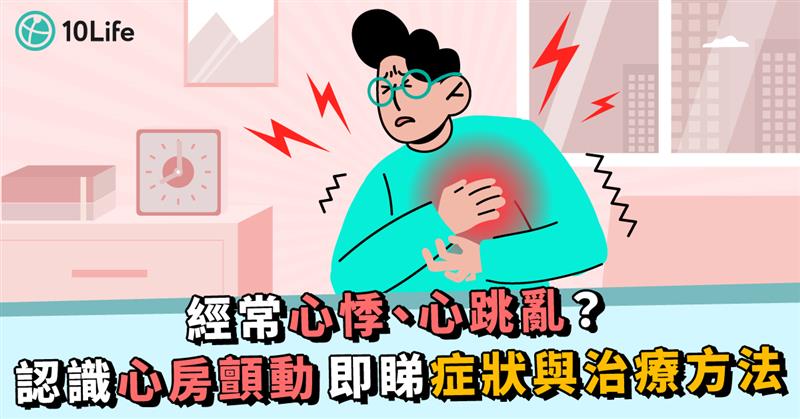
An irregular heartbeat, sometimes fast and sometimes slow, may not be as simple as "high stress"—it could be a warning sign of atrial fibrillation. Atrial fibrillation (AFib) is one of the most common arrhythmias among urban dwellers and can potentially lead to serious complications such as blood clots and stroke. Not only should middle-aged and elderly individuals take note, but even newborns may experience heart rhythm issues. Some babies are found to have arrhythmias or structural heart problems at birth, though many of these conditions often improve as the child grows. However, there are cases where insurance companies may decline coverage due to such issues. This article will provide an in-depth analysis of the types, symptoms, complication risks, diagnostic methods, and treatment options for atrial fibrillation, helping everyone identify risks early and understand prevention and management strategies.
What is Atrial Fibrillation? Types of Atrial Fibrillation
Atrial fibrillation is a common type of arrhythmia characterised by rapid and irregular contraction of the atria, causing the heartbeat to feel as if it is "quivering". This condition affects the heart's ability to pump blood effectively and may even lead to serious complications such as blood clots and stroke.
Based on the duration of episodes and whether normal heart rhythm can be restored, atrial fibrillation can be classified into three types:
Symptoms of Atrial Fibrillation
Symptoms of atrial fibrillation vary from person to person and may sometimes be absent, but common symptoms include:
Can atrial fibrillation cause complications?
Although atrial fibrillation is one of the common arrhythmias among urban dwellers, if not treated in time, it may lead to the following serious complications:
Diagnostic Methods for Atrial Fibrillation
Doctors typically use the following methods to determine if a patient has atrial fibrillation:
Note: Since atrial fibrillation may occur intermittently, a single ECG may not detect abnormalities. Multiple follow-ups or the use of wearable heart rhythm monitors may be necessary for diagnosis.
Can Atrial Fibrillation Be Cured? Treatment Methods for Atrial Fibrillation
Atrial fibrillation is not easily completely "cured", but with appropriate treatment, heart rhythm can be effectively managed, reducing the risk of complications.
Medication Therapy
Cardioversion Therapy
Surgery or Catheter Procedures
In the early stages, patients are generally treated with medication or may attempt to restore normal heart rhythm through medication or electrical cardioversion. If medication proves ineffective, doctors may recommend cardiac catheter ablation. Common treatment methods include radiofrequency ablation, cryoballoon ablation, and pulsed field ablation.
Among these, pulsed field ablation is a relatively new technology. It utilises a high-voltage electric field to create irreversible electroporation in cardiac muscle cells within an extremely short time, precisely targeting and destroying abnormal conduction pathways while minimising damage to surrounding tissues and reducing the risk of complications. The procedure takes approximately 1.5 hours, with a success rate of about 81% and a lower recurrence rate. It is particularly suitable for patients who do not respond well to medication or who exhibit significant symptoms.
Currently, only a few private and public hospitals in Hong Kong offer this technology, with private hospitals such as Canossa Hospital Hong Kong Asia Heart Centre being among the first to introduce it.
How to prevent atrial fibrillation?
To prevent atrial fibrillation, start with lifestyle habits:
Heart conditions cannot be ignored – securing medical insurance brings greater peace of mind
Many people assume that atrial fibrillation is just a minor issue, but in reality, it can be a "hidden killer" with underlying risks. When medication proves ineffective, doctors may recommend cardiac catheter ablation. However, whether performed in public or private hospitals, this treatment is typically self-funded and comes with a significant cost.
Having suitable medical insurance in place beforehand can greatly alleviate the financial burden. The Voluntary Health Insurance Scheme (VHIS) not only provides reimbursement for hospitalisation expenses but also offers tax deduction benefits, ensuring comprehensive health protection and financial planning.
If you wish to find out which VHIS plan best suits your personal needs, feel free to consult with a 10Life licensed insurance advisor in Hong Kong for impartial and professional advice to make a more confident choice in protection.
Related Articles:
What is Sinusitis? Understanding Symptoms, Causes, Types, and Treatments
What is Respiratory Sensitivity? Understanding Symptoms, Diagnosis, and Treatments
Source of Information:
Hong Kong Adventist Hospital. What is Atrial Fibrillation? Understanding Causes, Symptoms, and Treatments
on.cc. New Technology Introduced in Hong Kong for Atrial Fibrillation Treatment, Halving Surgery Time
Last updated: 17 October 2025
This English version of this article has been generated by machine translation powered by AI. It is provided solely for reference purposes. In the event of any discrepancy or inconsistency between this translation and the original Chinese version, the Chinese version shall prevail.
Last updated: 9 Apr 2026

Our team of professional content researchers focussing on insurance
Our team of professional content researchers focussing on insurance
10Life Product Comparison and 10Life Insurance Ratings are developed by 10Life Financial Limited, an authorised insurance broker company licensed with the Insurance Authority under License Number FB1526. 10Life Product Comparison and 10Life Insurance Ratings are developed for generic customer segments using mathematical calculations based on product information, facts and data, and are not influenced by any partnerships with or fees received from insurance companies. Any information on 10Life Platform ("10Life Information"), including but not limited to Product Comparison, Product Ratings, Blog Articles are intended for general education purpose and reference only. None of the 10Life Information is intended, nor should they be considered or relied upon, as regulated advice, insurance, financial, investment or professional advice, recommendation, approval, endorsement, invitation or solicitation in respect of any insurance, financial or investment products. 10Life Information does not take into account your individual needs. Reading 10Life Information should not be considered as conducting a suitability assessment, and is not sufficient to form the basis of any decisions to purchase any insurance products. You should rely on information authorised by insurance companies, carry out your own research and/or seek independent advice from licensed intermediaries before purchasing any insurance products or making any insurance decisions. While reasonable effort is used when collecting, validating and updating 10Life Information from various channels, none of 10Life Group and its subsidiaries, affiliates, agents, directors, officers and employees will be responsible for any liability, claim or loss arising from or associated with you using 10Life Information. No warranty, representation or guarantee is given by 10Life Group and its subsidiaries on the accuracy, completeness and timeliness of the information. If you have any questions on 10Life Product Comparison and 10Life Insurance Ratings, please email us at enquiries@10life.com




 Talk to 10Life on WeChat
