









10Life Financial Limited
Enquiries: enquiries@10life.com
Hotline: (852) 3705 1599
Address: 16/F Greatmany Centre, 109-115 Queen’s Road East, Wan Chai, Hong Kong



Do Hong Kong civil servants have medical insurance?
What medical benefits are available to civil servants?
What are the limitations of Hong Kong civil servants’ medical benefits?
Do non-civil service contract staff receive medical benefits?
Is it a good idea for civil servants to buy additional medical insurance?
What is VMIS?
What additional protection do civil servants need besides medical cover?


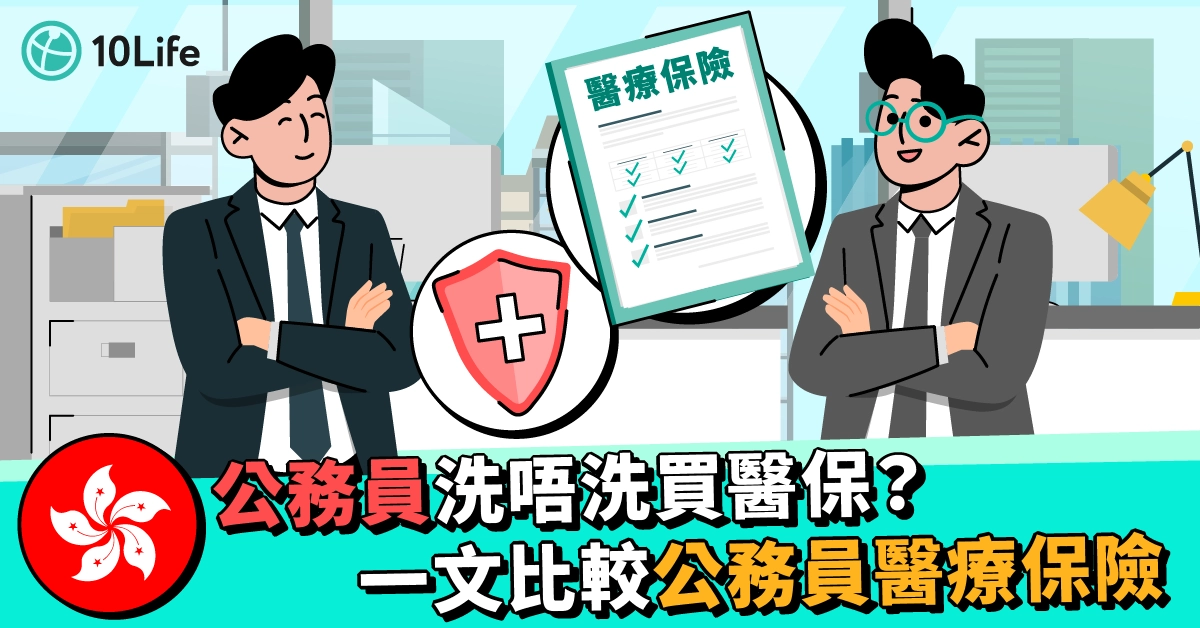
Do civil servants need to purchase additional medical insurance? Although civil servants enjoy decent medical benefits, there are still limitations. Civil servants should have a thorough understanding of the scope of their coverage and assess whether additional protection is needed. This article will compare civil service medical insurance to help civil servants make contingency arrangements.
Do Hong Kong civil servants have medical insurance?
Hong Kong civil servants are entitled to a range of medical benefits, including free consultations at public hospitals and clinics, as well as subsidies for certain dental treatments. However, these medical benefits are not entirely unlimited. For example, civil servants may only seek treatment at designated public hospitals and clinics. If they want faster or more private medical services, such as admission to a private hospital, they will need to pay out of pocket. In addition, civil servants will lose these medical benefits after retirement. As a result, many civil servants purchase medical insurance both during their employment and after retirement.
What medical benefits are available to civil servants?
Civil servants may use, free of charge, the basic medical and dental services provided by the Department of Health or the Hospital Authority, including general outpatient clinic services and accident and emergency services. There are 73 general outpatient clinics under the Hospital Authority, of which 65 reserve priority quotas for civil servants. In general, during daytime consultation hours, the total number of priority quotas available each day is around 2,000. In addition, the Department of Health operates six civil service clinics across Hong Kong, Kowloon and the New Territories, providing general outpatient services for civil servants and eligible persons. Furthermore, from 29 September 2021, the Hong Kong Civil Servants General Medical and Health Centre has also been set up in Central, with the aim of allowing diabetic patients referred by civil service clinics to undergo risk assessments for diabetic complications at the centre, and to formulate care plans according to their individual clinical needs. Civil servants and eligible persons may make appointments for same-day, within the next 24 hours, or within the next seven working days for outpatient tickets through the manual appointment hotline or the automated telephone appointment system.
In addition to basic public healthcare services, civil servants may also enjoy free and priority booking for specialist outpatient services, reducing waiting time for appointments.
The Government has specially set up three civil service Chinese medicine clinics to provide civil servants with free Chinese internal medicine and acupuncture services. Up to five doses of Chinese medicine may be prescribed per consultation.
If non-Hospital Authority/Department of Health medical services, medicines and equipment are required, and the relevant supporting documents are obtained, civil servants and eligible persons may apply to the Department of Health for reimbursement of medical expenses.
The Government provides civil servants with special discounted medical services, including hospitalisation fees and fees for dentures and oral appliances, enabling civil servants to access medical resources at preferential prices.
Civil servants’ medical benefits also cover spouses and unmarried children under the age of 21. Even after retirement, civil servants under the old scheme and their families may continue to enjoy free public healthcare services.
What are the limitations of Hong Kong civil servants’ medical benefits?
Civil servants and eligible persons can enjoy medical treatment services free of charge, but they often also have to face long waiting times. Taking the waiting period for specialist outpatient services as an example, and using Block L of Queen Elizabeth Hospital, which is designated for civil servants and eligible persons, as an example, the waiting time for new internal medicine cases exceeds 130 weeks, meaning a wait of more than two and a half years. In addition, some examinations that require more advanced equipment, such as CT scans and MRI scans, are often in short supply.
Under the old system, retired civil servants and their family members had to continue living in Hong Kong in order to keep enjoying free medical care. Under the new system, civil servants will lose the medical benefits they enjoyed while in service after retirement. This means that civil servants will have to bear their own medical expenses after retirement.
Civil servants’ medical benefits are limited to government public hospitals and do not include services provided by private hospitals. When visiting a public hospital for medical treatment, civil servants and eligible persons must first pass the Medical Benefits Eligibility Verification System and present valid identity documents before they can enjoy free medical services. In addition, if a doctor in charge at the Hospital Authority/Department of Health certifies that the relevant drugs, equipment and services are medically necessary due to the condition, but are not items provided by the Hospital Authority/Department of Health, civil servants and eligible persons must submit a series of supporting documents to the Department of Health to apply for reimbursement of medical expenses.
Do non-civil service contract staff receive medical benefits?
Generally speaking, non-civil service contract staff are not covered by the healthcare benefits provided by the Government for civil servants. They can only rely on private medical insurance purchased by themselves, or the public healthcare services provided by the Government.
Is it a good idea for civil servants to buy additional medical insurance?
According to the Civil Service Bureau, civil servants and their eligible dependants are entitled to benefits such as public healthcare services, Chinese medicine treatment and reimbursement of medical expenses. However, in recent years, public healthcare resources have remained increasingly tight, with long waiting times for medical consultations; there are also limitations on the choice of doctors, treatments and subsidised medicines, which may not be able to meet the healthcare needs of all civil servants. In addition, as age increases, civil servants’ healthcare needs may also gradually rise. It is therefore very important to prepare early for medical protection after retirement. Many civil servants choose to purchase additional medical insurance to meet their personal needs and obtain more comprehensive healthcare protection.
What is VMIS?
VMIS, the “Voluntary Medical Insurance Scheme for Civil Servants and Non-Civil Servants Employed by the Government”, aims to provide additional medical coverage for civil servants, non-civil servants employed by the Government, and their dependants. This scheme has been implemented by the Civil Service Medical and Dental Benefits Advisory Committee since 1996; from 2002 onwards, non-civil servants employed by the Government and their dependants could also join the scheme. Civil servants and non-civil servants employed by the Government who have purchased VMIS medical insurance products may continue to renew their policies after retirement, but the renewal conditions may vary depending on the policy. Some VMIS products offer broader coverage than VHIS, the Voluntary Health Insurance Scheme. Before taking out insurance, applicants should first review the relevant policy terms in detail.
For the 2023/24 period, VMIS is underwritten by the following 11 insurers:
In addition, among the “Civil Servants and Non-Civil Servants Employed by the Government (VMIS)”, 14 plans are also “certified products” under the Voluntary Health Insurance Scheme and are eligible for tax deductions. The VMIS premiums are paid by civil servants out of their own pockets, and the Government does not bear the cost.
What additional protection do civil servants need besides medical cover?
The existing medical coverage for civil servants is reimbursement-based. Although civil servants enjoy more leave, sick leave is also capped, and serious illnesses usually require a treatment and recovery period of 1 to 2 years. During this period, a civil servant’s income may be affected. Critical illness insurance provides civil servants with a lump-sum compensation payment, which can help them cope with medical expenses and living costs, easing financial pressure.
As with ordinary people, civil servants may face various accident risks in work and daily life, such as sudden accidents and traffic incidents. Accident insurance can provide timely claims to cover unexpected expenses arising from accidents, reducing the financial burden. It is worth noting that accident insurance premiums can generally be ranked from lowest to highest according to the following four occupation categories:
Category 1: Indoor non-manual work, such as clerical staff, administration, teachers, doctors and other professionals.
Category 2: People who work indoors but also do a small amount of outdoor manual work.
Category 3: People who do manual work both indoors and outdoors, such as government grade 2 workers, lorry drivers, chefs, and so on.
Category 4: High-risk occupations, such as construction workers, delivery workers, and disciplined services members (including police officers, firefighters, Customs officers, Immigration officers, Correctional Services officers and Government Flying Service personnel).
Therefore, civil servants in different occupations will also pay different premiums. In addition, different insurers may have different ways of classifying occupations. It is recommended to carefully understand the scope of cover before taking out a policy, or to consult the insurer directly for relevant information, to ensure that you obtain the protection best suited to your needs.
As a Hong Kong insurance comparison platform, 10Life introduces an actuarially designed scoring system to fairly compare different insurance products, enabling consumers to choose the most suitable insurance product for themselves. Check out VHIS comparison now to learn more.
This English version of this article has been generated by machine translation powered by AI. It is provided solely for reference purposes. In the event of any discrepancy or inconsistency between this translation and the original Chinese version, the Chinese version shall prevail.
Our team of professional content researchers focussing on insurance
Our team of professional content researchers focussing on insurance
10Life Product Comparison and 10Life Insurance Ratings are developed by 10Life Financial Limited, an authorised insurance broker company licensed with the Insurance Authority under License Number FB1526. 10Life Product Comparison and 10Life Insurance Ratings are developed for generic customer segments using mathematical calculations based on product information, facts and data, and are not influenced by any partnerships with or fees received from insurance companies. Any information on 10Life Platform ("10Life Information"), including but not limited to Product Comparison, Product Ratings, Blog Articles are intended for general education purpose and reference only. None of the 10Life Information is intended, nor should they be considered or relied upon, as regulated advice, insurance, financial, investment or professional advice, recommendation, approval, endorsement, invitation or solicitation in respect of any insurance, financial or investment products. 10Life Information does not take into account your individual needs. Reading 10Life Information should not be considered as conducting a suitability assessment, and is not sufficient to form the basis of any decisions to purchase any insurance products. You should rely on information authorised by insurance companies, carry out your own research and/or seek independent advice from licensed intermediaries before purchasing any insurance products or making any insurance decisions. While reasonable effort is used when collecting, validating and updating 10Life Information from various channels, none of 10Life Group and its subsidiaries, affiliates, agents, directors, officers and employees will be responsible for any liability, claim or loss arising from or associated with you using 10Life Information. No warranty, representation or guarantee is given by 10Life Group and its subsidiaries on the accuracy, completeness and timeliness of the information. If you have any questions on 10Life Product Comparison and 10Life Insurance Ratings, please email us at enquiries@10life.com




 Talk to 10Life on WeChat
