









10Life Financial Limited
Enquiries: enquiries@10life.com
Hotline: (852) 3705 1599
Address: 16/F Greatmany Centre, 109-115 Queen’s Road East, Wan Chai, Hong Kong



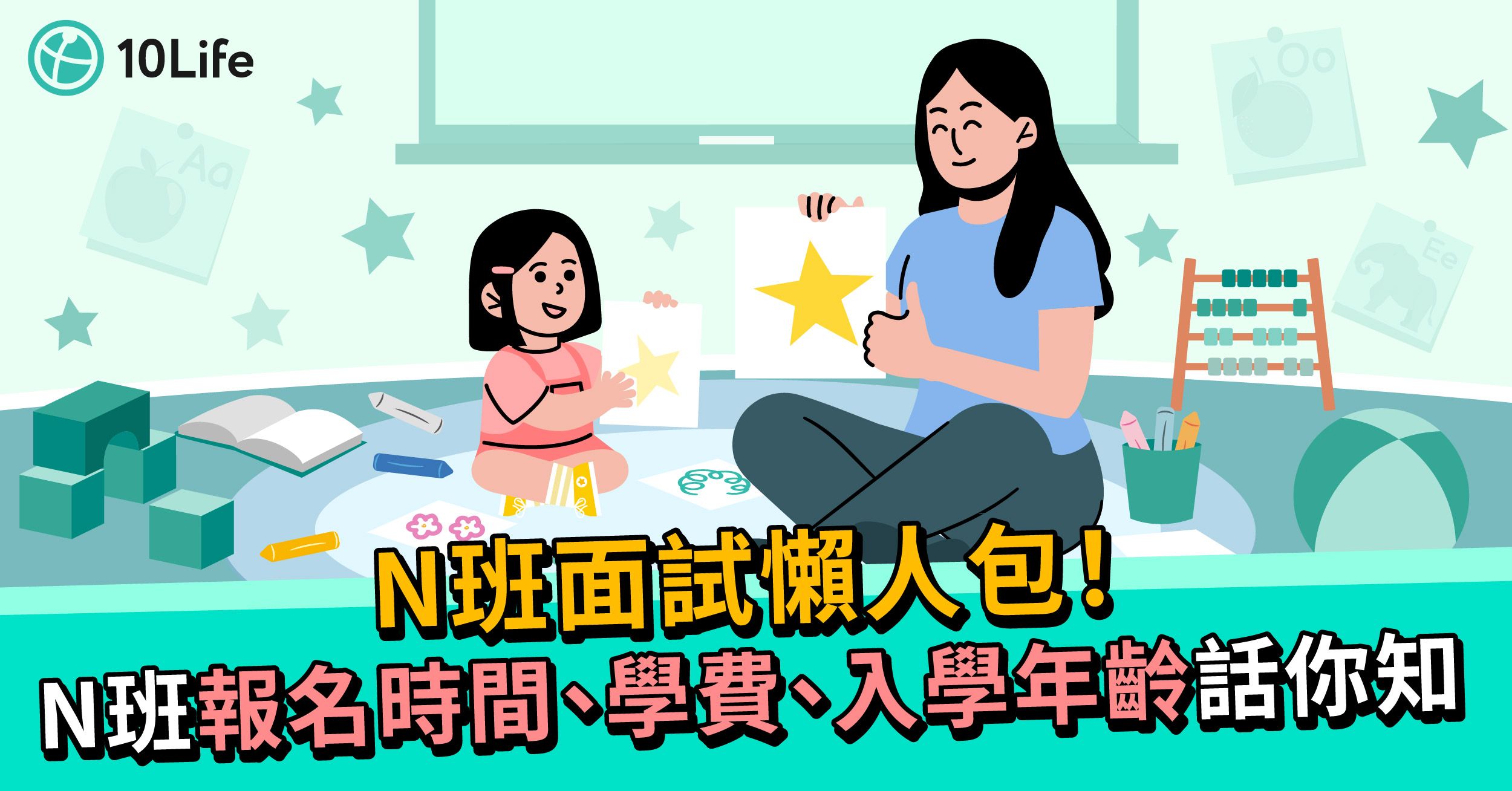
When a child is just born, parents may already face a concern: should they enrol them in a pre-nursery class, the so-called “N class” (Pre-Nursery)? According to the Education Bureau’s regulations, only children aged 2 or above may attend N class, but parents should start gathering information as early as when their child turns 1. If first-time parents do not pay attention to this, they may miss the application deadline set by the school and affect their child’s admission. The “N class” curriculum is regulated under the Education Ordinance and the Child Care Services Ordinance, so the quality of the programme is assured to a certain extent. Below, 10Life explains in detail the N class admission age and tuition fees, as well as information on the N class interview and application process.
If parents wish to enrol their child in some of the more popular and well-regarded top schools, such as Learning Habitat, Victoria Kindergarten, St. Catherine's International Kindergarten and Nursery, Creative Kindergarten (Main School), Kowloon Ling Liang Church Nursery School, Cannan Kindergarten (Waterloo Road), Po Leung Kuk Chan Lai Wai Yin Kindergarten, and Keenmind Kindergarten, it is necessary to start preparing early. In fact, when considering whether to enrol a child in an N class, parents can approach it from the following aspects to observe the child’s development and needs, so as to choose the most suitable path for their growth.
Before considering whether to enrol a child in N class, parents can first observe the child’s abilities and developmental needs, such as social and language skills. At around age two, children begin to imitate adults’ words and actions, especially in speech. If a child has not yet mastered their mother tongue and is then placed in an N class taught in a second language, they may face learning difficulties. A speech therapist has pointed out that, in recent years, children in Hong Kong have often developed language confusion due to being exposed to multiple languages too early, and may even be unable to form complete sentences. She therefore recommends that children should first learn their mother tongue well before learning a second language, to ensure that language development is not affected.
Every child is unique, with different personality traits. If a child is relatively shy and introverted, and has limited contact with the outside world in everyday life, enrolling in N class may help them learn how to get along in a group and develop social skills. If a child is outgoing and proactive, and already has more social experience as well as a basic understanding of rules and manners, parents may consider teaching them at home.
The average monthly fee for N class ranges from HK$3,000 to HK$6,000, and meal expenses and other miscellaneous charges must also be taken into account, making it a considerable expense. Therefore, parents need to consider whether they can afford both nursery fees and daily living expenses at the same time.
The daily life of a two-year-old is no longer just about eating, sleeping and playing. In addition to basic needs, they also need to gradually develop self-care abilities, knowledge and social skills, such as putting on shoes and greeting others. Therefore, parents need to consider whether they or the child’s main caregiver have the time and ability to accompany the child, and whether they can teach and help accumulate different experiences in daily life. They should also consider whether there are sufficient opportunities for the child to interact with other children of the same age, so that they can learn social skills.
Parents should take into account the school’s location and teaching philosophy. They need to consider the distance between the school and home, so as to avoid the child becoming tired or developing resistance to school due to a long daily commute. At the same time, parents should also consider whether the school’s ethos and teaching philosophy align with the family’s educational beliefs, so as to avoid the child becoming confused by different standards and expectations at home and at school.
Parents can start gathering relevant information about different schools online from April each year, such as their religious background, teaching methods, educational philosophy, curriculum structure and fees. They may also ask relatives and friends about the reputation of their preferred schools and refer to various reviews. Of course, when choosing a school, parents need to consider multiple factors, including their place of residence and the school’s location, the child’s personality and learning needs, as well as parental expectations. In making these considerations, parents need to analyse carefully to ensure they choose the most suitable school for their child.
At the same time, attending briefing sessions held by pre-school education institutions is an excellent opportunity for parents to gain a deeper understanding of the school’s educational policies, philosophy and curriculum. In addition, parents may also take their children to visit schools on open days. This not only helps them gain a deeper understanding of the school’s facilities, but also allows the child to take part in the school selection process, further strengthening their sense of belonging to the chosen school.
Taking 2024 admissions as an example, most schools will admit students between August 2023 and January 2024, and in general, October to November is the peak admission period. Parents should enquire in advance with their preferred schools about the exact admission dates and apply on time to avoid missing the application deadline.
As N class places are often in short supply, parents who, after considering all factors, decide to apply for N class should then carry out research and select their preferred school or nursery. First, confirm that the child meets the N class entry age at the time of admission. Taking applications for the 2024–25 N class as an example, the entry age for N class is 2 years old (i.e. born on or before 31 August 2022; if the child is still under 2 after the start of term in September, they must wait until they reach 2 before enrolling).
After choosing their preferred school, parents should pay attention to the application period and N class application process. In general, they should prepare the required documents one year before the school year begins. After checking the school’s application dates and deadlines, submit the application on time. At the same time, parents must also take note of the N class interview process and prepare early, so as to leave the school with a favourable impression of sincerity and commitment.
The general N class application procedure is as follows:
The interview schedule for N class varies from school to school, but is usually between October and March of the following year. In general, the interview date cannot be changed at will. To avoid forgetting the interview and missing the opportunity, parents are advised to note down the date as soon as they receive the interview notice.
During N-class interviews, children are usually only around one year old. Many younger children born later in the year, or toddlers with slower development, may not even be able to speak yet. At this stage, the interview naturally cannot fully showcase the children’s abilities, so the outcome mainly depends on body language and responsiveness. As a result, N-class interview questions are basically answered by parents, and may include:
A child’s abilities are assessed in several areas, including cognition, skills and character. In terms of cognition, assessors will use specific games and activities to evaluate the child’s language ability, hand-eye coordination and comprehension, among other things. Through interaction with the interview teacher, the teacher will observe how the child answers questions, as well as their ability to handle tasks and solve problems. Finally, in terms of character, by observing the child’s ability to cope with different situations and their attitude towards others — for example, whether they are polite, well-mannered, able to get along harmoniously in group activities, friendly, or whether they display traits such as being domineering or shy — the interviewer can comprehensively assess the child’s developmental level.
After understanding the information on N-class application, fees and entry age, parents should have a clearer idea and be better able to make a decision.
In addition, to help children build a fulfilling life, many parents consider buying medical insurance and savings insurance for their children. You may refer to 10Life’s comparisons of different insurance products, where the coverage details and premiums are clearly set out, together with actuary ratings. If you would like to know more, you are also welcome to enquire with 10Life’s professional insurance consultants.
Source: Media reports
Last updated: 19 October 2023
This English version of this article has been generated by machine translation powered by AI. It is provided solely for reference purposes. In the event of any discrepancy or inconsistency between this translation and the original Chinese version, the Chinese version shall prevail.
Our team of professional content researchers focussing on insurance
Our team of professional content researchers focussing on insurance
10Life Product Comparison and 10Life Insurance Ratings are developed by 10Life Financial Limited, an authorised insurance broker company licensed with the Insurance Authority under License Number FB1526. 10Life Product Comparison and 10Life Insurance Ratings are developed for generic customer segments using mathematical calculations based on product information, facts and data, and are not influenced by any partnerships with or fees received from insurance companies. Any information on 10Life Platform ("10Life Information"), including but not limited to Product Comparison, Product Ratings, Blog Articles are intended for general education purpose and reference only. None of the 10Life Information is intended, nor should they be considered or relied upon, as regulated advice, insurance, financial, investment or professional advice, recommendation, approval, endorsement, invitation or solicitation in respect of any insurance, financial or investment products. 10Life Information does not take into account your individual needs. Reading 10Life Information should not be considered as conducting a suitability assessment, and is not sufficient to form the basis of any decisions to purchase any insurance products. You should rely on information authorised by insurance companies, carry out your own research and/or seek independent advice from licensed intermediaries before purchasing any insurance products or making any insurance decisions. While reasonable effort is used when collecting, validating and updating 10Life Information from various channels, none of 10Life Group and its subsidiaries, affiliates, agents, directors, officers and employees will be responsible for any liability, claim or loss arising from or associated with you using 10Life Information. No warranty, representation or guarantee is given by 10Life Group and its subsidiaries on the accuracy, completeness and timeliness of the information. If you have any questions on 10Life Product Comparison and 10Life Insurance Ratings, please email us at enquiries@10life.com




 Talk to 10Life on WeChat
