









10Life Financial Limited
Enquiries: enquiries@10life.com
Hotline: (852) 3705 1599
Address: 16/F Greatmany Centre, 109-115 Queen’s Road East, Wan Chai, Hong Kong



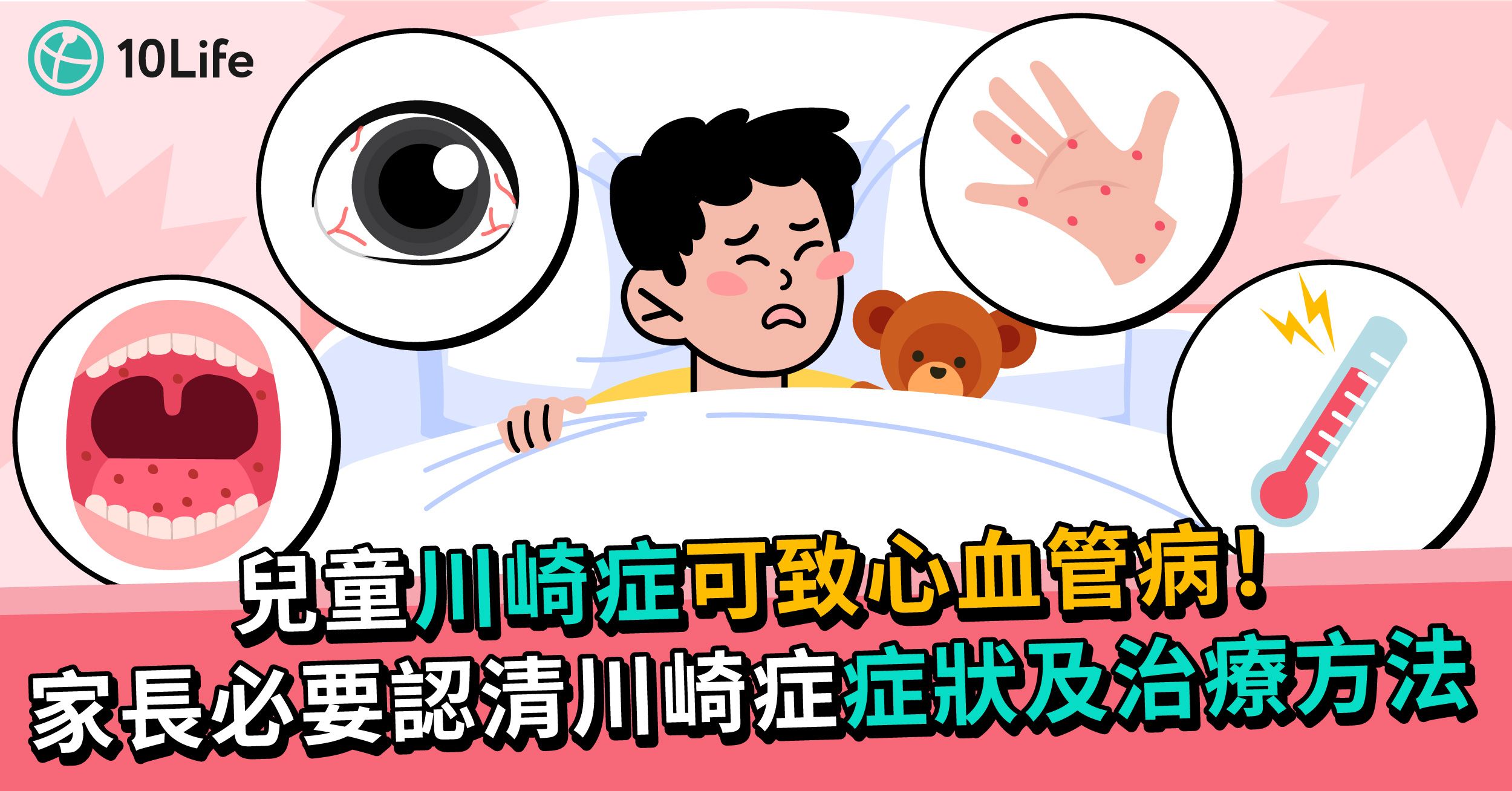
Kawasaki disease is a condition that causes severe inflammation of the blood vessels, and is most commonly seen in children aged two to five, though infants under one year old may also develop it. Although Kawasaki disease is not considered a common illness, there are still around 100 cases locally each year, so parents should be particularly alert to whether their children show any related symptoms. In the following, 10Life will introduce the symptoms and treatment methods of Kawasaki disease, as well as the likelihood of recurrence and any after-effects.
Why is this disease called Kawasaki disease? It was first reported in 1967 by the Japanese paediatrician Tomisaku Kawasaki, and was therefore named Kawasaki disease.
To this day, the medical community has still not confirmed the exact cause of Kawasaki disease. However, researchers generally believe that it may be triggered by the combined effects of multiple factors, including genetics, the environment and infection, leading to an abnormal autoimmune response in patients and causing various inflammatory reactions in the body.
As for the risk factors for Kawasaki disease, the incidence rate among people of Asian descent is higher than that of non-Asian people. In terms of age, children aged two to five are at higher risk. In terms of sex, boys have a higher incidence rate than girls.
| Fever | Persistent high fever lasting five days or more and not subsiding |
| Eyes | Conjunctival congestion causing red eyes |
| Lips | Dry, cracked lips with a bright red appearance |
| Tongue | A bright red tongue resembling a strawberry, also known as a “strawberry tongue” |
| Neck | Swollen lymph nodes |
| Limbs | Swollen hands and feet, with reddened palms; after around ten days, the fingers and toes begin to peel |
| Rash | An erythematous rash in various shapes |
In addition to the above major symptoms, Kawasaki disease causes inflammation of blood vessels throughout the body, particularly affecting the function of small and medium-sized vessels. The vessel walls become inflamed and fragile, and gradually expand, forming coronary artery aneurysms. At the same time, Kawasaki disease may also lead to cardiac complications, and the sequelae of Kawasaki disease are a major risk factor for acquired heart disease in children.
Doctors usually diagnose Kawasaki disease based on clinical symptoms, including a child having a high fever that persists for five days without subsiding and cannot be explained by any other pathology, together with any four of the above major symptoms.
The first ten days after developing Kawasaki disease are the golden treatment period. The main treatment methods are the use of immunoglobulin (gamma globulin) and high-dose aspirin. Immunoglobulin helps reduce the risk of cardiac complications, while aspirin is used to suppress systemic inflammation and significantly lower the likelihood of coronary artery aneurysms.
However, as aspirin is generally unsuitable for children, especially given research broadly showing a strong association between children taking aspirin and the brain disorder Reye’s syndrome, most doctors no longer prescribe aspirin to children, except that it is recommended for the treatment of Kawasaki disease.
After recovery from Kawasaki disease, if the patient’s heart has previously been inflamed, it is necessary to continue taking a low dose of aspirin to reduce heart problems caused by inflammation of the blood vessels. After receiving timely and appropriate treatment and making a full recovery, the recurrence rate of Kawasaki disease is 3% to 5%, and it is more common in children with an allergic predisposition. However, once Kawasaki disease recurs, it will again have a serious impact on the patient’s cardiovascular system. For patients whose hearts have been affected by Kawasaki disease, regular follow-up appointments and examinations are very important to confirm that their cardiovascular condition remains normal. At the same time, they should maintain a healthy diet and avoid placing additional strain on the cardiovascular system.
Whether at the first consultation or upon recurrence, if treatment for Kawasaki disease is delayed, the after-effects can be severe and may lead to heart complications, such as cardiovascular abnormalities and coronary aneurysms. In serious cases, long-term medication may be required for life.
As a disease that can affect the heart and blood vessels, parents should closely monitor whether their children develop any symptoms of Kawasaki disease, so as not to delay treatment. For the safety of the whole family, you may consider purchasing medical insurance for your child. 10Life provides a detailed comparison of insurance products to help parents choose the most suitable protection plan.
Source: media reports
Last updated: 25 October 2023

This English version of this article has been generated by machine translation powered by AI. It is provided solely for reference purposes. In the event of any discrepancy or inconsistency between this translation and the original Chinese version, the Chinese version shall prevail.
Our team of professional content researchers focussing on insurance
Our team of professional content researchers focussing on insurance
10Life Product Comparison and 10Life Insurance Ratings are developed by 10Life Financial Limited, an authorised insurance broker company licensed with the Insurance Authority under License Number FB1526. 10Life Product Comparison and 10Life Insurance Ratings are developed for generic customer segments using mathematical calculations based on product information, facts and data, and are not influenced by any partnerships with or fees received from insurance companies. Any information on 10Life Platform ("10Life Information"), including but not limited to Product Comparison, Product Ratings, Blog Articles are intended for general education purpose and reference only. None of the 10Life Information is intended, nor should they be considered or relied upon, as regulated advice, insurance, financial, investment or professional advice, recommendation, approval, endorsement, invitation or solicitation in respect of any insurance, financial or investment products. 10Life Information does not take into account your individual needs. Reading 10Life Information should not be considered as conducting a suitability assessment, and is not sufficient to form the basis of any decisions to purchase any insurance products. You should rely on information authorised by insurance companies, carry out your own research and/or seek independent advice from licensed intermediaries before purchasing any insurance products or making any insurance decisions. While reasonable effort is used when collecting, validating and updating 10Life Information from various channels, none of 10Life Group and its subsidiaries, affiliates, agents, directors, officers and employees will be responsible for any liability, claim or loss arising from or associated with you using 10Life Information. No warranty, representation or guarantee is given by 10Life Group and its subsidiaries on the accuracy, completeness and timeliness of the information. If you have any questions on 10Life Product Comparison and 10Life Insurance Ratings, please email us at enquiries@10life.com




 Talk to 10Life on WeChat
