









10Life Financial Limited
Enquiries: enquiries@10life.com
Hotline: (852) 3705 1599
Address: 16/F Greatmany Centre, 109-115 Queen’s Road East, Wan Chai, Hong Kong




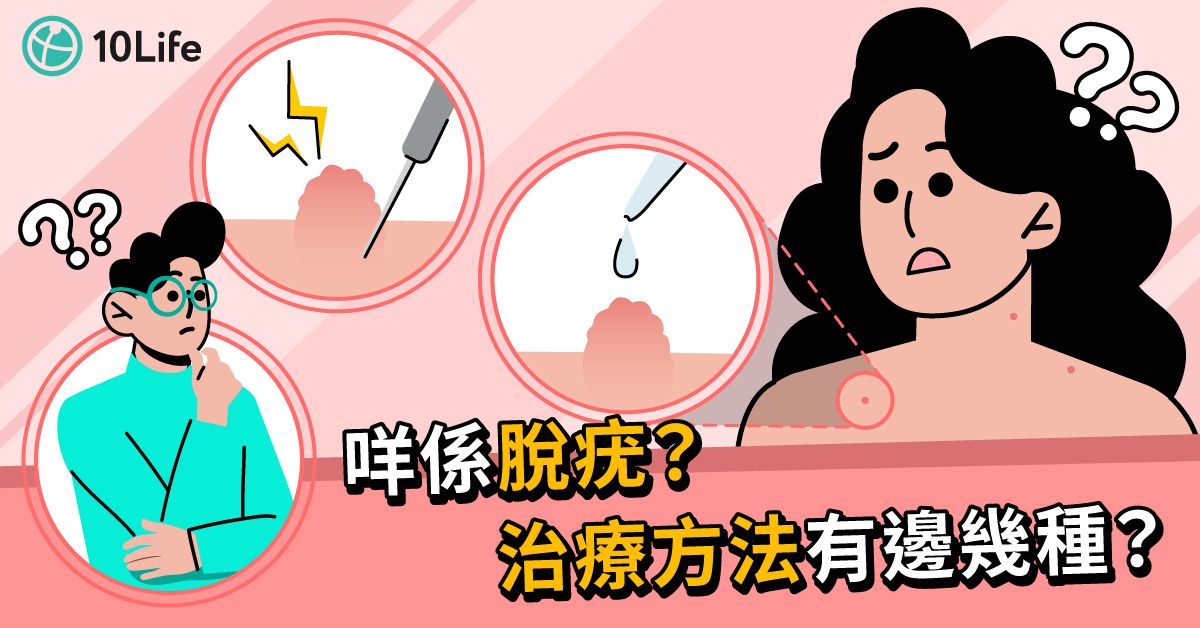
Warts are a very common skin condition in Hong Kong, and people of any age can get them. Although warts are usually asymptomatic, some people may experience itching and pain. Some medical institutions recommend that patients undergo wart removal treatment and file claims with insurance companies. However, not everyone can successfully claim. In fact, disputes over claims for wart removal are ongoing. Today, 10Life discusses the types of warts, methods of wart removal, and the key elements for successful claims.
Warts are a common contagious skin disease caused by the human papillomavirus (Human Papilloma Virus, HPV), causing abnormal keratin proliferation of the epidermis. There are over a hundred types of HPV; different viruses cause different skin problems, among which flat warts, plantar warts, and common warts are the most common.
| Type | Symptoms |
Flat warts | Approximately 1 mm in size, often light brown, and concentrated on the face, neck, and upper body. |
Common warts | 5 to 10 mm in size, with a rough surface, commonly found on fingers, palms, and the backs of hands. |
Plantar warts | Occur on the soles or toes; patients may experience pain when standing or walking due to pressure. |
Warts usually disappear on their own within six months. However, if the symptoms persist, wart removal may be necessary. There are many methods for wart removal, so patients should first seek the professional opinion of a dermatology specialist and then choose a treatment based on their individual circumstances. Readers should note, however, that because warts are a viral infection, they can still recur even after being cleared.
| Treatment | Method |
Topical medications | Apply salicylic acid or immune-modulating medications to the affected area. |
Laser treatment | Use a CO2 laser to vaporize the wart tissue. Generally requires 1 to 2 treatments. |
| Cryotherapy | Use liquid nitrogen at low temperatures to necrose the wart tissue and cause it to fall off. Generally requires multiple treatments. |
| Electrocautery treatment | Use high-temperature electrocautery to evaporate the moisture within the wart and destroy its tissue. |
Surgical excision | Surgically remove the wart tissue. |
Many medical institutions offer wart removal treatment, with some claiming prices as low as a few thousand Hong Kong dollars, and others pricing by body area. Some private hospitals or medical centres provide carbon dioxide laser wart removal fee information on their websites, with prices ranging from about HK$700 to over HK$16,000. Because prices may vary depending on the quantity and location, you should check with the relevant institution for the actual charges.
| Private Hospital / Medical Centre | Price |
From $695 | |
From $2,500 | |
From $5,322 | |
From $8,000 | |
$7,000 to $16,650 |
The Consumer Council earlier published a report, stating that staff at medical centres claimed wart removal treatment costs could be covered by medical insurance. The Consumer Council reminds that unless the staff hold insurance practitioner qualifications, they cannot be relied upon to provide authoritative statements on insurance claim matters. Successful claim examples mentioned by staff may be individual cases; consumers should not take them at face value.
In fact, insurers will only reimburse surgeries or treatments that are "medically necessary" and performed personally by a registered doctor. Procedures or treatments carried out for cosmetic purposes are generally excluded. In addition, if the claimed amount exceeds the "reasonable and customary" medical fees, the insurer may not cover the full amount.
Also, users should pay attention to the scope of medical insurance coverage. Some products, even if they fully cover general surgeries, may set individual sub-limits for specified procedures. For example, in the FTLife "FlexiCare" Medical Protection Plan, for excision of skin or subcutaneous diseased tissue, cryotherapy, electrocautery, and laser treatment, the surgeon's fee is reimbursed up to HK$5,000 per operation.
To reduce disputes, policyholders should, before undergoing surgery or treatment, first check with their insurer to understand the scope of coverage and the estimated reimbursement amount, and then decide whether to proceed with the treatment.
Warts can be transmitted through direct or indirect contact, so people should pay attention to personal hygiene in daily life and avoid sharing personal items such as towels and slippers with others. On the other hand, walking barefoot in public places increases the risk of infection, such as public swimming pools, yoga studios and gyms, etc., therefore some doctors recommend that yoga practitioners wear socks when exercising, and swimmers wear sandals or flip-flops in the pool area.
Note:
1. References: Hong Kong Sanatorium & Hospital (Health), Hong Kong Adventist Hospital - Tsuen Wan
2. This article last updated: 20 January 2025
This English version of this article has been generated by machine translation powered by AI. It is provided solely for reference purposes. In the event of any discrepancy or inconsistency between this translation and the original Chinese version, the Chinese version shall prevail.
Our team of professional content researchers focussing on insurance
Our team of professional content researchers focussing on insurance
10Life Product Comparison and 10Life Insurance Ratings are developed by 10Life Financial Limited, an authorised insurance broker company licensed with the Insurance Authority under License Number FB1526. 10Life Product Comparison and 10Life Insurance Ratings are developed for generic customer segments using mathematical calculations based on product information, facts and data, and are not influenced by any partnerships with or fees received from insurance companies. Any information on 10Life Platform ("10Life Information"), including but not limited to Product Comparison, Product Ratings, Blog Articles are intended for general education purpose and reference only. None of the 10Life Information is intended, nor should they be considered or relied upon, as regulated advice, insurance, financial, investment or professional advice, recommendation, approval, endorsement, invitation or solicitation in respect of any insurance, financial or investment products. 10Life Information does not take into account your individual needs. Reading 10Life Information should not be considered as conducting a suitability assessment, and is not sufficient to form the basis of any decisions to purchase any insurance products. You should rely on information authorised by insurance companies, carry out your own research and/or seek independent advice from licensed intermediaries before purchasing any insurance products or making any insurance decisions. While reasonable effort is used when collecting, validating and updating 10Life Information from various channels, none of 10Life Group and its subsidiaries, affiliates, agents, directors, officers and employees will be responsible for any liability, claim or loss arising from or associated with you using 10Life Information. No warranty, representation or guarantee is given by 10Life Group and its subsidiaries on the accuracy, completeness and timeliness of the information. If you have any questions on 10Life Product Comparison and 10Life Insurance Ratings, please email us at enquiries@10life.com



 Talk to 10Life on WeChat
