









10Life Financial Limited
Enquiries: enquiries@10life.com
Hotline: (852) 3705 1599
Address: 16/F Greatmany Centre, 109-115 Queen’s Road East, Wan Chai, Hong Kong




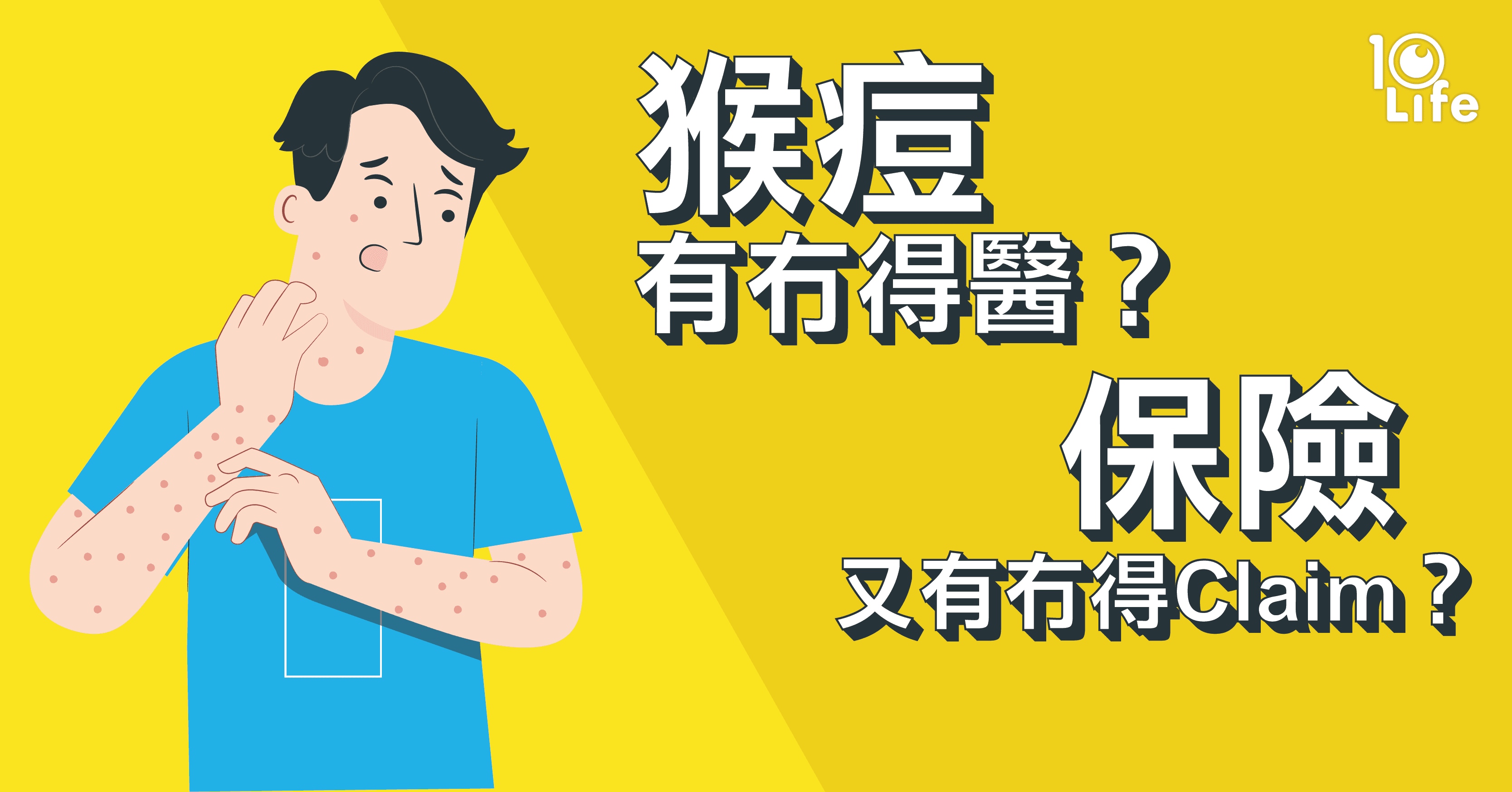
Monkeypox is a viral infectious disease that can be contracted through contact with infected animals, people or objects. For example, infection may occur after eating inadequately cooked meat from infected animals or being bitten by an infected animal. The virus can also be transmitted through respiratory droplets or direct contact with bodily fluids, such as through sexual contact, resulting in person-to-person transmission.
The incubation period for monkeypox ranges from 5 to 21 days, but is generally 6 to 13 days.
| Invasion period |
|
| Rash period |
|
The mortality rate of monkeypox ranges from 1% to 10%. Since the beginning of this year, there have been at least 5 deaths in Africa.
Rosamund Lewis, head of the smallpox section of the WHO’s Emergencies Programme, said that the monkeypox virus mutates less frequently, and there is currently no evidence of a viral variant.
People with monkeypox generally recover on their own. Furthermore, Professor David Hui, Director of the HKU Centre for Influenza Research and the Centre for Health Protection stated that this monkeypox cluster was primarily transmitted through sexual contact. He believes that the risk of monkeypox being imported into Hong Kong is low. In addition, as it is not highly contagious and Hong Kong has sufficient isolation facilities, members of the public need not be overly concerned.
Good personal and hand hygiene can help prevent the transmission of viruses through contact. In addition, if readers visit places affected by monkeypox virus, they should avoid contact with patients or animals; wear protective clothing and equipment, including gloves and surgical masks, when caring for patients or handling animals, and wash their hands after the procedure; thoroughly cook animal products before eating; and seek medical attention as soon as possible if they develop any suspicious symptoms.
This English version of this article has been generated by machine translation powered by AI. It is provided solely for reference purposes. In the event of any discrepancy or inconsistency between this translation and the original Chinese version, the Chinese version shall prevail.
Our team of professional content researchers focussing on insurance
Our team of professional content researchers focussing on insurance
10Life Product Comparison and 10Life Insurance Ratings are developed by 10Life Financial Limited, an authorised insurance broker company licensed with the Insurance Authority under License Number FB1526. 10Life Product Comparison and 10Life Insurance Ratings are developed for generic customer segments using mathematical calculations based on product information, facts and data, and are not influenced by any partnerships with or fees received from insurance companies. Any information on 10Life Platform ("10Life Information"), including but not limited to Product Comparison, Product Ratings, Blog Articles are intended for general education purpose and reference only. None of the 10Life Information is intended, nor should they be considered or relied upon, as regulated advice, insurance, financial, investment or professional advice, recommendation, approval, endorsement, invitation or solicitation in respect of any insurance, financial or investment products. 10Life Information does not take into account your individual needs. Reading 10Life Information should not be considered as conducting a suitability assessment, and is not sufficient to form the basis of any decisions to purchase any insurance products. You should rely on information authorised by insurance companies, carry out your own research and/or seek independent advice from licensed intermediaries before purchasing any insurance products or making any insurance decisions. While reasonable effort is used when collecting, validating and updating 10Life Information from various channels, none of 10Life Group and its subsidiaries, affiliates, agents, directors, officers and employees will be responsible for any liability, claim or loss arising from or associated with you using 10Life Information. No warranty, representation or guarantee is given by 10Life Group and its subsidiaries on the accuracy, completeness and timeliness of the information. If you have any questions on 10Life Product Comparison and 10Life Insurance Ratings, please email us at enquiries@10life.com



 Talk to 10Life on WeChat
