









10Life Financial Limited
Enquiries: enquiries@10life.com
Hotline: (852) 3705 1599
Address: 16/F Greatmany Centre, 109-115 Queen’s Road East, Wan Chai, Hong Kong



What is pre-eclampsia?1,2
Causes of pre-eclampsia1,2
Symptoms of pre-eclampsia3
Who is more likely to develop pre-eclampsia?3
What impact does pre-eclampsia have on mothers and babies?4
How is pre-eclampsia diagnosed?1
What treatment options are available if you are unfortunately diagnosed with pre-eclampsia?1
Can pre-eclampsia be prevented?1,3
Give yourself and your baby the best protection


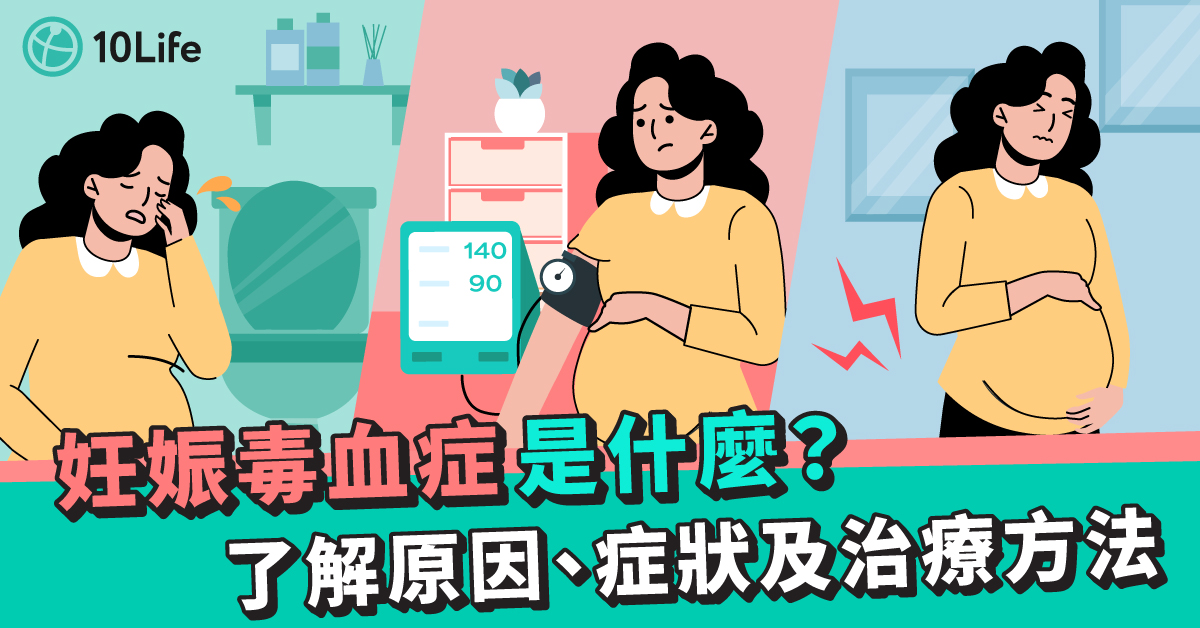
As an expectant mother, you will naturally hope that both you and your baby can safely get through the entire pregnancy. However, during pregnancy, an expectant mother may experience various conditions, ranging from simple changes in body shape to more serious illnesses. If you develop pre-eclampsia, it may also affect your baby, so it should not be overlooked. What exactly is pre-eclampsia? What are its symptoms? Are there any warning signs? How does it affect your baby? In this article, 10Life explains the causes, symptoms and treatment methods of pre-eclampsia for all expectant mothers, helping you enjoy a more reassuring pregnancy.
What is pre-eclampsia?1,2
Pre-eclampsia, also known as toxæmia of pregnancy, is a serious pregnancy complication that usually occurs after the 20th week of pregnancy. In Hong Kong, the incidence of pre-eclampsia is approximately 1 in 1,000, so it is not common, but expectant mothers should not be complacent. The main symptoms of pre-eclampsia are high blood pressure, swelling and proteinuria, and it may also be accompanied by organ damage, such as failure of the liver, kidneys and lungs, as well as coagulation problems. If not treated promptly, it may even trigger eclampsia in the mother, endangering the lives of both mother and baby.
Causes of pre-eclampsia1,2
Pre-eclampsia, also known as toxæmia of pregnancy, is a serious pregnancy complication that usually occurs after the 20th week of pregnancy. In Hong Kong, the incidence of pre-eclampsia is around one in a thousand, so it is not very common; however, expectant mothers should not take it lightly. The main symptoms of pre-eclampsia are high blood pressure, oedema and proteinuria, and it may also be accompanied by organ dysfunction, such as liver, kidney and lung failure, as well as blood clotting problems. If not treated promptly, it may even trigger seizures in the pregnant woman, endangering the lives of both mother and baby.
Symptoms of pre-eclampsia3
If you want to know whether you may have pre-eclampsia, you can look out for the following symptoms:
Pre-eclampsia may lead to convulsions, liver, kidney and lung failure, and blood clotting problems. In severe cases, it may even endanger the lives of both the expectant mother and the baby. Therefore, if any of the above symptoms occur, seek medical attention immediately.
Who is more likely to develop pre-eclampsia?3
Although the medical community has not yet fully understood the causes of pre-eclampsia, it is generally believed to be related to genetics and immune system disorders. The following are high-risk individuals:
What impact does pre-eclampsia have on mothers and babies?4
For expectant mothers, pre-eclampsia may trigger seizures, affect liver and kidney function, and even increase the risk of stroke and placental bleeding. If it is not detected and treated early, it may also cause permanent damage to the mother’s health.
In addition to affecting the health of expectant mothers, pre-eclampsia can also endanger the baby’s health. It may cause foetal growth restriction, lead to premature birth, and even increase the likelihood of stillbirth.
How is pre-eclampsia diagnosed?1
If an expectant mother shows signs of pre-eclampsia, the doctor will recommend a series of tests, including urine tests, blood tests and an ultrasound examination, to confirm the diagnosis. First, the doctor will monitor the pregnant woman's blood pressure, then carry out blood tests to check liver and kidney function and measure the platelet count, and use a urine test to confirm whether there is proteinuria. In addition, an ultrasound examination will also be performed to observe the foetus's growth and ensure normal development.
What treatment options are available if you are unfortunately diagnosed with pre-eclampsia?1
If an expectant mother unfortunately develops pre-eclampsia, the doctor will provide treatment according to the severity of the condition. In general, treatment includes medication to control blood pressure and prevent seizures. Once the blood pressure has stabilised and if the situation allows, the doctor may recommend delivering the baby as soon as possible, because the symptoms of pre-eclampsia usually gradually ease after birth. If the condition is more severe, corticosteroids may be used to temporarily improve liver and platelet function, help prolong the pregnancy, and promote the development of the baby’s lungs. The doctor may also prescribe anticonvulsant medication to prevent seizures and ensure the safety of the mother and baby.
Can pre-eclampsia be prevented?1,3
Although pre-eclampsia cannot be completely prevented, expectant mothers can reduce the risk through regular antenatal check-ups and good health management. Maintaining a balanced diet, getting sufficient calcium, and taking moderate exercise can help prevent high blood pressure during pregnancy. Between weeks 11 and 13 of pregnancy, women carrying a single baby can undergo first-trimester pre-eclampsia screening to assess the risk of preterm birth and pre-eclampsia, so that appropriate preventive measures can be taken as early as possible. If an expectant mother is assessed as high risk, a doctor may recommend starting low-dose aspirin before 16 weeks of pregnancy to further reduce the likelihood of pre-eclampsia.
The above information is for reference only and does not replace professional medical advice. If any abnormal symptoms occur, expectant mothers should seek early medical examination and professional treatment to ensure the health and safety of both themselves and their baby.
Give yourself and your baby the best protection
Welcoming a new life is undoubtedly one of the most important moments in life, and it is both exciting and nerve-racking for expectant parents. Before the baby is born, it is an excellent time to prepare and put essential protection in place. Pregnancy insurance (or maternity insurance) can protect expectant mothers against risks that may arise during pregnancy, while some critical illness insurance policies accept applications for babies from 22 weeks onwards, providing cover for congenital conditions for newborns. With such protection plans in place, expectant parents can welcome their new arrival with peace of mind.
As a Hong Kong insurance comparison platform, 10Life introduces a rating system designed by actuaries to compare different insurance products fairly, enabling consumers to choose the insurance product that best suits their needs. Check out the must-have insurance products for expectant parents now to learn more.
Further reading:
[Gestational Diabetes] What are the symptoms? Does it affect the baby if you develop it?
[Pregnancy Diet] Tips, taboos and healthy meal ideas for early pregnancy
[Prenatal Check-ups] Ensuring the baby’s health: why are T21 and structure scans necessary?
Note:
1. OT&P Healthcare 《Preeclampsia》
2. Department of Obstetrics and Gynaecology, The Chinese University of Hong Kong and Prince of Wales Hospital 《First-trimester pre-eclampsia screening》
3. Department of Health, Women’s Health 《Preeclampsia》
4. Obstetrics and Gynaecology Centre, Hong Kong Sanatorium & Hospital 《First-trimester pre-eclampsia screening》
Last updated: 10 October 2024
This English version of this article has been generated by machine translation powered by AI. It is provided solely for reference purposes. In the event of any discrepancy or inconsistency between this translation and the original Chinese version, the Chinese version shall prevail.
Our team of professional content researchers focussing on insurance
Our team of professional content researchers focussing on insurance
10Life Product Comparison and 10Life Insurance Ratings are developed by 10Life Financial Limited, an authorised insurance broker company licensed with the Insurance Authority under License Number FB1526. 10Life Product Comparison and 10Life Insurance Ratings are developed for generic customer segments using mathematical calculations based on product information, facts and data, and are not influenced by any partnerships with or fees received from insurance companies. Any information on 10Life Platform ("10Life Information"), including but not limited to Product Comparison, Product Ratings, Blog Articles are intended for general education purpose and reference only. None of the 10Life Information is intended, nor should they be considered or relied upon, as regulated advice, insurance, financial, investment or professional advice, recommendation, approval, endorsement, invitation or solicitation in respect of any insurance, financial or investment products. 10Life Information does not take into account your individual needs. Reading 10Life Information should not be considered as conducting a suitability assessment, and is not sufficient to form the basis of any decisions to purchase any insurance products. You should rely on information authorised by insurance companies, carry out your own research and/or seek independent advice from licensed intermediaries before purchasing any insurance products or making any insurance decisions. While reasonable effort is used when collecting, validating and updating 10Life Information from various channels, none of 10Life Group and its subsidiaries, affiliates, agents, directors, officers and employees will be responsible for any liability, claim or loss arising from or associated with you using 10Life Information. No warranty, representation or guarantee is given by 10Life Group and its subsidiaries on the accuracy, completeness and timeliness of the information. If you have any questions on 10Life Product Comparison and 10Life Insurance Ratings, please email us at enquiries@10life.com




 Talk to 10Life on WeChat
