









10Life Financial Limited
Enquiries: enquiries@10life.com
Hotline: (852) 3705 1599
Address: 16/F Greatmany Centre, 109-115 Queen’s Road East, Wan Chai, Hong Kong



What are the causes of urticaria?
What are the initial symptoms of urticaria?
When should you seek medical attention for hives?
How to alleviate discomfort from hives?
Treatment Methods for Urticaria
Prepare Early with Medical Insurance for Greater Peace of Mind in Emergencies
How to prevent the recurrence of urticaria?
Is urticaria contagious?
What is urticaria?


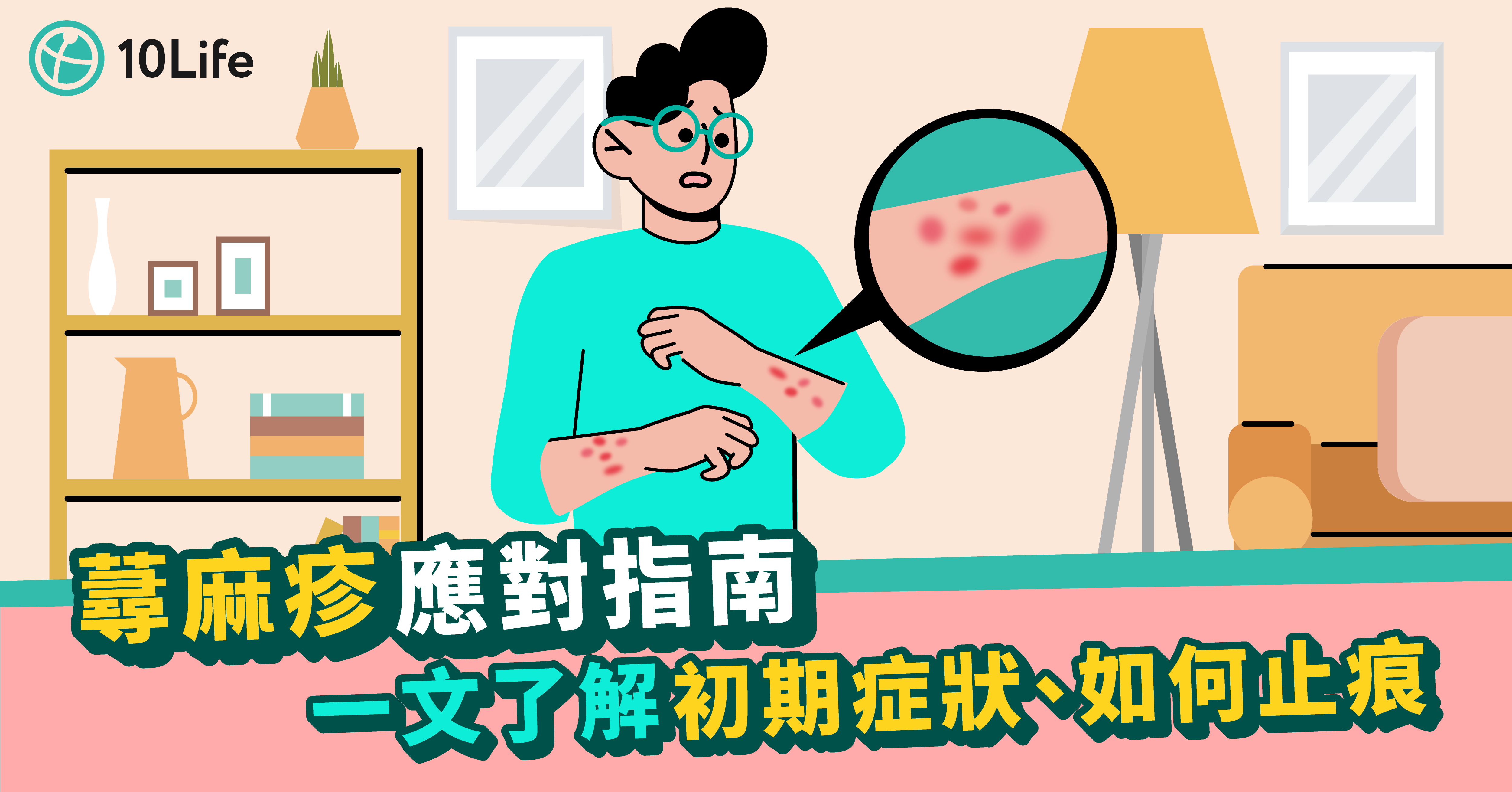
As spring turns to summer, fluctuating temperatures can cause sudden skin itching and the appearance of large patches of hives. This could very likely be "urticaria" (commonly known as "hives") at play. Urticaria is a common skin condition that causes intense itching during outbreaks. What are the early symptoms of urticaria? Do patients need to seek medical attention? And how can the itching be relieved? This article will comprehensively explore the causes, early symptoms, treatment methods, and key points for preventing recurrence of urticaria, helping readers to better identify and manage this allergic reaction.
What are the causes of urticaria?
There are numerous causes of urticaria, and while some patients may identify the trigger immediately, others may need to observe and record their symptoms repeatedly. Below are some of the more common triggering factors:
What are the initial symptoms of urticaria?
The onset of urticaria often occurs suddenly, with some patients experiencing redness, itching, and even swelling discomfort on their skin without any prior warning. Nevertheless, the initial outbreak of urticaria still presents some typical symptoms to watch for:
When should you seek medical attention for hives?
Although most cases of hives resolve on their own within a few hours, they can sometimes be a warning sign of a severe allergic reaction and should not be ignored. If you experience the following conditions, it is advisable to seek medical attention immediately:
Seeking medical attention promptly can effectively prevent the condition from worsening, thereby safeguarding personal health.
How to alleviate discomfort from hives?
In addition to medical treatment, when experiencing a hives outbreak, it is also important to take note of the following care tips to help alleviate discomfort and prevent recurrence.
Treatment Methods for Urticaria
Urticaria, though common, often causes significant distress to patients during an outbreak. For effective treatment, the first step is to determine whether it is a transient acute episode or a recurring chronic issue, and then devise an appropriate treatment plan based on the severity.
For acute urticaria, doctors typically recommend common over-the-counter antihistamines such as Diphenhydramine or Loratadine. These medications can help alleviate allergic reactions on the skin, relieving itching and rashes. In more severe cases, such as widespread hives, intense itching, or disruption of sleep, doctors may prescribe stronger antihistamines or even short-term oral corticosteroids to quickly control the inflammatory response.
Chronic urticaria is characterised by recurrent episodes, often linked to an imbalance in the body's immune system. For such patients, in addition to regular antihistamine use, treatment plans may include:
Prepare Early with Medical Insurance for Greater Peace of Mind in Emergencies
Urticaria, though common, can in some cases be a severe allergic reaction, potentially requiring emergency medical attention or hospitalisation. If you have suitable medical insurance in place, you can be admitted to a private hospital during unexpected situations without worrying about exorbitant medical costs, avoiding long waiting times at public hospitals and receiving appropriate treatment as soon as possible.
If you wish to learn more about coverage plans that suit your specific circumstances, feel free to consult 10Life licensed insurance advisors for impartial and reliable advice.
Related Articles:
Frequent Palpitations or Irregular Heartbeat? Understanding Atrial Fibrillation – Symptoms and Treatment Methods
What is Sinusitis? Understanding Symptoms, Causes, Types, and Treatment Methods
References:
Mayo Clinic. Hives and Angioedema
Saudi German Hospital. Hives: Symptoms, Causes, and Treatment Options
Last updated: 20 October 2025
How to prevent the recurrence of urticaria?
To effectively manage urticaria, in addition to medical treatment, daily care is equally important. Implementing the following measures can not only enhance treatment outcomes but also help in long-term condition stabilisation and reduce the likelihood of recurrence.
Is urticaria contagious?
Urticaria, commonly known as hives, is not contagious. It is a skin condition triggered by an abnormal reaction of the immune system, primarily related to allergies, individual constitution, and environmental factors, rather than caused by pathogens such as viruses or bacteria. Therefore, it does not pose a risk of transmission. In other words, even close contact with a patient or sharing items with them will not result in contracting urticaria.
It is worth noting that certain infections caused by viruses or bacteria (such as colds or flu) are contagious, and these infections may act as triggers for urticaria. In such cases, what others might contract from the patient is the cold or flu, not urticaria itself. Hence, if an outbreak of urticaria is accompanied by symptoms of infection such as fever or sore throat, it is advisable to seek medical attention promptly to diagnose and address the underlying infection.
What is urticaria?
Urticaria (also known as hives or welts) is an allergic skin condition often characterised by the sudden appearance of red, swollen, and itchy wheals on the skin. These wheals vary in size and have irregular shapes, typically resolving on their own within 24 hours.
Acute urticaria develops rapidly and is usually triggered by external stimuli such as medications, food, insect bites, or infections. Most cases resolve within a few hours to a few days; due to the clear symptoms, it is relatively easy to identify the triggers and subsequently avoid contact with them.
Chronic urticaria refers to recurring symptoms lasting more than six weeks. Its causes may be related to immune system imbalances, autoimmune diseases (such as lupus or thyroid issues), or imbalances in gut microbiota. The treatment duration is longer, sometimes taking months or even longer to achieve relief.
This English version of this article has been generated by machine translation powered by AI. It is provided solely for reference purposes. In the event of any discrepancy or inconsistency between this translation and the original Chinese version, the Chinese version shall prevail.
Last updated: 9 Apr 2026

Our team of professional content researchers focussing on insurance
Our team of professional content researchers focussing on insurance
10Life Product Comparison and 10Life Insurance Ratings are developed by 10Life Financial Limited, an authorised insurance broker company licensed with the Insurance Authority under License Number FB1526. 10Life Product Comparison and 10Life Insurance Ratings are developed for generic customer segments using mathematical calculations based on product information, facts and data, and are not influenced by any partnerships with or fees received from insurance companies. Any information on 10Life Platform ("10Life Information"), including but not limited to Product Comparison, Product Ratings, Blog Articles are intended for general education purpose and reference only. None of the 10Life Information is intended, nor should they be considered or relied upon, as regulated advice, insurance, financial, investment or professional advice, recommendation, approval, endorsement, invitation or solicitation in respect of any insurance, financial or investment products. 10Life Information does not take into account your individual needs. Reading 10Life Information should not be considered as conducting a suitability assessment, and is not sufficient to form the basis of any decisions to purchase any insurance products. You should rely on information authorised by insurance companies, carry out your own research and/or seek independent advice from licensed intermediaries before purchasing any insurance products or making any insurance decisions. While reasonable effort is used when collecting, validating and updating 10Life Information from various channels, none of 10Life Group and its subsidiaries, affiliates, agents, directors, officers and employees will be responsible for any liability, claim or loss arising from or associated with you using 10Life Information. No warranty, representation or guarantee is given by 10Life Group and its subsidiaries on the accuracy, completeness and timeliness of the information. If you have any questions on 10Life Product Comparison and 10Life Insurance Ratings, please email us at enquiries@10life.com




 Talk to 10Life on WeChat
