









10Life Financial Limited
Enquiries: enquiries@10life.com
Hotline: (852) 3705 1599
Address: 16/F Greatmany Centre, 109-115 Queen’s Road East, Wan Chai, Hong Kong



Early Pregnancy Complications Carry out the necessary examinations to avoid ending up with nothing to show for it
Pregnancy complications in the later stages of pregnancy Monitor blood glucose and blood pressure levels
Controlling weight before pregnancy helps reduce the risk of pregnancy complications


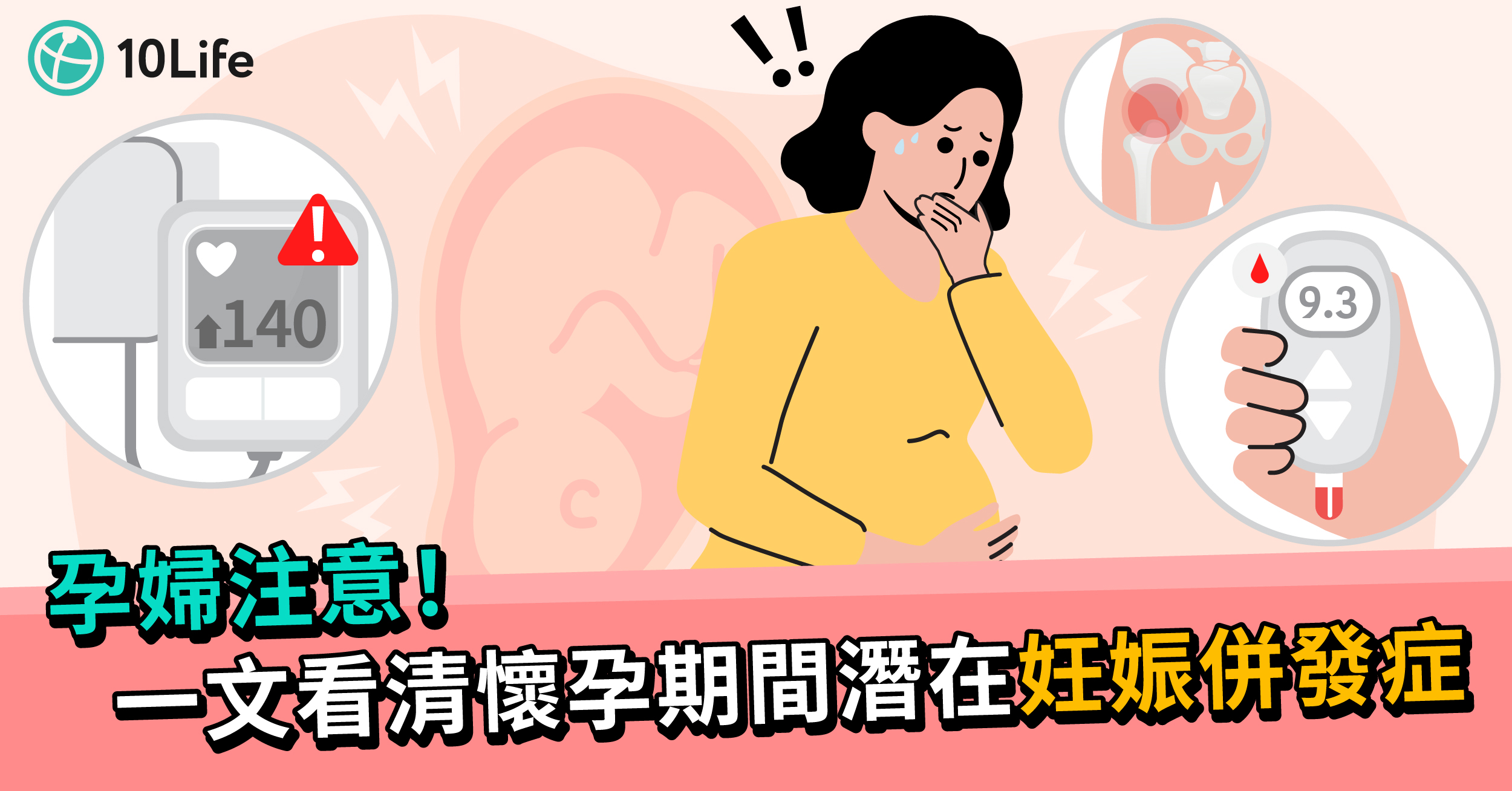
Having children is an important plan for many families. Some couples, after many attempts, finally succeed in conceiving, and are bound to be overjoyed and eagerly await the arrival of new life. The journey of pregnancy has never been easy; expectant mothers must cope with bodily changes as well as pregnancy discomforts such as nausea, loss of appetite and fatigue. Many expectant mothers feel very anxious, fearing that they may develop pregnancy complications. In fact, if pregnancy complications are not properly managed, they may harm the health of both the mother and the baby. This article will introduce several common pregnancy complications.
Early Pregnancy Complications Carry out the necessary examinations to avoid ending up with nothing to show for it
Pregnancy is meant to be a joyful experience, but prospective parents may also end up with nothing. Under natural conception, sperm and egg combine in the fallopian tube to form a fertilised egg, which then moves into the uterine cavity. If the embryo implants outside the uterus, it results in an ectopic pregnancy, also known as extrauterine pregnancy. Unfortunately, treatment for ectopic pregnancy generally requires termination of the pregnancy to avoid further harm to the mother’s health.
Pregnancy complications in the later stages of pregnancy Monitor blood glucose and blood pressure levels
As a pregnant woman gets closer to her due date, pregnancy-related conditions become more likely to occur. Gestational diabetes is one of the most representative pregnancy complications.
This complication causes the foetus to secrete more insulin, affecting development and potentially leading to overgrowth of the foetal organs, poor brain development, or congenital heart disease. Children may also be more likely to develop obesity and type 2 diabetes later in life. If a pregnant woman has mild hyperglycaemia, it may be improved through dietary control and moderate exercise; otherwise, medication may be required.
Further reading:【Gestational Diabetes】What are the symptoms? Will it affect the baby once diagnosed?
Pregnancy-induced hypertension differs from ordinary hypertension and only appears in pregnant women after around 20 weeks of pregnancy. If blood pressure remains persistently high, blood flow to the placenta decreases, leading to poor foetal nutrition and increasing the risk of premature birth. Hypertension can also damage the pregnant woman’s kidneys and other organs. To prevent the condition from worsening, the woman may need to take antihypertensive medication to control her blood pressure. If the blood pressure remains persistently high, hospital monitoring is required.
Pregnant women provide oxygen and nutrients to the developing foetus through the placenta to ensure healthy growth. In a normal pregnancy, the placenta attaches to the front wall, back wall or top of the uterine cavity. As the uterus enlarges over the weeks, the main part of the placenta also moves upwards towards the top of the uterus. Placenta previa refers to a condition in which, after 20 weeks of pregnancy, the placenta is still positioned too low and blocks the cervical opening.
Online personality Coffee Lam once revealed that when she was pregnant with her son “Bobo” in 2018, she had placenta previa and frequently experienced minor bleeding. At 37 weeks, her doctor asked whether she wanted to “take a chance” by staying in bed and waiting for a natural birth, but this carried the risk of massive bleeding and the possibility of losing the baby. In the end, however, she decided to abandon natural birth and instead undergo an immediate caesarean section.
Controlling weight before pregnancy helps reduce the risk of pregnancy complications
To reduce the risk of pregnancy complications, expectant mothers should ideally maintain a healthy weight before conceiving. This not only helps with conception, but also lowers the chance of complications during pregnancy. In addition, getting enough calcium, together with a regular routine and appropriate physical exercise, can help keep the baby healthy and allow the mother to stay relaxed throughout pregnancy.
For expectant mothers who are already pregnant, what insurance can they consider?
For product details, please feel free to enquire with 10Life’s professional insurance advisers.
Last updated: 27 September 2024
This English version of this article has been generated by machine translation powered by AI. It is provided solely for reference purposes. In the event of any discrepancy or inconsistency between this translation and the original Chinese version, the Chinese version shall prevail.

Our team of professional content researchers focussing on insurance
Our team of professional content researchers focussing on insurance
10Life Product Comparison and 10Life Insurance Ratings are developed by 10Life Financial Limited, an authorised insurance broker company licensed with the Insurance Authority under License Number FB1526. 10Life Product Comparison and 10Life Insurance Ratings are developed for generic customer segments using mathematical calculations based on product information, facts and data, and are not influenced by any partnerships with or fees received from insurance companies. Any information on 10Life Platform ("10Life Information"), including but not limited to Product Comparison, Product Ratings, Blog Articles are intended for general education purpose and reference only. None of the 10Life Information is intended, nor should they be considered or relied upon, as regulated advice, insurance, financial, investment or professional advice, recommendation, approval, endorsement, invitation or solicitation in respect of any insurance, financial or investment products. 10Life Information does not take into account your individual needs. Reading 10Life Information should not be considered as conducting a suitability assessment, and is not sufficient to form the basis of any decisions to purchase any insurance products. You should rely on information authorised by insurance companies, carry out your own research and/or seek independent advice from licensed intermediaries before purchasing any insurance products or making any insurance decisions. While reasonable effort is used when collecting, validating and updating 10Life Information from various channels, none of 10Life Group and its subsidiaries, affiliates, agents, directors, officers and employees will be responsible for any liability, claim or loss arising from or associated with you using 10Life Information. No warranty, representation or guarantee is given by 10Life Group and its subsidiaries on the accuracy, completeness and timeliness of the information. If you have any questions on 10Life Product Comparison and 10Life Insurance Ratings, please email us at enquiries@10life.com




 Talk to 10Life on WeChat
