









10Life Financial Limited
Enquiries: enquiries@10life.com
Hotline: (852) 3705 1599
Address: 16/F Greatmany Centre, 109-115 Queen’s Road East, Wan Chai, Hong Kong



How does hepatitis B affect the liver? There is a risk of liver cancer even if you do not drink alcohol
Where is free hepatitis B screening available? Who can register?
If you are not eligible, you can still consult a doctor about hepatitis B testing
What should you do after testing positive on a rapid hepatitis B test?
How should you manage your health after being diagnosed with hepatitis B?
Will having hepatitis B affect my ability to purchase insurance?
You must provide accurate information when applying for insurance
Frequently Asked Questions about Hepatitis B Screening


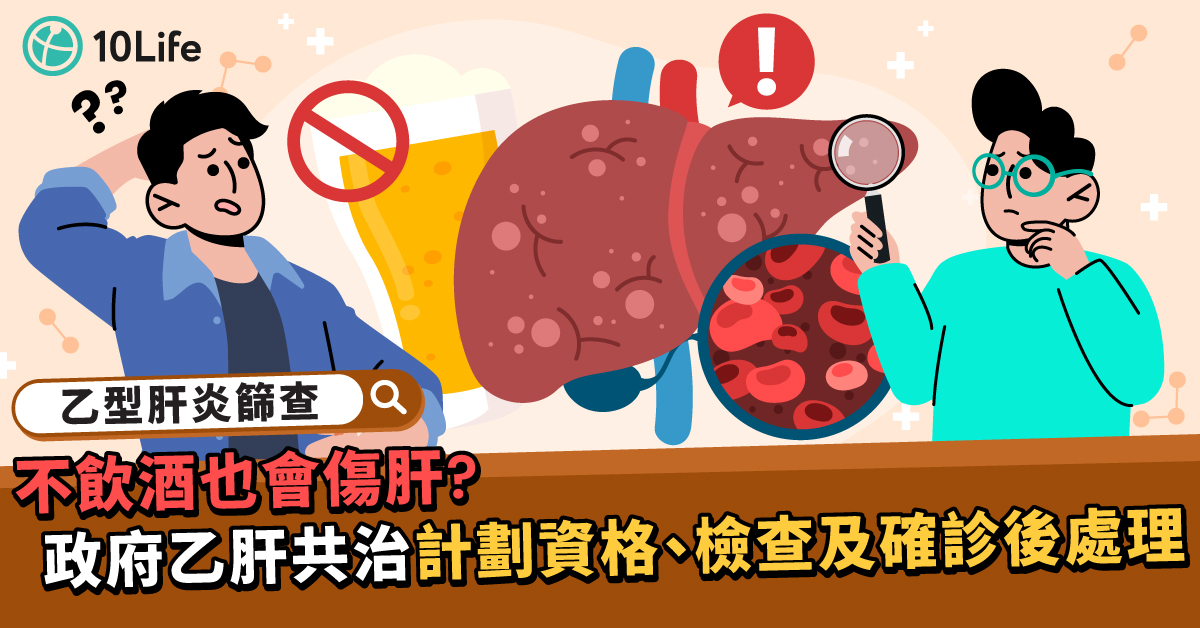
Many people assume that liver problems are mostly associated with long-term alcohol consumption. However, in Hong Kong, chronic hepatitis B (hepatitis B) is also an important risk factor for cirrhosis and liver cancer. Even more easily overlooked is that some people with chronic hepatitis B may have no obvious symptoms for many years. Even if they do not smoke or drink and feel well, the virus may continue to affect the liver.
If a family member or sexual partner has ever been diagnosed with chronic hepatitis B, you should not overlook hepatitis B screening simply because you consider yourself healthy. The Government has now launched the “Hepatitis B Collaborative Care Programme”, which provides eligible high-risk individuals with free rapid hepatitis B surface antigen tests, as well as subsidised follow-up blood tests and family doctor care. This article explains the eligibility criteria, screening process and costs for hepatitis B screening, and discusses how to reduce the risk of cirrhosis and liver cancer after diagnosis.
How does hepatitis B affect the liver? There is a risk of liver cancer even if you do not drink alcohol
Hepatitis B is caused by the hepatitis B virus and can be transmitted from mother to child, through blood, or through contact with bodily fluids. Some people develop chronic hepatitis B after infection and may have no obvious symptoms for a long time.
However, the virus can continue to cause inflammation of the liver, resulting in repeated damage to liver cells. In the long term, this may lead to liver fibrosis, cirrhosis and even an increased risk of liver cancer:
Chronic hepatitis B → persistent liver inflammation → liver fibrosis/cirrhosis → increased risk of liver cancer
Many people believe that only alcohol can damage the liver, but chronic hepatitis B can still affect the liver even if you do not drink alcohol. Long-term or excessive alcohol consumption increases the strain on the liver and the risk of cirrhosis. People with hepatitis B should avoid alcohol and attend follow-up appointments as advised by their doctor. Government data show that approximately 75% to 80% of hepatocellular carcinoma cases are associated with chronic hepatitis B.
| Question | Key points |
| Who is eligible for free screening? | Generally, Hong Kong residents born in 1988 or before; eligible persons whose family members or sexual partners have chronic hepatitis B, who have never been diagnosed with chronic hepatitis B and who have no related symptoms |
| Where is it available? | District Health Centres or District Health Stations |
| What is the initial test? | Free rapid hepatitis B surface antigen (HBsAg) test |
| What should I do if the rapid test is positive? | Be matched with a family doctor for further blood tests; chronic hepatitis B cannot be diagnosed based solely on the rapid test |
| How much does the screening cost? | The initial rapid test is free; if the rapid test is positive, a one-off co-payment of HK$180 is required during the screening stage |
| What follow-up is available after diagnosis? | Up to 4 subsidised medical consultations may be provided each year; arrangements for tests, liver monitoring, medication and other treatments are subject to the doctor's assessment and the scope of the programme's services |
| Why should I get tested early? | Chronic hepatitis B may cause no symptoms, but can increase the risk of liver fibrosis, cirrhosis and liver cancer |
| Note: Eligibility, co-payments and service arrangements may be updated. The latest announcements by the Government shall prevail. | |
Where is free hepatitis B screening available? Who can register?
Eligible individuals can register for the “Hepatitis B Co-care Programme” at the nearest District Health Centre or District Health Station. All 18 districts in Hong Kong have a District Health Centre or District Health Station. Participants must first register as a member of a District Health Centre/Station and consent to joining eHealth, then inform the staff that they wish to participate in the Hepatitis B Co-care Programme. The centre will verify eligibility, conduct a risk assessment and arrange a free rapid hepatitis B surface antigen test. If the rapid test is positive, it will assist in matching the participant with a family doctor of their choice for subsequent blood tests and follow-up.
The programme mainly serves Hong Kong residents born in 1988 or earlier who have a family member or sexual partner with chronic hepatitis B, but who have not themselves been diagnosed with chronic hepatitis B and do not have related symptoms. The Government uses 1988 as the cut-off year because universal hepatitis B vaccination for newborn babies was introduced in Hong Kong from that year onwards. Those born earlier who have a family or sexual partner at risk of infection are therefore priority screening targets.
Before registering, it is recommended that individuals contact the Government’s “Primary Healthcare Guide”, the official website or telephone line of their District Health Centre/Health Station to enquire about the nearest service point, opening hours and appointment arrangements. Even if they are not eligible for subsidised services, individuals with a family history of hepatitis B, a previous risk of exposure to blood or bodily fluids, or who wish to find out whether they have previously been infected or have antibodies, may still consult a family doctor about whether hepatitis B blood tests or hepatitis B vaccination would be suitable.
If you are not eligible, you can still consult a doctor about hepatitis B testing
Not meeting the eligibility criteria for government funding does not mean that the risk of hepatitis B can be disregarded. If you have a family history of hepatitis B, have been exposed to blood or bodily fluids, or simply wish to find out whether you have previously been infected with hepatitis B and whether you have antibodies, you may still consult your family doctor to determine whether a hepatitis B blood test is appropriate.
Your doctor will recommend suitable tests based on your individual circumstances, such as hepatitis B surface antigen, hepatitis B surface antibody and other relevant blood markers, and assess whether you need to receive the hepatitis B vaccine or undergo further follow-up.
What should you do after testing positive on a rapid hepatitis B test?
A positive result from a hepatitis B surface antigen rapid test does not mean that chronic hepatitis B has been confirmed. The centre will assist in matching you with a family doctor for further blood tests; during the screening stage, you only need to pay a one-off co-payment of HK$180, while the Government will subsidise up to two consultations and the related blood tests. If the initial test result is positive, the family doctor will generally arrange a second blood test approximately 6 months later to confirm whether it is chronic hepatitis B.
How should you manage your health after being diagnosed with hepatitis B?
Even if you are unfortunately diagnosed with chronic hepatitis B, this does not necessarily mean that you need to start taking medication immediately, nor does it mean that you will definitely develop cirrhosis or liver cancer. Your doctor will assess whether antiviral treatment is necessary based on factors including the viral load, liver function, degree of liver fibrosis and family history. Even if medication is not currently required, you should attend regular follow-up appointments and examinations as advised by your doctor. Antiviral medications can suppress viral replication and help reduce the risk of cirrhosis, liver failure and liver cancer.
Under the Hepatitis B Co-Care Programme, confirmed participants may receive subsidised consultations up to four times a year, with the Government recommending a co-payment of HK$150 per consultation. If a hepatitis B antiviral medication covered by the programme’s list of prescribed medicines is prescribed, participants do not need to pay for the medication. People with chronic hepatitis B, chronic hepatitis C or cirrhosis have a higher risk of liver cancer and should ask their doctor whether they need to undergo regular abdominal ultrasound scans and alpha-fetoprotein (AFP) tests.
Will having hepatitis B affect my ability to purchase insurance?
Chronic hepatitis B may increase the risk of liver fibrosis, cirrhosis and liver cancer. If hospitalisation, surgery or cancer treatment becomes necessary, this may affect work and household income in addition to incurring medical expenses. Medical insurance generally helps pay for eligible hospitalisation, surgical and treatment expenses in accordance with the policy coverage and claims terms. Critical illness insurance, on the other hand, may provide a lump-sum payout when the insured is diagnosed with a serious illness that meets the policy definition, such as liver cancer, allowing patients to meet living expenses beyond treatment costs more flexibly. The actual coverage, benefit limits, waiting periods and exclusions are subject to the terms of the individual policy.
In fact, having hepatitis B does not necessarily mean that you cannot obtain insurance. Insurers will assess applications individually based on factors including liver function, viral load, whether treatment is required, follow-up consultations and imaging examination results, and whether there is liver fibrosis or cirrhosis. The outcome may include standard underwriting, a premium loading, exclusions for liver- or hepatitis B-related conditions, or a decline in coverage. The actual outcome is subject to the insurer’s underwriting decision.

You must provide accurate information when applying for insurance
Even if it is only an abnormal result from a rapid hepatitis B test or blood test, and you are awaiting a follow-up examination, you should still make a truthful disclosure when applying for insurance. Insurance contracts are based on the principle of utmost good faith; if you fail to disclose material health information, preventing the insurer from making an appropriate underwriting decision, this may affect future claims and could even result in the policy being cancelled.
If you would like to understand the coverage of your existing medical or critical illness insurance, or what health information you should prepare when applying for insurance, you can contact a 10Life insurance adviser. We will do our utmost to find a suitable product for you.
Frequently Asked Questions about Hepatitis B Screening
Not necessarily. The Government’s “Hepatitis B Co-governance Programme” mainly serves people at higher risk. Participants are generally required to be Hong Kong residents born in or before 1988, have a family member or sexual partner with chronic hepatitis B, and have neither been diagnosed with chronic hepatitis B nor experienced related symptoms. Eligible individuals may receive one free rapid hepatitis B surface antigen test.
Not necessarily. A rapid hepatitis B test is an initial screening tool. After a positive result, a family doctor will still need to arrange a blood test. If the initial blood test is positive, another blood test will generally be conducted about 6 months later to confirm whether chronic hepatitis B is present.
You can consult your family doctor. Even if you may not be eligible for a Government-subsidised programme, your doctor can recommend appropriate blood tests or vaccination arrangements based on your individual circumstances if you have been at risk of exposure to blood or bodily fluids, wish to find out whether you have previously been infected, or want to know whether you have hepatitis B antibodies.
Not necessarily. Insurers will assess each application individually based on factors such as liver function, viral load, treatment and follow-up records, and whether there is liver fibrosis or cirrhosis. You must disclose your health information truthfully when applying for insurance; failure to disclose material facts may affect a claim and could even result in the policy being cancelled.
Hepatitis B can remain symptomless for a long time, but the virus may continue to affect the liver. If you were born in or before 1988 and have a family member or sexual partner with chronic hepatitis B, you may consider visiting a District Health Centre or District Health Station to find out more about the “Hepatitis B Co-governance Programme”. Undergoing hepatitis B screening at an early stage, attending regular follow-up appointments after diagnosis, receiving treatment when necessary and avoiding alcohol, while reviewing your medical and critical illness cover when your health situation is relatively straightforward, can help preserve more options for you and your family.
This English version of this article has been generated by machine translation powered by AI. It is provided solely for reference purposes. In the event of any discrepancy or inconsistency between this translation and the original Chinese version, the Chinese version shall prevail.
I’m delighted to be part of 10Life in building a one stop insurance platform.
10Life Product Comparison and 10Life Insurance Ratings are developed by 10Life Financial Limited, an authorised insurance broker company licensed with the Insurance Authority under License Number FB1526. 10Life Product Comparison and 10Life Insurance Ratings are developed for generic customer segments using mathematical calculations based on product information, facts and data, and are not influenced by any partnerships with or fees received from insurance companies. Any information on 10Life Platform ("10Life Information"), including but not limited to Product Comparison, Product Ratings, Blog Articles are intended for general education purpose and reference only. None of the 10Life Information is intended, nor should they be considered or relied upon, as regulated advice, insurance, financial, investment or professional advice, recommendation, approval, endorsement, invitation or solicitation in respect of any insurance, financial or investment products. 10Life Information does not take into account your individual needs. Reading 10Life Information should not be considered as conducting a suitability assessment, and is not sufficient to form the basis of any decisions to purchase any insurance products. You should rely on information authorised by insurance companies, carry out your own research and/or seek independent advice from licensed intermediaries before purchasing any insurance products or making any insurance decisions. While reasonable effort is used when collecting, validating and updating 10Life Information from various channels, none of 10Life Group and its subsidiaries, affiliates, agents, directors, officers and employees will be responsible for any liability, claim or loss arising from or associated with you using 10Life Information. No warranty, representation or guarantee is given by 10Life Group and its subsidiaries on the accuracy, completeness and timeliness of the information. If you have any questions on 10Life Product Comparison and 10Life Insurance Ratings, please email us at enquiries@10life.com




 Talk to 10Life on WeChat
