








10Life Financial Limited
Enquiries: enquiries@10life.com
Hotline: (852) 3705 1599
Address: 16/F Greatmany Centre, 109-115 Queen’s Road East, Wan Chai, Hong Kong



What is a headache? Types of headaches
What is the difference between a headache and a migraine?
What are the main causes of headaches?
What are some methods to relieve headaches?
Does a headache make you feel nauseous? When should you seek medical attention?
How to prevent headaches?
Plan Medical Insurance Early to Enhance Treatment Flexibility


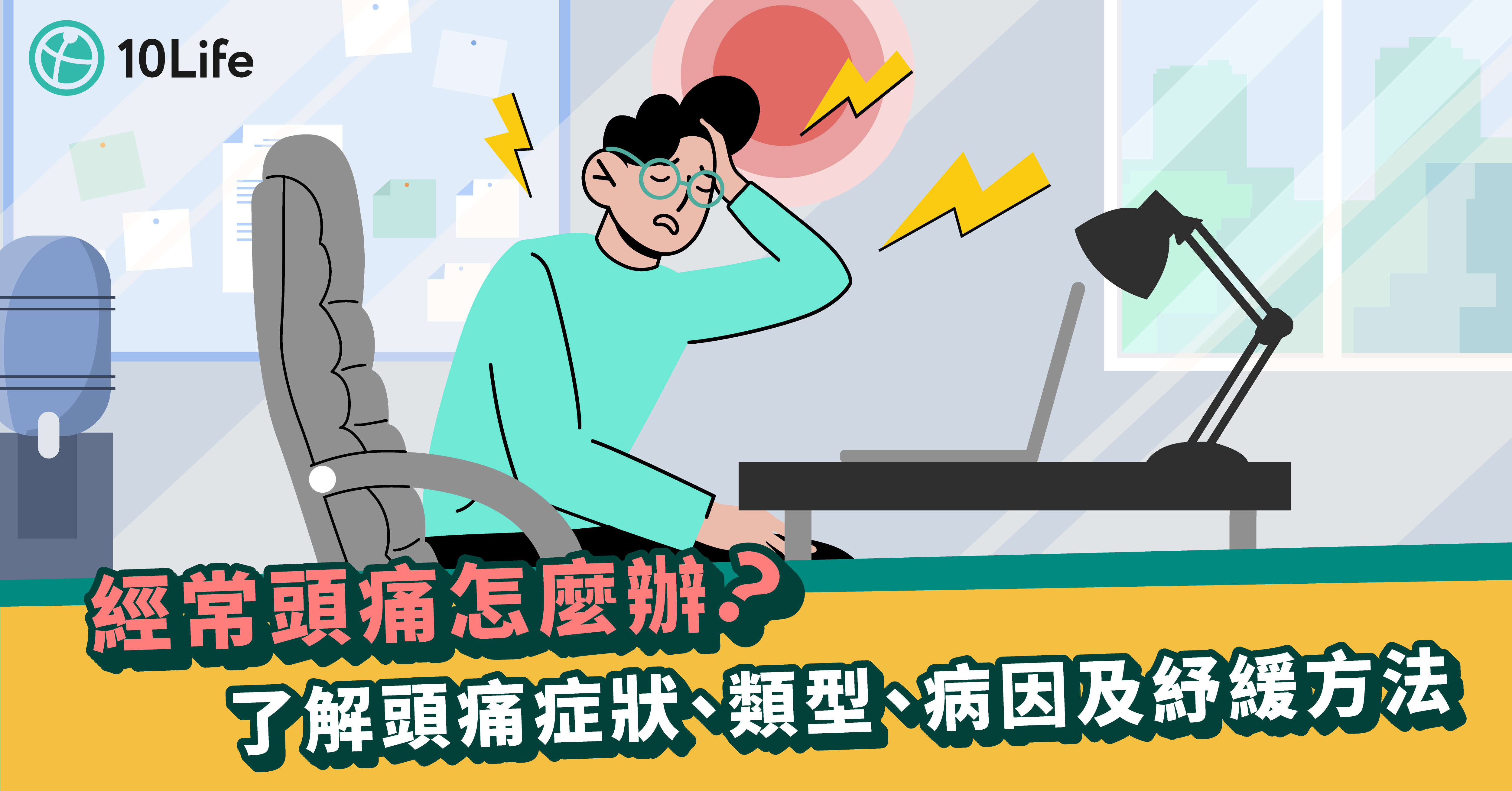
Headaches may seem like a minor issue, but for busy working professionals, they can significantly affect quality of life and are a common annoyance. Some people only experience occasional headaches that subside quickly, while others suffer from frequent, intense headaches, sometimes accompanied by nausea, making it difficult to focus on work in severe cases. This article provides a comprehensive analysis of the types of headaches, common causes, immediate relief methods, and prevention tips to help you effectively manage recurring headache troubles and regain daily clarity and focus.
What is a headache? Types of headaches
Headache refers to pain in the head, face, or neck, which can manifest as a dull ache, sharp pain, throbbing, or a feeling of pressure. Based on the cause, headaches can be classified into two main categories: primary headaches and secondary headaches.
Primary headaches are not caused by other medical conditions but are triggered by abnormal brain nerve activity, blood vessel dilation, hormonal fluctuations, or lifestyle factors (such as stress or lack of sleep). While these headaches are not life-threatening, frequent occurrences can significantly impact quality of life.
Common types of primary headaches include:
Secondary headaches are symptoms triggered by other diseases or health issues and can be considered a warning sign from the body. If not addressed properly, they may lead to serious consequences. These headaches are often accompanied by other symptoms, such as fever, vomiting, blurred vision, or confusion, and require heightened vigilance and prompt medical attention.
Common types of secondary headaches include:
What is the difference between a headache and a migraine?
Although migraine is a type of headache, the symptoms of the two are distinctly different. General headaches typically cause pain on both sides of the head or across the entire head, with the pain often being a persistent dull ache or a feeling of pressure, and they are less likely to be accompanied by other noticeable symptoms. The pain generally lasts from a few hours to a day, with a lower frequency of occurrence.
As for migraines, the pain is often unilateral, described as a "throbbing" or pulsating pain, and is frequently accompanied by symptoms such as sensitivity to light, sensitivity to sound, nausea, or vomiting. The pain usually lasts from 4 to 72 hours and tends to recur periodically.
In summary, the symptoms of migraines are far more complex than those of general headaches, and their impact on sufferers is significantly more severe.
What are the main causes of headaches?
The causes of headaches are complex and varied. For office workers who are constantly under high stress, changes in daily habits or external environments can more easily trigger different types of headaches. Below are some common "culprits":
Prolonged exposure to work-related stress, such as meeting tight deadlines, chasing performance targets, or managing tense interpersonal relationships, can lead to sustained muscle tension and overactive nerves, resulting in tension headaches. Symptoms include a tight, constricting, and oppressive sensation around the head, as if it is being "clamped".
Skipping meals due to overtime work, going long periods without eating, or consuming excessive amounts of coffee, strong tea, or sugary drinks can lead to unstable blood sugar levels or abnormal vascular responses, thereby triggering migraines or throbbing headaches.
Staying up late to work overtime or having irregular sleep patterns can disrupt the body's "biological clock", affecting brain nerve conduction functions. This is one of the main causes of migraines and tension headaches.
Prolonged exposure to overly strong air conditioning, poor ventilation, harsh lighting, or noisy environments in the workplace can stimulate brain blood vessels or nerves, thereby triggering or worsening headaches.
For women, significant fluctuations in oestrogen levels during menstruation, ovulation, or menopause can easily affect the constriction and dilation of blood vessels, leading to cyclical migraine attacks. Symptoms are more likely to worsen under conditions of high stress or insufficient sleep.
What are some methods to relieve headaches?
For instance, medications such as Paracetamol or Ibuprofen can effectively relieve mild headaches. However, long-term reliance should be avoided, and it is advisable to consult a doctor or pharmacist before use.
By stimulating meridians and regulating qi and blood, acupuncture can effectively alleviate migraines and tension headaches. It is also recognised by the World Health Organization (WHO) as a complementary therapy.
Applying a hot compress to the shoulders and neck can help relax muscles, while a cold compress to the forehead can ease pain caused by blood vessel dilation.
Gently pressing acupoints such as the temples or Fengchi point can help relieve headaches caused by muscle tension and fatigue.
Finding a quiet space with soft or dim lighting to close your eyes and rest can effectively reduce discomfort during a migraine attack.
Practising deep breathing or meditation to stabilise breathing and relax the mind can effectively reduce headaches triggered by stress.
Does a headache make you feel nauseous? When should you seek medical attention?
Generally speaking, tension headaches, while uncomfortable, typically do not cause nausea or vomiting. In contrast, migraines are often accompanied by symptoms such as nausea and vomiting. For some patients, resting in a quiet, dimly lit room can help alleviate discomfort.
However, if the following situations occur, they should not be taken lightly, and medical attention should be sought as soon as possible:
The above symptoms could be warning signs of an underlying serious condition, and professional examination and treatment should be sought at the earliest opportunity.
How to prevent headaches?
For office workers who need to sit for long periods, face high stress, and have irregular schedules, headaches have almost become a "norm". Instead of relying on painkillers to treat the symptoms, it is better to address the root cause by improving lifestyle habits for effective prevention.
Many office workers miss regular meals due to busy schedules, sometimes even relying solely on coffee or milk tea to "survive". However, prolonged hunger or nutritional imbalance can easily trigger migraines. It is recommended to eat at regular intervals, avoid an empty stomach, and consume foods rich in B vitamins, magnesium, and iron, such as leafy greens, nuts, and whole grains, to help maintain a stable nervous system.
Work-related stress is one of the main causes of tension headaches. In addition to daily relaxation techniques like deep breathing and meditation, consider scheduling short walks or naps to relieve mental fatigue. You can also release emotions through exercise, listening to music, or chatting with others.
Staying in air-conditioned offices for long hours often leads people to forget to drink water. It is advisable to consume 1500–2000 ml of water daily to prevent headaches, dizziness, or lack of concentration caused by dehydration.
Frequently staying up late or working overtime (OT) can disrupt your biological clock, triggering migraines or sleep-related headaches. It is recommended to try to sleep before 11 pm and ensure 7–8 hours of adequate sleep each night. Additionally, engaging in aerobic exercise at least three times a week, such as brisk walking, jogging, yoga, or cycling, can help relax muscles, improve blood circulation, and alleviate neck and shoulder tension caused by prolonged sitting.
Plan Medical Insurance Early to Enhance Treatment Flexibility
Recurring headaches may not be solely due to fatigue. If a doctor suspects issues related to the nervous system, they typically recommend a CT scan or MRI examination. However, in private hospitals, the cost of such tests generally starts from HKD 6,000, and fees can be higher if the scope of the examination is broader or if contrast agents are required. As for public hospitals, although the charges are lower, long waiting times due to resource constraints make it difficult to address sudden or emergency situations.
In such cases, if you are enrolled in a Voluntary Health Insurance Scheme (VHIS), you can utilise the coverage for "prescribed diagnostic imaging tests." Even without hospitalisation, you can claim reimbursement for the high costs of CT scans, MRIs, and other expensive examinations, ensuring more timely and reassuring medical support at critical moments. Additionally, policyholders can benefit from personal income tax deductions, effectively reducing financial burdens.
If you wish to explore a protection plan more tailored to your personal circumstances, feel free to consult 10Life’s licensed insurance advisors for impartial and reliable professional advice.
Further Reading:
Frequent Palpitations or Irregular Heartbeat? Understanding Atrial Fibrillation, Symptoms, and Treatment Methods
Urticaria (Hives) Coping Guide: Understanding Early Symptoms and How to Relieve Itching
What is Sinusitis? Understanding Symptoms, Causes, Types, and Treatment Methods
References:
Last updated: 30 October 2025
This English version of this article has been generated by machine translation powered by AI. It is provided solely for reference purposes. In the event of any discrepancy or inconsistency between this translation and the original Chinese version, the Chinese version shall prevail.
Last updated: 9 Apr 2026

Our team of professional content researchers focussing on insurance
Our team of professional content researchers focussing on insurance
10Life Product Comparison and 10Life Insurance Ratings are developed by 10Life Financial Limited, an authorised insurance broker company licensed with the Insurance Authority under License Number FB1526. 10Life Product Comparison and 10Life Insurance Ratings are developed for generic customer segments using mathematical calculations based on product information, facts and data, and are not influenced by any partnerships with or fees received from insurance companies. Any information on 10Life Platform ("10Life Information"), including but not limited to Product Comparison, Product Ratings, Blog Articles are intended for general education purpose and reference only. None of the 10Life Information is intended, nor should they be considered or relied upon, as regulated advice, insurance, financial, investment or professional advice, recommendation, approval, endorsement, invitation or solicitation in respect of any insurance, financial or investment products. 10Life Information does not take into account your individual needs. Reading 10Life Information should not be considered as conducting a suitability assessment, and is not sufficient to form the basis of any decisions to purchase any insurance products. You should rely on information authorised by insurance companies, carry out your own research and/or seek independent advice from licensed intermediaries before purchasing any insurance products or making any insurance decisions. While reasonable effort is used when collecting, validating and updating 10Life Information from various channels, none of 10Life Group and its subsidiaries, affiliates, agents, directors, officers and employees will be responsible for any liability, claim or loss arising from or associated with you using 10Life Information. No warranty, representation or guarantee is given by 10Life Group and its subsidiaries on the accuracy, completeness and timeliness of the information. If you have any questions on 10Life Product Comparison and 10Life Insurance Ratings, please email us at enquiries@10life.com




 Talk to 10Life on WeChat
