









10Life Financial Limited
Enquiries: enquiries@10life.com
Hotline: (852) 3705 1599
Address: 16/F Greatmany Centre, 109-115 Queen’s Road East, Wan Chai, Hong Kong



Why do seniors need medical insurance?
Can people aged 60 also buy medical insurance?
Besides the coverage, what should the elderly pay attention to when taking out medical insurance?
Can I purchase VHIS for elderly parents?
Voluntary Health Insurance offers many options; it is advisable to consult an expert before taking out a policy


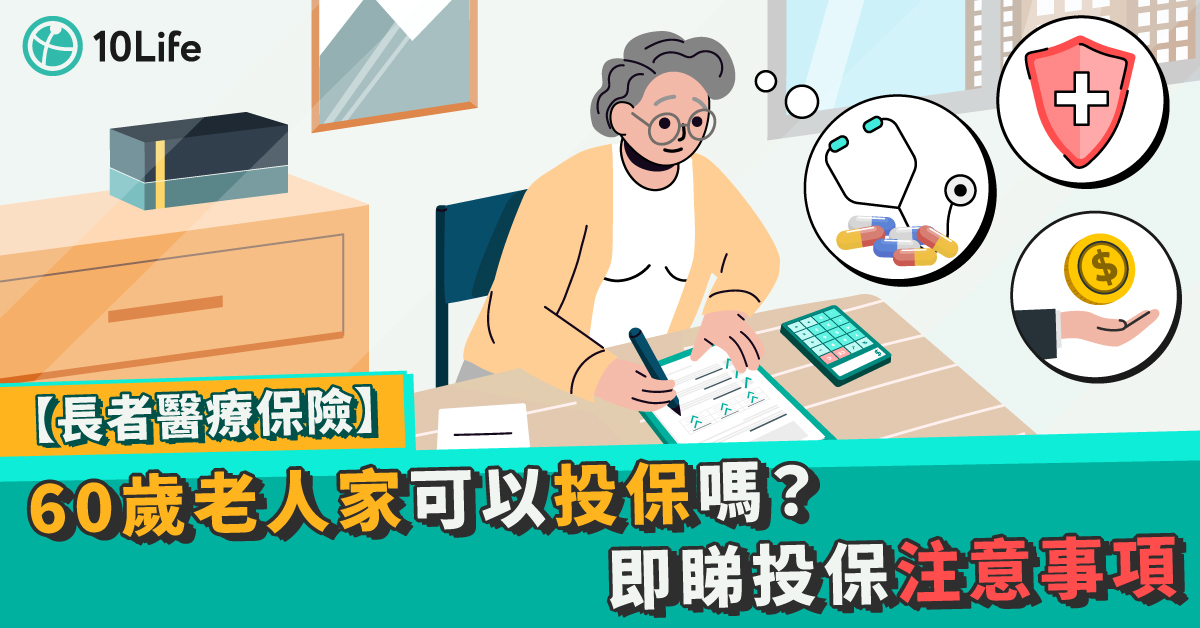
As the saying goes, “the older you get, the more likely things are to go wrong”. As we age, our bodily functions gradually deteriorate, and the risk of illness increases significantly. Amid medical inflation, healthcare costs in Hong Kong continue to rise every year. With long waiting times at public hospitals and expensive private hospital fees, elderly people without medical insurance may face substantial financial pressure, which could even affect their treatment choices. Many people mistakenly believe that “it is already too late for the elderly to buy medical insurance”. Strict underwriting requirements, coupled with high premiums, deter many from taking out a policy. In fact, people aged 60 can still purchase suitable medical insurance to prepare for their future health. This time, 10Life will break down the key issues relating to medical insurance for the elderly, as well as the points to note when taking out a policy.
Why do seniors need medical insurance?
After the age of 60, the risk of chronic diseases such as hypertension, diabetes and heart disease increases significantly, along with medical needs. Even if you are currently in good health, it is impossible to predict whether a serious illness will develop in the future. If long-term treatment or hospitalisation is required, the expenses may be considerable.
Public hospital resources in Hong Kong are stretched, and elderly patients often face lengthy waiting times for treatment. For example, the latest data shows that the median overall waiting time for cataract surgery is 14 months, while the longest waiting time can reach 38 months. Although the authorities estimate that the average waiting time may be reduced by approximately 10 months over the next five years1, prolonged waiting may delay treatment for the elderly, affect the progression of their condition and even increase health risks.
Choosing a private hospital is the quickest way to reduce waiting times, but the costs are relatively high. Although people aged 65 and above can receive 2,000 dollars in Elderly Health Care Vouchers each year, this amount cannot fully cover surgery and hospitalisation expenses if they are unfortunately diagnosed with a serious illness and require admission to a private hospital. Therefore, having suitable medical insurance is particularly important to help alleviate the burden of unexpected medical expenses.
The following are the cost ranges for some common procedures at private hospitals2,3:
Cataract extraction (one eye, day surgery): approximately $20,400
Gastroscopy (± polyp removal): approximately $36,663 - $54,390 depending on the procedure
Breast lump removal: approximately $54,136 - $81,910 depending on the procedure
In the face of high medical costs, medical insurance can reimburse eligible medical expenses on a reimbursement basis, covering hospitalisation, surgery and designated treatment costs. This enables the elderly to receive timely treatment when needed without having to worry about the financial burden.
Many employees enjoy medical coverage through their employers, but this coverage ends upon retirement. Without medical insurance, elderly people can only rely on the public healthcare system or may need to pay out of pocket for better treatment options.
Medical expenses are difficult to predict. Without medical insurance, elderly people may need to use their retirement savings to pay for medical expenses, potentially affecting their original retirement plans, such as travel and investment plans. In serious cases, they may need financial support from their children or relatives and friends, increasing the financial burden on the family.
Can people aged 60 also buy medical insurance?
There are currently many medical insurance plans on the market designed specifically for people aged 55 to 80, covering cancer, chronic illnesses, hospitalisation and surgery. Even if you have reached the retirement age of 60, you may still be able to purchase a suitable medical insurance plan. However, as the eligibility requirements for medical insurance are closely related to your health condition, insurers may charge an additional premium, commonly known as a loading, or impose exclusions depending on the individual circumstances. In addition, most medical insurance plans have a waiting period and do not take effect immediately. Therefore, the earlier you plan, the better.
Besides the coverage, what should the elderly pay attention to when taking out medical insurance?
The maximum age for taking out most medical insurance plans is 65 to 70, but some Voluntary Health Insurance Scheme (VHIS) plans accept applicants up to the age of 80. However, it is important to note that even if you meet the age requirements, you may need to undergo a health assessment when applying. The insurer may decide whether to provide cover or adjust the coverage based on the applicant’s health condition.
The older you are, the fewer insurance options are generally available, and premiums will also increase. You may even be refused cover due to health issues. Therefore, taking out insurance earlier can help avoid missing out on more comprehensive coverage or even the opportunity to successfully obtain insurance due to age limits or changes in health condition.
Generally, when applying for medical insurance, insurers assess the risk based on the applicant’s health condition. For older applicants with a “Pre-existing Condition”, such as chronic illnesses (for example, high blood pressure or diabetes) or a history of hospitalisation, the insurer may apply a Loading, resulting in higher premiums. In addition, certain pre-existing conditions or specific illnesses may not be covered. For example, if an applicant has previously undergone heart surgery, the insurer may not cover treatment expenses relating to the relevant organ.
Despite this, it is very important to declare your health condition honestly, as insurance contracts are based on the principle of “utmost good faith”. Even after successfully obtaining cover, if the policyholder makes a claim, the insurer will still conduct a detailed investigation into their previous medical records, particularly for claims made soon after the policy takes effect. If any medical history is found not to have been truthfully declared, or if medical records have been concealed or omitted, the insurer has the right to refuse the claim and may even cancel the policy (commonly known as “kicking out the policy”). Therefore, older applicants must declare their health condition truthfully when applying for medical insurance to avoid affecting their coverage in the future.
The coverage provided by different medical insurance plans varies. Before applying, you should carefully review the terms and conditions to ensure that the Hospital & Surgical Benefit amount is sufficient to cover expenses at private hospitals. In addition, some medical insurance plans have waiting periods (such as 30 days, 90 days or longer). If you fall ill and need to be hospitalised during this period, you may not be covered, so you should check when the coverage takes effect. You should also understand the exclusions, as some plans do not cover specific illnesses or pre-existing conditions. This can help you avoid discovering only after taking out the policy that a critical illness is not covered.
The following are common exclusions under medical insurance policies4:
However, as exclusions vary between insurers, you should always read the terms and conditions carefully before applying to ensure that the coverage meets your needs.
Medical insurance premiums vary depending on age, health condition and coverage. Generally speaking, the older you are, the higher the premium. Therefore, older applicants should assess their financial situation before applying and consider whether they can afford the annual premium. You should also assess whether the coverage is sufficient and avoid overlooking the scope of cover simply because the premium is low. When choosing insurance, you should therefore weigh the premium against the coverage to ensure that you receive adequate protection.
After taking out insurance, being able to remain insured is equally important, so you should pay attention to the renewal terms. Some plans offer guaranteed renewal. For example, Voluntary Health Insurance Scheme (VHIS) plans may be renewed up to the age of 100, while some even offer lifetime renewal, ensuring that coverage is not affected by age or changes in health condition. However, some plans may apply an additional loading or terminate the contract if your health deteriorates, so you should understand this clearly when applying.
There are many medical insurance options available on the market. It is advisable to consult a professional adviser or research online, and compare different plans to find the option that best suits you. You should also understand the insurer’s reputation and claims procedures to avoid difficulties when making a claim.
Can I purchase VHIS for elderly parents?
The maximum entry age for Voluntary Health Insurance Scheme (VHIS) plans is 80. Children can purchase a plan for their elderly parents to ensure they have adequate medical protection. In addition, as the policyholder, a child may be eligible for a tax deduction of up to HK$8,000 each year, helping to reduce the financial burden. If you want to buy medical insurance for your parents, whether applying online or through an insurance intermediary, you will need to prepare the following documents:
If your parents are unable to manage the policy or claims themselves, they can choose to make their child the policyholder to assist with premium payments, policy administration and claims applications, ensuring that they receive timely protection.
Voluntary Health Insurance offers many options; it is advisable to consult an expert before taking out a policy
The maximum entry age for the Voluntary Health Insurance Scheme is 80, and policies can be renewed up to the age of 100, making it relatively suitable for those aged 60. However, as the Voluntary Health Insurance Scheme involves considerable specialist knowledge, it may be difficult for general consumers to analyse the options independently. If you would like to learn more, you can use the Product Decoder to compare coverage and premiums, or WhatsApp 10Life insurance adviser for further details.
Further reading
【One medical insurance policy covering two generations】Want to protect yourself while safeguarding your children? Covered children diagnosed with autism or ADHD are covered too#?
【Guide to tax deductions for the Voluntary Health Insurance Scheme】What is the maximum tax deduction for the Voluntary Health Insurance Scheme? Examples of claiming tax deductions for medical insurance included
【Which Voluntary Health Insurance Scheme is the best in 2025】Comparison of “5-star” plans Which one is the choice for middle-class families?
References:
本文最後更新日期:14 April 2025

This English version of this article has been generated by machine translation powered by AI. It is provided solely for reference purposes. In the event of any discrepancy or inconsistency between this translation and the original Chinese version, the Chinese version shall prevail.
Our team of professional content researchers focussing on insurance
Our team of professional content researchers focussing on insurance
10Life Product Comparison and 10Life Insurance Ratings are developed by 10Life Financial Limited, an authorised insurance broker company licensed with the Insurance Authority under License Number FB1526. 10Life Product Comparison and 10Life Insurance Ratings are developed for generic customer segments using mathematical calculations based on product information, facts and data, and are not influenced by any partnerships with or fees received from insurance companies. Any information on 10Life Platform ("10Life Information"), including but not limited to Product Comparison, Product Ratings, Blog Articles are intended for general education purpose and reference only. None of the 10Life Information is intended, nor should they be considered or relied upon, as regulated advice, insurance, financial, investment or professional advice, recommendation, approval, endorsement, invitation or solicitation in respect of any insurance, financial or investment products. 10Life Information does not take into account your individual needs. Reading 10Life Information should not be considered as conducting a suitability assessment, and is not sufficient to form the basis of any decisions to purchase any insurance products. You should rely on information authorised by insurance companies, carry out your own research and/or seek independent advice from licensed intermediaries before purchasing any insurance products or making any insurance decisions. While reasonable effort is used when collecting, validating and updating 10Life Information from various channels, none of 10Life Group and its subsidiaries, affiliates, agents, directors, officers and employees will be responsible for any liability, claim or loss arising from or associated with you using 10Life Information. No warranty, representation or guarantee is given by 10Life Group and its subsidiaries on the accuracy, completeness and timeliness of the information. If you have any questions on 10Life Product Comparison and 10Life Insurance Ratings, please email us at enquiries@10life.com




 Talk to 10Life on WeChat
