









10Life Financial Limited
Enquiries: enquiries@10life.com
Hotline: (852) 3705 1599
Address: 16/F Greatmany Centre, 109-115 Queen’s Road East, Wan Chai, Hong Kong





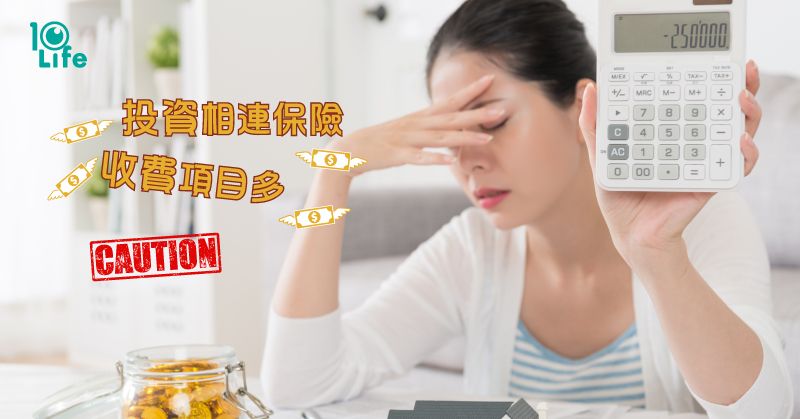
Recently, “dividend-paying funds” that pay interest every month have become popular in the insurance market, attracting many consumers to take out policies. However, when buying funds from an insurance company’s adviser, what you are ultimately buying is, in most cases, an “investment-linked assurance scheme” (ILAS, hereafter referred to as “ILAS”). Some of the currently popular ILAS products charge fees of around 1% per year. This may not sound particularly high, but there have been numerous reports in the past indicating that ILAS involve various complex charges. What is the actual situation?
To understand ILAS products, you can first google them, and reports about ILAS will immediately appear, offering a certain degree of educational value. Of course, if you only refer to online articles, you may say that I am not a professional. In that case, I recommend that you visit the 《錢家有道》 website, which provides a detailed introduction to ILAS products. The following is a comparison of investing in ILAS VS investing directly in funds in terms of fees and charges﹕﹙excerpt﹚
As can be seen, ILAS products involve multiple charges. In addition to charges at fund level, there are also various policy-level charges, such as administration/management fees, surrender charges and withdrawal charges. In the past, ILAS were criticised because of their substantial upfront charges. Some newer-generation ILAS products have indeed reduced their upfront charges, instead spreading administration/management fees over a longer period. In the long run, this will also affect the compounding potential of the invested amount.
To enhance the disclosure of information about ILAS products and make it easier for consumers to compare them, since 2013, the SFC has required insurance companies to disclose in the “Product Key Facts Statement” (KFS) the percentage (%) of total fees and charges as a proportion of total premiums (see Note 1). This percentage is calculated based on a series of assumptions (see Note 2), allowing consumers to understand how much in charges is paid to the insurance company.
According to the Insurance Authority’s market and industry statistics (January–March 2018), Manulife, AIA, Sun Life and Old Mutual accounted for 90% of new premium income in the ILAS market, with Manulife clearly leading the market (accounting for 67%). The following shows the percentage (%) of total fees and charges as a proportion of total premiums for some ILAS products:
If you wish to read the “Product Key Facts Statement” for ILAS products, you can log in to the 《SFC》 website, search for ILAS products under “List of Investment Products”, and download the relevant offering documents.
Since the interview about ILAS on Cable TV was broadcast, we have received criticism from a number of insurance advisers. We understand that ILAS products are currently selling well, and some advisers may not agree with the points we have raised. However, as the saying goes, a gentleman knows both what to do and what not to do. We sincerely urge the insurance advisers concerned not only to study their companies’ training material thoroughly, but also to read the “Product Key Facts Statement” carefully and gain a proper understanding of ILAS charges. Trust is crucial in the insurance industry; advisers should treasure their clients’ trust.
Notes:
1. The disclosure of total fees and charges is known in English as Total Fees and Charges Disclosure, abbreviated as “TFCD”. The method for calculating the TFCD percentage (%): total fees and charges paid to the insurance company (after deducting all non-discretionary bonuses and rebates paid by the insurance company) / total premiums paid by the policyholder x 100%
For details, please visit 《錢家有道》’s website and refer to the 《Total Fees and Charges Disclosure》 section on investment-linked assurance.
2. The calculation of the TFCD percentage is based on certain assumptions, including the life assured’s age, gender and smoking habits, the sum assured, premium amount, holding period and rate of return during the period. As different investment-linked assurance products have different product features, some of the assumptions for the relevant products may differ. These differences must be taken into account when comparing the TFCD percentages of different products.
For details, please visit 《錢家有道》’s website and refer to the 《Total Fees and Charges Disclosure》 section on investment-linked assurance.
This English version of this article has been generated by machine translation powered by AI. It is provided solely for reference purposes. In the event of any discrepancy or inconsistency between this translation and the original Chinese version, the Chinese version shall prevail.
Our team of professional content researchers focussing on insurance
Our team of professional content researchers focussing on insurance
10Life Product Comparison and 10Life Insurance Ratings are developed by 10Life Financial Limited, an authorised insurance broker company licensed with the Insurance Authority under License Number FB1526. 10Life Product Comparison and 10Life Insurance Ratings are developed for generic customer segments using mathematical calculations based on product information, facts and data, and are not influenced by any partnerships with or fees received from insurance companies. Any information on 10Life Platform ("10Life Information"), including but not limited to Product Comparison, Product Ratings, Blog Articles are intended for general education purpose and reference only. None of the 10Life Information is intended, nor should they be considered or relied upon, as regulated advice, insurance, financial, investment or professional advice, recommendation, approval, endorsement, invitation or solicitation in respect of any insurance, financial or investment products. 10Life Information does not take into account your individual needs. Reading 10Life Information should not be considered as conducting a suitability assessment, and is not sufficient to form the basis of any decisions to purchase any insurance products. You should rely on information authorised by insurance companies, carry out your own research and/or seek independent advice from licensed intermediaries before purchasing any insurance products or making any insurance decisions. While reasonable effort is used when collecting, validating and updating 10Life Information from various channels, none of 10Life Group and its subsidiaries, affiliates, agents, directors, officers and employees will be responsible for any liability, claim or loss arising from or associated with you using 10Life Information. No warranty, representation or guarantee is given by 10Life Group and its subsidiaries on the accuracy, completeness and timeliness of the information. If you have any questions on 10Life Product Comparison and 10Life Insurance Ratings, please email us at enquiries@10life.com




 Talk to 10Life on WeChat


