









10Life Financial Limited
Enquiries: enquiries@10life.com
Hotline: (852) 3705 1599
Address: 16/F Greatmany Centre, 109-115 Queen’s Road East, Wan Chai, Hong Kong



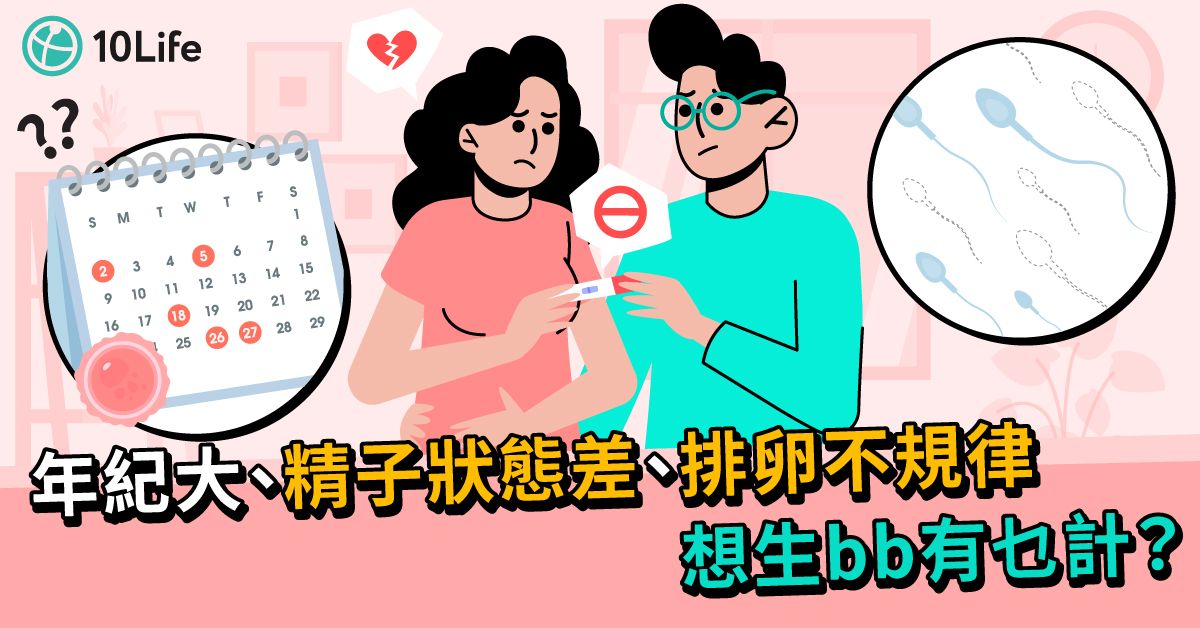
Life in Hong Kong is busy, and people are marrying and having children later and later. Some couples, after years of hard work, find that when they want to have a child, it is more difficult to conceive because of their age; others are eager to start a family, but infertility caused by health issues stands in the way. Fortunately, with advances in medical technology, assisted reproduction is now available to help with fertility, such as in vitro fertilisation (IVF), commonly known as “test-tube baby”, and intrauterine insemination (IUI). What are the differences between these two assisted reproduction methods? Who are they suitable for respectively? Are the success rates and costs of IVF and IUI the same? The following section explains them one by one.
At present, there are two methods of assisted reproduction, including in vitro fertilisation (IVF) and intrauterine insemination (IUI). The most basic difference between IVF and IUI is whether fertilisation takes place outside or inside the body. The table below provides a simple comparison of the process and reference prices of the two, to give everyone a preliminary understanding.
| In vitro fertilisation (IVF, also known as test-tube baby) | Intrauterine insemination (IUI) | |
| Procedure | 1. Eggs are extracted from the woman’s body 2. The man submits a fresh semen sample on the same day 3. The eggs are combined with sperm in the laboratory, and the fertilised eggs are allowed to develop into embryos 4. The best embryo is selected and placed back into the uterus to continue the pregnancy process 5. Any remaining embryos can be cryopreserved for future use | 1. Sperm of better quality is selected and washed to increase sperm motility 2. The sperm is directly inserted into the uterus 3. The insemination timing is arranged to align as closely as possible with the woman’s ovulation period to increase the chance of conception |
| Price reference in Hong Kong | HK$90,000 to HK$110,000 | Approximately HK$11,000 to HK$17,000 |
| Price reference in Taiwan | NT$150,000 to NT$250,000 (approximately HK$38,000 to HK$63,000) | NT$15,000 to NT$18,000 (approximately HK$3,750 to HK$4,500) |
| Remarks: 1. The Hong Kong price reference is based on the package charges of the Reproductive Medicine Centre of Union Hospital 2. The Taiwan price reference is based on the charges of the Reproductive Medicine Centre of Show Chwan Hospital Source: compiled from obstetricians and gynaecologists, Union Hospital and Show Chwan Hospital in Taiwan | ||
A gynaecologist and obstetrician has pointed out that the choice between IVF and IUI depends on the cause and duration of the patient’s infertility. Therefore, before undergoing assisted reproduction, one should first undergo examinations to confirm their physical condition, so as to choose the most suitable treatment.
| In vitro fertilisation (IVF) | Intrauterine insemination (IUI) | |
| Suitable for | -Blocked or adhesed fallopian tubes -Severe endometriosis -Abnormal or very low sperm count -Unexplained infertility -Unable to conceive after several rounds of intrauterine insemination (IUI) | -Mild infertility -Irregular ovulation or no ovulation, but the fallopian tubes are still patent -Lower sperm count or reduced motility |
| Source: compiled from obstetricians and gynaecologists, Union Hospital, and Taisan Hospital in Taiwan | ||
According to the explanation from obstetricians and gynaecologists and information from Union Hospital, after examinations confirm that the body is suitable for in vitro fertilisation (IVF), the female partner needs to have ovulation-inducing injections to accelerate follicular growth and maturation. When the follicles have grown to an appropriate size, the doctor will administer a trigger shot, and the egg retrieval procedure will be performed about 36 hours later.
The egg retrieval procedure takes around 45 minutes. During the procedure, anaesthetic or sedatives will be administered, and under ultrasound guidance, a needle is inserted through the vagina into the ovaries to extract the eggs, which are then sent to the laboratory to be combined with sperm.
According to the experiences shared by expectant mothers on online parenting forums, egg retrieval generally causes only mild bloating or pain, and may even be completely painless. However, they note that one may feel more tired afterwards, so it is advisable to take one or two days off work and rest properly.
Assisted reproduction can help couples who find it more difficult to conceive due to advanced age or physical conditions, enabling them to welcome a new life. However, neither in vitro fertilisation (IVF) nor intrauterine insemination (IUI) is 100% successful.
| In vitro fertilisation (IVF) | Intrauterine insemination (IUI) |
| -Can ensure the egg and sperm combine and fertilisation occurs -Relatively high success rate, but it declines with age -The success rate for 35-year-old patients is around 30% to 40%; by age 40, it may fall to 10% to 20% | -The success rate is around 15% -Most people need to try several times before successfully conceiving |
| Source: compiled from obstetricians and gynaecologists, Union Hospital and Taiwan's Ma Sheng Hospital | |
In addition, a gynaecologist and obstetrician pointed out that assisted reproduction is only an auxiliary fertility method. If the couple’s own physical condition is relatively poor, for example if the woman has premature ovarian insufficiency from birth, or if the ovaries have undergone major surgery, leaving no eggs available, or if the man has no sperm, pregnancy cannot be achieved through assisted reproduction technology.
In addition to the relatively high cost, some infertile couples are also concerned that assisted reproduction may lead to side effects, such as a higher risk of miscarriage or a greater likelihood of genetic disorders.
An obstetrician and gynaecologist explained that assisted reproduction does not increase the risk of miscarriage. However, couples who undergo assisted reproduction are usually older, and older pregnant women are inherently at a higher risk of miscarriage than younger pregnant women, which creates this misconception. Likewise, assisted reproduction does not increase the risk of genetic disorders. Whether through assisted reproduction or natural conception, if the patient has chromosome abnormalities, these may be passed on to the baby.
Insurance plans on the market generally do not cover the cost of assisted reproductive treatment. However, if expectant parents would like more comprehensive protection during the journey to pregnancy, it is worth planning ahead and purchasing maternity cover as early as possible during the preconception period.
Maternity cover generally includes prenatal and postnatal check-ups, as well as delivery expenses in hospital. However, please note that maternity cover must be purchased as an add-on to a medical insurance product and cannot be bought separately. It usually also comes with a “waiting period”, meaning that claims for maternity-related expenses can only be made after 9 months to 1 year from the date the maternity cover is added. This requirement is to ensure that the insured becomes pregnant after the policy takes effect.
In addition, whether through assisted reproduction or natural conception, prenatal check-ups are still necessary to ensure the baby’s health. 10Life previously compiled the recommended gestational weeks for prenatal tests such as T21 and anomaly scans, as well as their approximate costs. Expectant parents may refer to “A Simple Guide to Prenatal Check-ups”. If you would like to learn more about insurance information related to maternity cover, you are also welcome to enquire with 10Life’s professional insurance advisers.
Source: Union Hospital, Chang Gung Memorial Hospital (Taiwan), Bortek Medical Group, media reports, online parenting forums
Last updated: 12 October 2023
This English version of this article has been generated by machine translation powered by AI. It is provided solely for reference purposes. In the event of any discrepancy or inconsistency between this translation and the original Chinese version, the Chinese version shall prevail.
Our team of professional content researchers focussing on insurance
Our team of professional content researchers focussing on insurance
10Life Product Comparison and 10Life Insurance Ratings are developed by 10Life Financial Limited, an authorised insurance broker company licensed with the Insurance Authority under License Number FB1526. 10Life Product Comparison and 10Life Insurance Ratings are developed for generic customer segments using mathematical calculations based on product information, facts and data, and are not influenced by any partnerships with or fees received from insurance companies. Any information on 10Life Platform ("10Life Information"), including but not limited to Product Comparison, Product Ratings, Blog Articles are intended for general education purpose and reference only. None of the 10Life Information is intended, nor should they be considered or relied upon, as regulated advice, insurance, financial, investment or professional advice, recommendation, approval, endorsement, invitation or solicitation in respect of any insurance, financial or investment products. 10Life Information does not take into account your individual needs. Reading 10Life Information should not be considered as conducting a suitability assessment, and is not sufficient to form the basis of any decisions to purchase any insurance products. You should rely on information authorised by insurance companies, carry out your own research and/or seek independent advice from licensed intermediaries before purchasing any insurance products or making any insurance decisions. While reasonable effort is used when collecting, validating and updating 10Life Information from various channels, none of 10Life Group and its subsidiaries, affiliates, agents, directors, officers and employees will be responsible for any liability, claim or loss arising from or associated with you using 10Life Information. No warranty, representation or guarantee is given by 10Life Group and its subsidiaries on the accuracy, completeness and timeliness of the information. If you have any questions on 10Life Product Comparison and 10Life Insurance Ratings, please email us at enquiries@10life.com




 Talk to 10Life on WeChat
