









10Life Financial Limited
Enquiries: enquiries@10life.com
Hotline: (852) 3705 1599
Address: 16/F Greatmany Centre, 109-115 Queen’s Road East, Wan Chai, Hong Kong



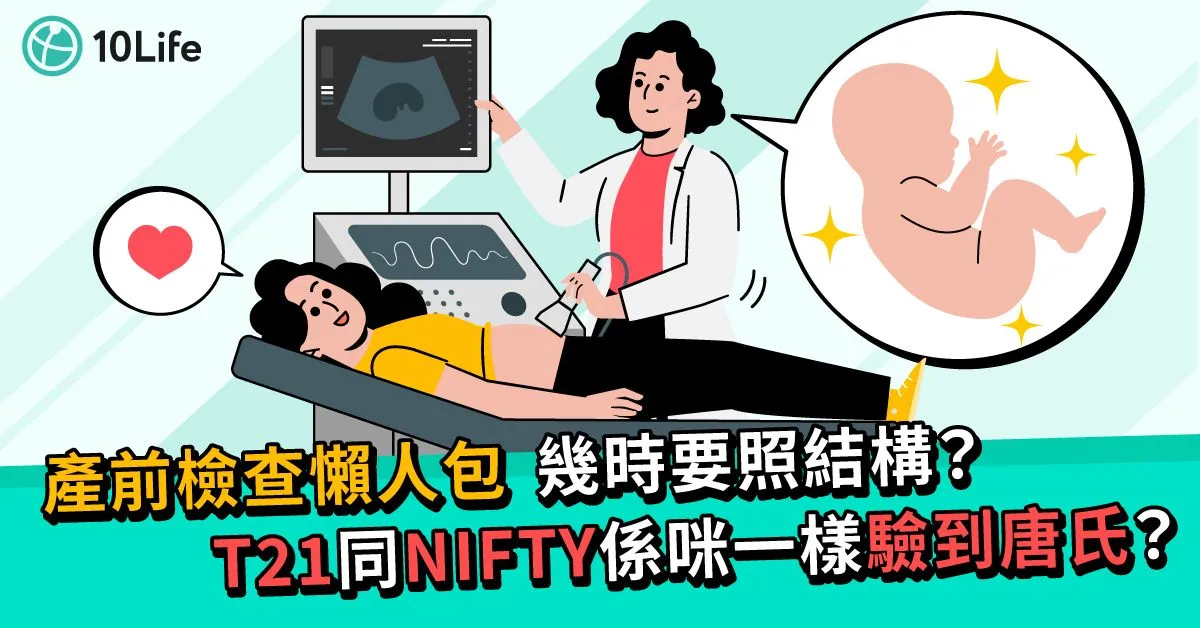
In addition to worrying about whether the baby is getting enough nutrition, expectant mothers during pregnancy also pay attention to the baby’s growth rate, whether the body structure is normal, and whether there is any risk of Down syndrome. These can all be monitored or screened through antenatal tests such as T21 and anomaly scans. However, there are many antenatal test items. At which weeks of pregnancy should which tests be carried out? And what are the differences in cost between antenatal check-ups at a maternal and child health centre and at a private clinic?
If an expectant mother gives birth in a public hospital, the government will provide free antenatal check-ups.
However, the government’s antenatal check-up scheme only covers the most basic examination items, such as blood tests and Down’s syndrome screening. Over the entire pregnancy, there are generally only four to seven follow-up visits, and a structural scan (detailed ultrasound) may not be arranged either.
As a result, many expectant mothers who give birth in public hospitals choose to have it both ways in order to receive more comprehensive follow-up care, paying privately to see a doctor for additional antenatal check-ups. Antenatal check-ups offered by private doctors or private hospitals are generally more frequent, and follow-up appointments are arranged more flexibly. Taking Matilda International Hospital as an example, from early pregnancy to 41 weeks, a total of 14 health assessments or antenatal check-ups are provided, and a structural scan is also performed at 20 to 22 weeks.
The entire pregnancy period lasts about 40 weeks and is divided into three stages — early, middle and late — according to the baby’s growth progress, with different recommended check-up items for each stage.
Private doctors generally charge for antenatal consultations on a per-visit and per-test basis. Fees vary from doctor to doctor and can differ significantly, ranging from $500 to around $1,000. You should enquire about the relevant fees before making an appointment. Some private hospitals list their charges on their websites; for example, Precious Blood Hospital (Caritas) charges about $45,000 for 14 antenatal check-ups and all necessary examinations such as the detailed scan. In addition, some private hospitals’ delivery packages already include antenatal check-ups, so no extra charges are required.
The following is a summary of the antenatal check-up schedule and approximate prices for reference by first-time parents. Please note, however, that depending on each expectant mother’s background and health condition, the number of routine antenatal check-ups and the examination items required may vary. In practice, medical advice should be followed.
| Pregnancy stage | Antenatal check-ups and other examinations | Matilda International Hospital charges |
| Early stage (14 weeks before) |
| $2,0201 |
| $6,0202 | |
| NIPT $7,2202 | |
| Mid stage (14 weeks to 27 weeks) |
| $2,0201 |
| $5,3902 | |
| $2,6802 | |
| Late stage (28 weeks to 40 weeks) |
| $2,0201 |
| 4,8102 | |
| Notes: 1. Routine antenatal check-ups include weight and blood pressure measurements, urine tests and basic ultrasound scans, and are charged per visit; the above is the price of a single check-up. 2. The charges for the examination items include the routine antenatal check-up fee for that visit. 3. The price information for Matilda International Hospital was taken from the hospital website on 25 July 2023 for reference only, and the hospital may adjust its charges from time to time. As for private doctor fees, the data are compiled from the Baby Kingdom online forum and private healthcare groups. | ||
Source: Compiled from obstetrics and gynaecology specialists, Matilda International Hospital, and OT&P Healthcare
Routine ultrasound scans help assess the estimated due date, confirm the foetal heartbeat, size and position, etc. Structural ultrasound can then examine the foetus’ body structure and internal organs in detail, including the skull, lips, spine, heart and limbs. It is generally performed around the 20th to 22nd week of pregnancy. Structural ultrasound can diagnose serious congenital structural abnormalities, such as spina bifida and limb abnormalities.
Structural ultrasound can be further divided into 2D, 3D and 4D. An obstetrics and gynaecology specialist explained that 2D is sufficient to identify structural issues in the foetus, 3D allows a clearer view of the foetus’ appearance, while 4D goes a step further by showing the foetus’ movements. 3D and 4D scans are not essential, and expectant mothers may choose whether or not to undergo them.
Private doctors charge around HK$2,500 to HK$5,000 for a structural scan. If both mother and baby are in normal condition, usually only one structural ultrasound is needed. If issues such as kidney enlargement are found, or if the heart cannot be clearly seen, a follow-up examination will need to be arranged.
Although the Government offers free Down’s syndrome screening (OSCAR), many expectant mothers choose to pay privately to undergo T21 or NIFTY at a private hospital or clinic, also known as NIPT, meaning “non-invasive prenatal testing for foetal chromosomal abnormalities”, mainly because the latter is more accurate.
An obstetrics and gynaecology specialist explained that T21 and NIFTY are essentially the same test, differing only in brand and laboratory, so only one of them needs to be chosen. The principle behind this test is genetic screening to check whether the baby has chromosomal conditions such as Down’s syndrome, Edwards syndrome and Patau syndrome, with an accuracy rate of 99%. Based on online information, the fee for a T21 test with a private doctor is around HK$5,000.
Yes. At present, there is no maternity insurance available for separate purchase in the market. Some medical insurance products allow policyholders to add maternity cover, which generally covers prenatal and postnatal check-ups, as well as related hospital delivery expenses.
However, before purchasing, please note that maternity cover usually has a “waiting period” of 9 months to 1 year, meaning the period after adding maternity cover before a claim can be made. In the event of premature birth, a doctor’s certificate is required to confirm that conception took place after the policy became effective. If you are already planning to have a baby, it is advisable to purchase maternity cover as early as possible during the pre-conception period.
In addition, a small number of insurers’ high-end medical insurance plans already include maternity cover, but the premiums for such plans are generally high.
If expecting parents would like to know more about insurance products with maternity cover, you are welcome to enquire with 10Life’s professional insurance advisers.
Note:
1. Source: Department of Health, media reports, parenting online forums, private hospitals and insurance companies
2. Last updated on: 15 August 2023.

This English version of this article has been generated by machine translation powered by AI. It is provided solely for reference purposes. In the event of any discrepancy or inconsistency between this translation and the original Chinese version, the Chinese version shall prevail.
Our team of professional content researchers focussing on insurance
Our team of professional content researchers focussing on insurance
10Life Product Comparison and 10Life Insurance Ratings are developed by 10Life Financial Limited, an authorised insurance broker company licensed with the Insurance Authority under License Number FB1526. 10Life Product Comparison and 10Life Insurance Ratings are developed for generic customer segments using mathematical calculations based on product information, facts and data, and are not influenced by any partnerships with or fees received from insurance companies. Any information on 10Life Platform ("10Life Information"), including but not limited to Product Comparison, Product Ratings, Blog Articles are intended for general education purpose and reference only. None of the 10Life Information is intended, nor should they be considered or relied upon, as regulated advice, insurance, financial, investment or professional advice, recommendation, approval, endorsement, invitation or solicitation in respect of any insurance, financial or investment products. 10Life Information does not take into account your individual needs. Reading 10Life Information should not be considered as conducting a suitability assessment, and is not sufficient to form the basis of any decisions to purchase any insurance products. You should rely on information authorised by insurance companies, carry out your own research and/or seek independent advice from licensed intermediaries before purchasing any insurance products or making any insurance decisions. While reasonable effort is used when collecting, validating and updating 10Life Information from various channels, none of 10Life Group and its subsidiaries, affiliates, agents, directors, officers and employees will be responsible for any liability, claim or loss arising from or associated with you using 10Life Information. No warranty, representation or guarantee is given by 10Life Group and its subsidiaries on the accuracy, completeness and timeliness of the information. If you have any questions on 10Life Product Comparison and 10Life Insurance Ratings, please email us at enquiries@10life.com




 Talk to 10Life on WeChat
