









10Life Financial Limited
Enquiries: enquiries@10life.com
Hotline: (852) 3705 1599
Address: 16/F Greatmany Centre, 109-115 Queen’s Road East, Wan Chai, Hong Kong





1. What are cryptocurrencies and NFTs? How large is the market?
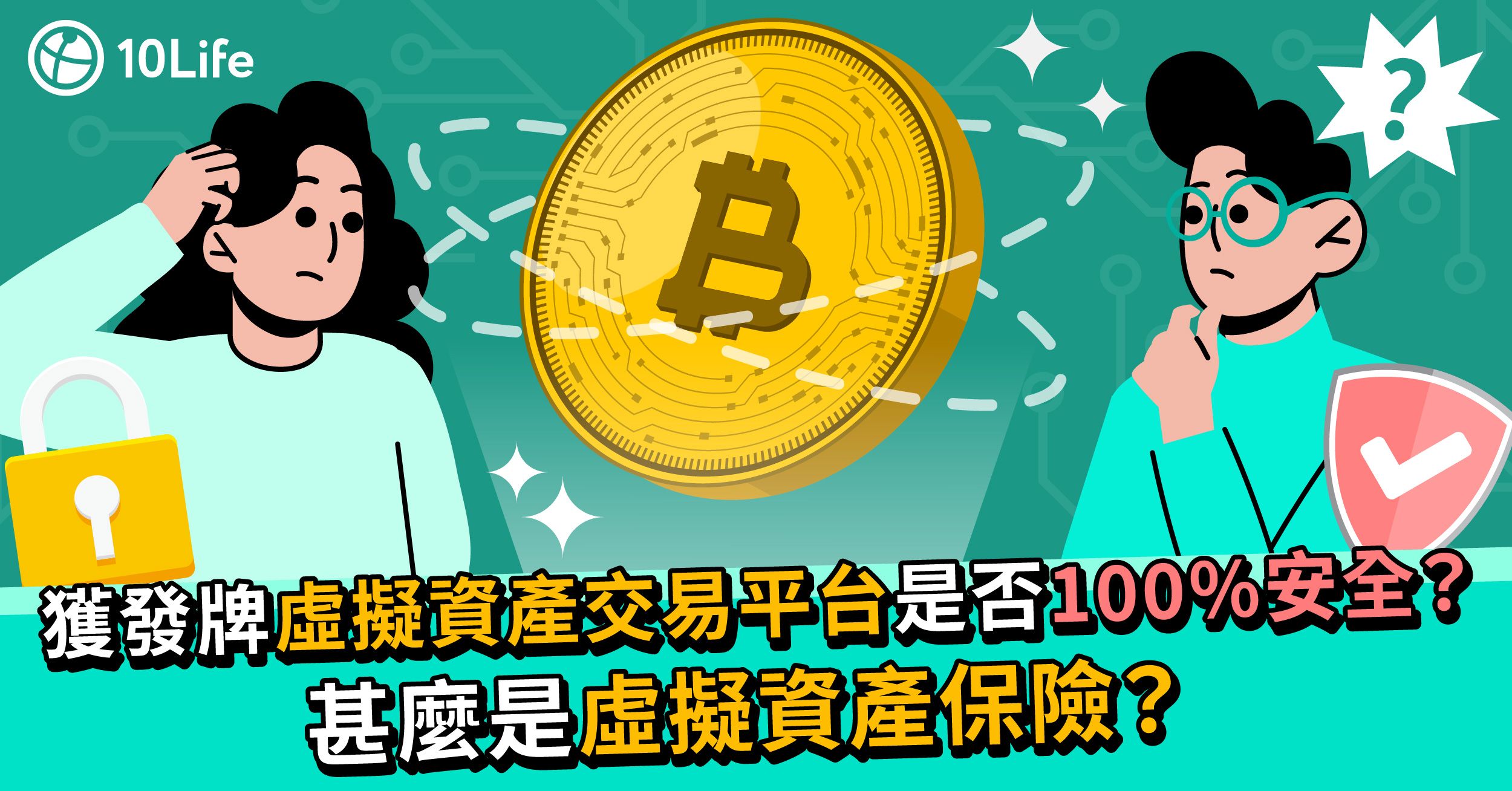
The virtual asset trading platform JPEX has recently become embroiled in a fraud case. One month after the incident came to light, the Government announced that more than 2,500 people had fallen victim, involving approximately HK$1.5 billion. Following the incident, the public has once again focused on the safety of virtual asset trading. Since 2020, the Securities and Futures Commission has established a licensing regime for virtual asset trading platforms. However, for investors, does investing in a licensed institution necessarily mean that they are protected?
In its consultation paper on virtual asset platform operators, the Securities and Futures Commission proposed that licensed platform operators establish compensation arrangements to protect clients against potential risks that may arise on the platform, such as hacking or default by the licensed platform operator. Such arrangements may include third-party insurance, funds set aside in trust for this purpose by the licensed platform operator or a corporation within the same corporate group, or a combination of both.
However, there are not many insurance companies in the market that provide virtual asset protection for individuals or institutions. Today, 10Life will explore the challenges faced by insurance companies, as well as how individual insurance companies may provide protection for virtual assets.
Cryptocurrencies are assets that apply blockchain technology. Common examples include Bitcoin and Ether, with market capitalisations of US$550 billion and US$190.7 billion respectively (Note 1). It is worth noting that cryptocurrencies are not legal tender in major countries and regions around the world, including Hong Kong, and are regarded merely as virtual commodities.
Another type of virtual asset, NFT, uses blockchain technology to authenticate ownership and facilitate trading. Trading records are publicly recorded on the blockchain and cannot be altered or deleted. NFTs are non-fungible and cannot be divided. According to Chainalysis data, NFT transactions worth US$44.2 billion were recorded on the Ethereum blockchain in 2021. However, after examining cryptocurrency price-tracking website CoinMarketCap and NFT Scan data, Web3 review website dappGambi pointed out that, among the 73,000 NFTs worldwide, 70,000 had a market value close to zero. In other words, 95% of NFT collections were virtually worthless.
2. What are the risks of cryptocurrencies and NFTs?
For individuals or organisations, apart from the significant volatility in cryptocurrency or NFT prices, another risk comes from theft. In 2021, approximately US$3.2 billion worth of cryptocurrency was stolen, with many thefts linked to vulnerabilities in smart contracts of decentralised finance protocols, while others involved cryptocurrency exchanges.
In fact, reports of hackers infiltrating exchanges are not uncommon. The most famous example is the exchange Mt. Gox. In 2014, Mt. Gox was the world’s largest Bitcoin exchange, accounting for more than 70% of Bitcoin trading volume on the market. However, it ultimately collapsed after hackers stole 850,000 bitcoins.
3. What types of coverage does the insurance company provide?
In other countries, some exchanges also purchase insurance. For example, the British insurance services provider Lloyd’s provides Coinbase with online wallet protection against hacking and theft. In addition, it also protects Crypto.com’s offline wallets held by its custodian Ledger Vault, covering physical damage or destruction, as well as third-party theft.
In Hong Kong, OneDegree provides insurance coverage for ON1ON, the digital asset custody services platform operated by HKbitEX’s sister company, including the theft and misappropriation of private keys resulting from physical damage to wallets caused by natural events, cybersecurity threats and employee theft. A “Private Key” can be understood as the password required to access or make payments using cryptocurrency. In April 2022, OneDegree also extended its cryptocurrency insurance coverage to NFTs through a partnership with Munich Re.
In addition, the insurtech platform YAS also plans to offer microinsurance for NFTs, covering losses arising from NFT theft and loss. the product will initially accept applications from institutional clients before being made available to retail customers, but an official launch date has not yet been announced.
4. Why has the development of virtual asset insurance been slow?
Currently, only a small number of insurance companies provide cover for virtual asset theft, and this is mainly offered to institutions. Insurers have not entered the virtual asset insurance market on a large scale, primarily due to concerns about underwriting risks (see Table 1).
| Risk factor | Details |
| High price volatility | Virtual asset prices are highly volatile, making it difficult for insurers to determine premiums. |
| Insufficient data | As virtual assets are an emerging asset class, there is insufficient data, making it difficult for insurers to quantify the risks. |
| Regulatory uncertainty | Regulatory legislation concerning virtual assets is still being developed in certain countries or regions, and insurers need to assess the impact this may have. |
| No support from central banks | Insurers are concerned about systemic risks in the cryptocurrency industry and the non-convertibility of currencies. |
| Sources: WTW, Hub International | |
5. Are licensed virtual asset trading platforms 100% safe?
At the end of 2022, the Government announced its intention to develop Hong Kong into an international virtual asset hub. One step towards achieving this is to establish an effective regulatory regime, thereby building a comprehensive trading system. At present, only two virtual asset trading platforms have successfully obtained licences issued by the Securities and Futures Commission of Hong Kong: OSL Exchange and HashKey Exchange. However, even when investors trade on platforms licensed by the Securities and Futures Commission, their virtual assets may not necessarily be protected. Technically, virtual assets always carry the risk of theft, meaning that investors are not entirely safe when trading. In addition, virtual assets are rarely backed by tangible assets, so their prices can rise or fall sharply. From an investment perspective, investors therefore also face a certain level of risk.
6. How does the metaverse affect the insurance industry?
“Metaverse” is a virtual space where users can interact through virtual avatars. Larger metaverse platforms include Sandbox, Decentraland and NFT Worlds.
Ownership of virtual assets in the metaverse, such as land, can be verified by NFTs. Experts in the insurance industry predict that there will be demand for protection for individuals and property in the metaverse, for example against risks such as theft and ransomware.
On the other hand, there is still some uncertainty surrounding the future regulation of the metaverse. A report by Citibank states that, if the metaverse genuinely becomes the next major trend on the internet, it may attract greater scrutiny from regulators, policymakers and governments around the world. Issues including anti-money laundering regulations for exchanges and wallets, the use of decentralised finance, crypto assets and ownership rights must all be resolved.
Note:
1. Data source: CoinMarketCap.com. Date and time of price: 17 October 2023, 2:40 pm.
2. Last updated: 17 October 2023
This English version of this article has been generated by machine translation powered by AI. It is provided solely for reference purposes. In the event of any discrepancy or inconsistency between this translation and the original Chinese version, the Chinese version shall prevail.
Our team of professional content researchers focussing on insurance
Our team of professional content researchers focussing on insurance
10Life Product Comparison and 10Life Insurance Ratings are developed by 10Life Financial Limited, an authorised insurance broker company licensed with the Insurance Authority under License Number FB1526. 10Life Product Comparison and 10Life Insurance Ratings are developed for generic customer segments using mathematical calculations based on product information, facts and data, and are not influenced by any partnerships with or fees received from insurance companies. Any information on 10Life Platform ("10Life Information"), including but not limited to Product Comparison, Product Ratings, Blog Articles are intended for general education purpose and reference only. None of the 10Life Information is intended, nor should they be considered or relied upon, as regulated advice, insurance, financial, investment or professional advice, recommendation, approval, endorsement, invitation or solicitation in respect of any insurance, financial or investment products. 10Life Information does not take into account your individual needs. Reading 10Life Information should not be considered as conducting a suitability assessment, and is not sufficient to form the basis of any decisions to purchase any insurance products. You should rely on information authorised by insurance companies, carry out your own research and/or seek independent advice from licensed intermediaries before purchasing any insurance products or making any insurance decisions. While reasonable effort is used when collecting, validating and updating 10Life Information from various channels, none of 10Life Group and its subsidiaries, affiliates, agents, directors, officers and employees will be responsible for any liability, claim or loss arising from or associated with you using 10Life Information. No warranty, representation or guarantee is given by 10Life Group and its subsidiaries on the accuracy, completeness and timeliness of the information. If you have any questions on 10Life Product Comparison and 10Life Insurance Ratings, please email us at enquiries@10life.com



 Talk to 10Life on WeChat
