









10Life Financial Limited
Enquiries: enquiries@10life.com
Hotline: (852) 3705 1599
Address: 16/F Greatmany Centre, 109-115 Queen’s Road East, Wan Chai, Hong Kong





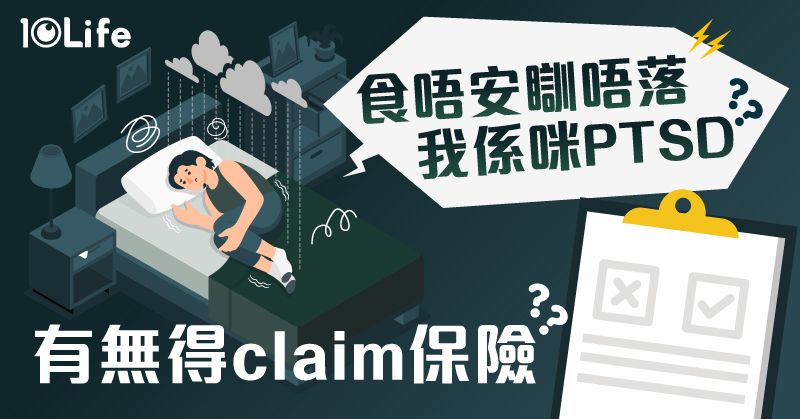
Earlier this month, a rare accident occurred at a MIRROR concert, when a giant screen suspended mid-air fell and injured a dancer. The accident not only shocked audience members who witnessed it in person, but the incident footage also went viral online. Many people who watched the clips were emotionally affected; some became unsettled, trembling, and unable to eat or sleep, while others said they had been left with psychological trauma and were afraid to attend other concerts. At the time, experts pointed out that some people may have developed post-traumatic stress disorder (PTSD). What causes PTSD? How do its symptoms differ from anxiety brought on by everyday stress?
According to information from Castle Peak Hospital, the main cause of PTSD is directly experiencing or witnessing a sudden incident, such as a serious accident, assault, or abuse, resulting in shock and fear.
Within one month after the incident, almost everyone will experience an acute stress reaction. Many people will gradually come to terms with what they have been through and recover on their own. However, if the symptoms persist for several months, or even years, it is classified as PTSD.
In daily life, work setbacks, relationship issues and financial problems can all cause stress. In severe cases, people may experience anxiety, depression and fatigue, but these symptoms are not PTSD.
The Hong Kong Centre for Well-Being at the Department of Psychiatry of The Chinese University of Hong Kong has developed five questions to help people who are emotionally distressed carry out an initial self-assessment. A self-test cannot replace a professional clinical assessment. If the test results indicate a possible PTSD diagnosis, or if you suspect that you may have the condition, you should seek help from a doctor or clinical psychologist.
Studies show that both psychological and drug treatments are effective in treating PTSD. The main treatment methods include:
1. Cognitive behavioural therapy
Through discussion, this helps patients understand how their thinking patterns contribute to PTSD and worsen symptoms, and corrects more extreme thoughts, thereby improving daily behaviour and emotional regulation.
2. Group therapy
People with the same or similar traumatic experiences are invited to share, making it easier for patients to open up and talk about what they have been through.
3. Drug treatment
Antidepressants known as serotonin modulators can reduce the symptoms of PTSD and depression. These medications must be prescribed by a doctor.
According to guidance from the National Institute for Health and Care Excellence (NICE) in the UK, before resorting to medication, psychological trauma should be addressed as far as possible through cognitive behavioural therapy and similar approaches.
Most insurance products on the market do not cover mental illnesses, while the Voluntary Health Insurance Scheme covers eligible psychiatric treatment costs for insured persons during hospitalisation in Hong Kong, when recommended by a specialist. However, if the condition is mild and does not require hospitalisation, expenses for outpatient psychiatric consultations and psychological counselling are generally not claimable.
Secondly, the Voluntary Health Insurance Scheme provides an annual psychiatric treatment benefit limit of HK$30,000. Even if the compensation limit has been reached, the benefit limit will be reset to HK$30,000 in the next policy year, allowing patients to cope with medical expenses that may recur year after year.
Policyholders should also note that insurers generally do not cover pre-existing conditions. For diagnosed patients with mental health conditions, related treatment may not be covered if they purchase medical insurance. Please refer to the terms and conditions of the insurance product or consult a licensed insurance intermediary for details.
Note:
1. Sources: Castle Peak Hospital, doctors’ columns, media reports and the Hong Kong Centre for Well-Being.
2. Last updated on: 17 October 2022.
This English version of this article has been generated by machine translation powered by AI. It is provided solely for reference purposes. In the event of any discrepancy or inconsistency between this translation and the original Chinese version, the Chinese version shall prevail.
Our team of professional content researchers focussing on insurance
Our team of professional content researchers focussing on insurance
10Life Product Comparison and 10Life Insurance Ratings are developed by 10Life Financial Limited, an authorised insurance broker company licensed with the Insurance Authority under License Number FB1526. 10Life Product Comparison and 10Life Insurance Ratings are developed for generic customer segments using mathematical calculations based on product information, facts and data, and are not influenced by any partnerships with or fees received from insurance companies. Any information on 10Life Platform ("10Life Information"), including but not limited to Product Comparison, Product Ratings, Blog Articles are intended for general education purpose and reference only. None of the 10Life Information is intended, nor should they be considered or relied upon, as regulated advice, insurance, financial, investment or professional advice, recommendation, approval, endorsement, invitation or solicitation in respect of any insurance, financial or investment products. 10Life Information does not take into account your individual needs. Reading 10Life Information should not be considered as conducting a suitability assessment, and is not sufficient to form the basis of any decisions to purchase any insurance products. You should rely on information authorised by insurance companies, carry out your own research and/or seek independent advice from licensed intermediaries before purchasing any insurance products or making any insurance decisions. While reasonable effort is used when collecting, validating and updating 10Life Information from various channels, none of 10Life Group and its subsidiaries, affiliates, agents, directors, officers and employees will be responsible for any liability, claim or loss arising from or associated with you using 10Life Information. No warranty, representation or guarantee is given by 10Life Group and its subsidiaries on the accuracy, completeness and timeliness of the information. If you have any questions on 10Life Product Comparison and 10Life Insurance Ratings, please email us at enquiries@10life.com



 Talk to 10Life on WeChat
