









10Life Financial Limited
Enquiries: enquiries@10life.com
Hotline: (852) 3705 1599
Address: 16/F Greatmany Centre, 109-115 Queen’s Road East, Wan Chai, Hong Kong



What to bring to hospital? Hospital admission checklist
What documents do I need to bring when being admitted to a public hospital?
What is an admission form?
What are the latest public hospital inpatient charges? (2026)
What time are patients discharged from public hospitals?
Can you transfer from a public hospital to a private hospital?
What should you take note of when preparing for admission to a private hospital?
What does private hospital inpatient care include?
What should you do before and after hospitalisation if you have medical insurance?
Be well prepared before hospitalisation to avoid last-minute panic
Frequently Asked Questions About Preparing for Hospitalisation


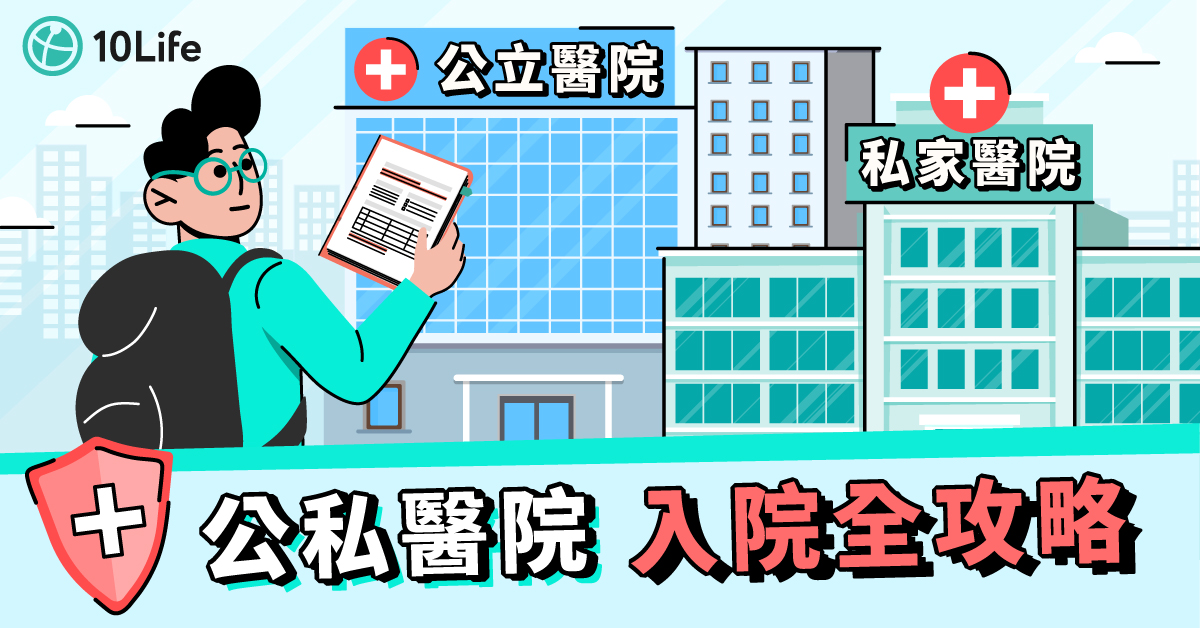
If you suddenly need to be admitted to hospital, apart from worrying about your condition, many people will immediately ask: “What should I bring to hospital?” and “What documents do I need to prepare?” Whether you are admitted to a public or private hospital, preparing your identification documents, admission documents, medication and insurance information in advance can help make the admission process smoother. In this article, the 10Life insurance comparison platform has compiled a hospital admission checklist, along with key points to note when being admitted to and discharged from public and private hospitals.
What to bring to hospital? Hospital admission checklist
Before being admitted, you can use the checklist below to prepare the necessary documents and personal items. However, requirements may vary between hospitals, wards and treatments, so you should still prepare according to the hospital’s instructions before admission.
| Category | Suggested items |
|---|---|
| Proof of identity | Hong Kong Identity Card, passport or other valid proof of identity |
| Admission documents | Admission papers/admission notice issued by your doctor, appointment documents and referral letter (if applicable) |
| Medical information | Medications currently being taken, medication records, medical reports, test reports or relevant scans |
| Insurance information | Medical card, policy details, hospitalisation claim form and letter of guarantee/pre-authorisation documents (if applicable) |
| Payment arrangements | Credit card, admission deposit or other payment methods accepted by the hospital |
| Clothing | Underwear, pyjamas, a jacket or dressing gown |
| Personal items | Non-slip slippers, toothbrush, toothpaste, towel and other toiletries |
| Everyday items | Mobile phone, charger, glasses, hearing aid and other essentials |
If you are taking long-term medication, in addition to bringing the medication, it is also advisable to prepare information such as the names of the medications, dosages and instructions for use, to help medical staff understand your medication regimen. Requirements may vary between hospitals and treatments, so you should check the hospital’s instructions and prepare accordingly before admission.
If you are an expectant mother being admitted to give birth, the items required will be different. You can refer to 10Life’s hospital bag checklist.
What documents do I need to bring when being admitted to a public hospital?
For a scheduled admission, such as for surgery or specified treatment, you will generally need to complete the admission procedures at the designated location on the date and time specified by the hospital.
Commonly required documents include:
The documents required for children, non-Hong Kong residents or other specified individuals may differ. You should follow the hospital’s instructions.
What is an admission form?
For a scheduled admission, the attending doctor or hospital will generally provide an admission letter or relevant notification document specifying the admission date, time and location. The patient should follow the instructions in the document to complete the admission process. If the document is lost, the patient should first contact the hospital or attending doctor.
What are the latest public hospital inpatient charges? (2026)
Hong Kong’s public healthcare charges will be adjusted from 1 January 2026. Taking “Eligible Persons” as an example:
| Public hospital services | 2026 charges |
|---|---|
| Accident and emergency department | HK$400 per visit |
| Acute beds | HK$300 per day |
| Convalescent/rehabilitation, infirmary and psychiatric beds | HK$200 per day |
| Day procedures and treatment services | HK$250 per visit |
Inpatient charges are calculated on a daily basis, with the cut-off time at midnight. Charges for non-Eligible Persons are higher; the actual fees should be based on the latest announcement by the Hospital Authority.
What time are patients discharged from public hospitals?
Public hospitals do not have a standardised fixed discharge time.
Doctors will determine whether patients are fit for discharge based on their condition and treatment progress. The ward will then arrange medication, discharge documents, follow-up appointments and other procedures.
When being discharged, you should generally remember to:
If your family needs to pick you up, you may enquire with the ward in advance about the approximate arrangements. However, the actual discharge time may still vary.
Can you transfer from a public hospital to a private hospital?
If a patient wishes to transfer from a public hospital to a private hospital, they generally need to confirm the receiving private hospital, attending doctor and bed arrangements first, and handle medical records, patient transport and the hospital admission deposit as necessary.
If they have medical insurance, they should also confirm before the transfer whether the selected hospital, doctor and ward class are covered, and whether pre-authorisation is required.
For more information about the differences between public and private healthcare, please refer to 10Life’s 【Hong Kong Healthcare System: How to Choose Between Public and Private Hospitals?】.
What should you take note of when preparing for admission to a private hospital?
The basic preparations for admission to private and public hospitals are similar. However, as ward selection, admission deposits and medical insurance arrangements are involved, more financial and insurance matters usually need to be handled before admission.
You will generally need to prepare:
For example, a Hong Kong Identity Card, passport or other identity documents accepted by the hospital.
If you are scheduled to undergo surgery or treatment, your attending doctor will generally arrange the admission and provide the relevant documents.
This includes previous medical reports, test results, the names and dosages of medicines, and so on.
If you have medical insurance, you should bring your medical card, claim forms, and any pre-authorisation or letter of guarantee issued by the insurance company (where applicable).
Private hospitals generally require patients to pay a deposit upon admission. The amount varies depending on the hospital, ward class, surgery and estimated medical expenses.
What does private hospital inpatient care include?
Staying in a private hospital, medical expenses usually involve more than just room charges.
Depending on the medical condition and treatment plan, the costs may include:
Therefore, even when two patients stay in the same class of room, their final medical bills can differ significantly.
For non-emergency surgery or treatment, you can request an estimate of the medical costs from the hospital or attending doctor before admission to understand the expected doctor’s fees, hospital charges and other related expenses.
Please note that medical cost estimates are generally indicative only. The actual costs may be affected by factors such as the length of hospitalisation, changes in the medical condition, and any additional treatment or examinations.
What should you do before and after hospitalisation if you have medical insurance?
Having medical insurance does not mean that all hospitalisation expenses can be reimbursed in full. Before admission, check the following:
| Before and after admission | What should you pay attention to? |
|---|---|
| Before admission | Confirm the ward class, coverage limits and deductible/excess |
| Before admission | For non-emergency treatment, check whether pre-authorisation is required |
| Before admission | Confirm whether a “cashless discharge” or guarantee of payment is available |
| During hospitalisation | Prepare the claim form and have your attending doctor complete it where necessary |
| At discharge | Keep the receipts, medical reports, examination reports and discharge documents |
| After discharge | Submit your claim within the period specified in the policy |
The claim period for medical insurance is generally within 30 to 90 days after receiving medical treatment or discharge, but the requirements vary between policies. The terms of the individual policy shall prevail.

Be well prepared before hospitalisation to avoid last-minute panic
Preparing your documents, medication and personal belongings before admission can help make the admission process smoother. If you are admitted to a private hospital and have medical insurance, you should also find out in advance about the room class, excess, pre-authorisation and claims requirements, to avoid discovering upon discharge that the cover falls short of your expectations.
10Life compares the coverage, room classes and product features of different medical insurance and Voluntary Health Insurance Scheme plans. If you would like to understand your medical cover, you can compare different medical insurance plans, or contact a 10Life insurance adviser.
Frequently Asked Questions About Preparing for Hospitalisation
Bring proof of identity, admission documents, medication and medical information, insurance details, and basic personal items.
Generally, from 12–1 pm and 6–8 pm.
Prepare the admission documents, medication, medical information, insurance details and daily necessities.
They can assist with the process, but some documents may need to be signed by the insured person.
Generally, yes. The amount depends on the hospital, room type, surgery and estimated medical expenses.
Not necessarily. There are generally requirements regarding designated hospitals, doctors, treatments and applications. You should confirm with the insurance company before admission.
Further reading:
Sources:
This English version of this article has been generated by machine translation powered by AI. It is provided solely for reference purposes. In the event of any discrepancy or inconsistency between this translation and the original Chinese version, the Chinese version shall prevail.

10+ years in editing & copywriting. I love solving puzzles — now my goal is making insurance jargon simple. Let's decode policies and learn together.
10+ years in editing & copywriting. I love solving puzzles — now my goal is making insurance jargon simple. Let's decode policies and learn together.
10Life Product Comparison and 10Life Insurance Ratings are developed by 10Life Financial Limited, an authorised insurance broker company licensed with the Insurance Authority under License Number FB1526. 10Life Product Comparison and 10Life Insurance Ratings are developed for generic customer segments using mathematical calculations based on product information, facts and data, and are not influenced by any partnerships with or fees received from insurance companies. Any information on 10Life Platform ("10Life Information"), including but not limited to Product Comparison, Product Ratings, Blog Articles are intended for general education purpose and reference only. None of the 10Life Information is intended, nor should they be considered or relied upon, as regulated advice, insurance, financial, investment or professional advice, recommendation, approval, endorsement, invitation or solicitation in respect of any insurance, financial or investment products. 10Life Information does not take into account your individual needs. Reading 10Life Information should not be considered as conducting a suitability assessment, and is not sufficient to form the basis of any decisions to purchase any insurance products. You should rely on information authorised by insurance companies, carry out your own research and/or seek independent advice from licensed intermediaries before purchasing any insurance products or making any insurance decisions. While reasonable effort is used when collecting, validating and updating 10Life Information from various channels, none of 10Life Group and its subsidiaries, affiliates, agents, directors, officers and employees will be responsible for any liability, claim or loss arising from or associated with you using 10Life Information. No warranty, representation or guarantee is given by 10Life Group and its subsidiaries on the accuracy, completeness and timeliness of the information. If you have any questions on 10Life Product Comparison and 10Life Insurance Ratings, please email us at enquiries@10life.com




 Talk to 10Life on WeChat
